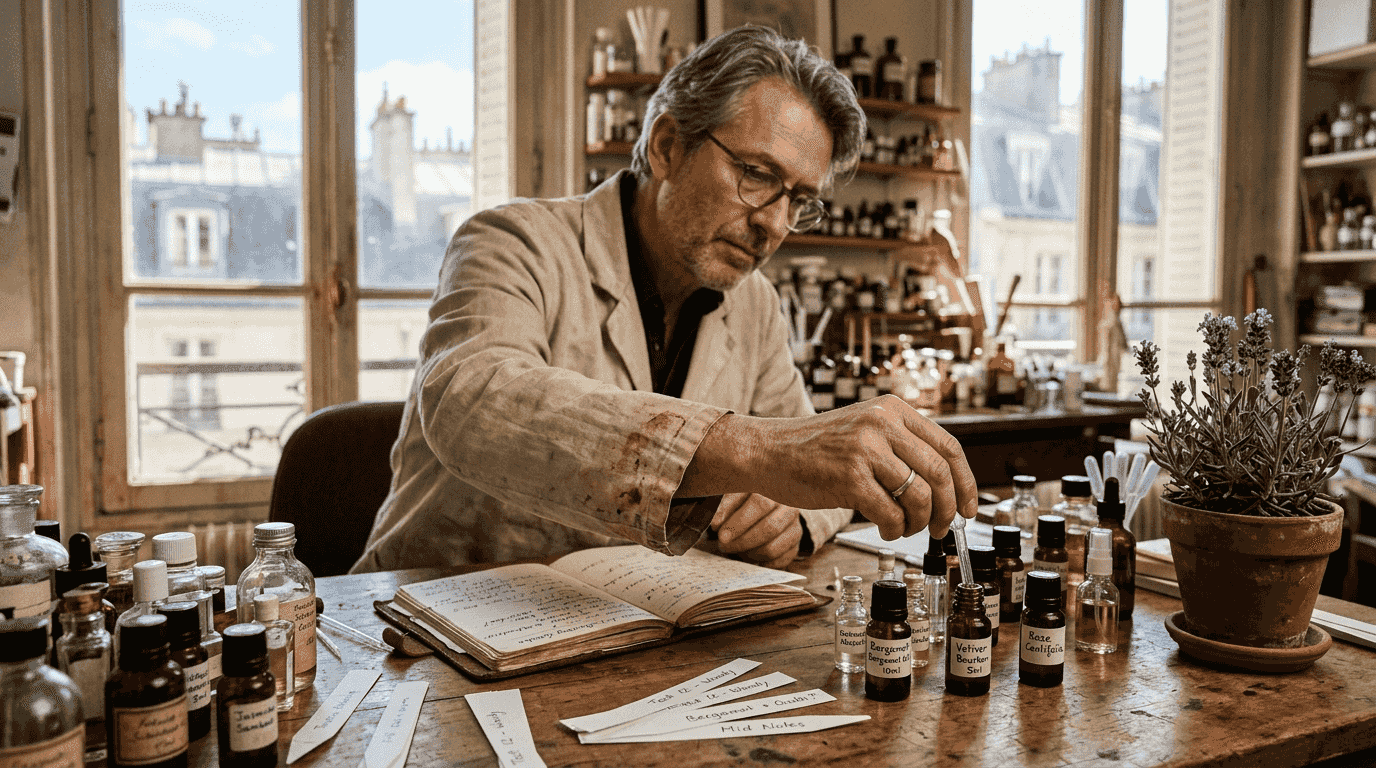
Most people imagine perfumers as artists casually blending essential oils until magic happens. The reality involves rigorous chemistry, regulatory compliance, and years mastering molecular structures. Creating signature scents demands equal parts scientific precision and creative vision, balancing natural jasmine costing £6,000 per kilogram against synthetic alternatives that ensure consistency. This article reveals the perfumer's multifaceted craft, from formulating complex accords to navigating ingredient regulations, empowering you to understand and perhaps attempt your own fragrance creations.
Table of Contents
- The Essential Role Of The Perfumer In Fragrance Creation
- Crafting Unique Scent Accords: Science And Artistry Combined
- Balancing Natural And Synthetic Ingredients In Modern Perfumery
- Applying Perfumer's Craft: From Concept To Signature Scents
- Explore Signature Fragrances From Amoureé Parfums
- Frequently Asked Questions
Key takeaways
| Point | Details |
|---|---|
| Art meets science | Perfumers combine creative vision with chemistry expertise to craft unique fragrances |
| Hybrid ingredients | Blending natural and synthetic materials optimises quality, cost, and sustainability |
| Accord mastery | Complex scents like lily-of-the-valley require molecular replication using specific synthetics |
| Regulatory balance | Perfumers navigate IFRA guidelines whilst maintaining creative expression |
| Maturation matters | Accords need weeks to develop fully, revealing their true character over time |
The essential role of the perfumer in fragrance creation
Perfumers occupy a unique intersection between artist and chemist, translating abstract concepts into tangible olfactory experiences. Their work begins with understanding client briefs, whether creating a signature scent for a luxury brand or developing a commercial fragrance for mass production. Each project demands balancing creative ambition against practical constraints like ingredient costs, regulatory limits, and market expectations.
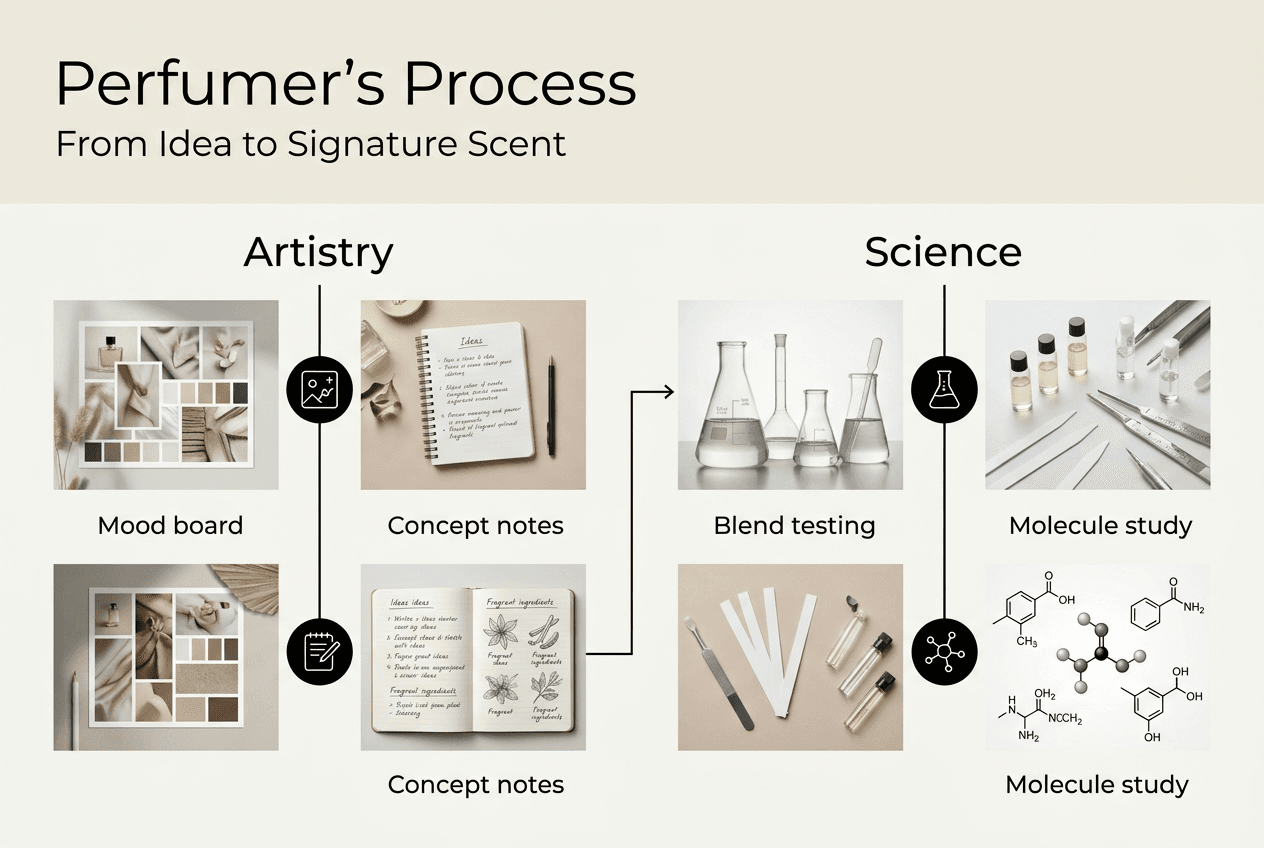
The creative process unfolds through multiple stages. Initial conceptualisation involves mood boards, colour palettes, and storytelling that guide ingredient selection. Perfumers then formulate trial versions, adjusting ratios and testing how notes interact during evaporation. This iterative refinement continues until the fragrance achieves its intended character, often requiring dozens of modifications.
Technical expertise proves equally vital. Perfumers must understand molecular structures, evaporation rates, and how ingredients behave in different concentrations. They navigate complex regulations governing allergen limits, particularly with materials like oakmoss or certain musks. IFRA guidelines restrict specific compounds to protect consumers, requiring perfumers to reformulate classic compositions or find creative alternatives.
Economic factors shape every decision. Natural jasmine costs £6,000 to £11,000 per kilogram, making synthetic alternatives essential for commercial viability. Perfumers evaluate ingredient sourcing, considering sustainability, ethical harvesting, and supply chain reliability. Rare naturals like oud or ambergris command premium prices, pushing creators toward lab-created molecules that replicate these scents affordably.
Collaboration defines modern perfumery. Perfumers work closely with brand managers, marketing teams, and regulatory specialists to ensure fragrances meet commercial objectives whilst remaining compliant. They translate abstract brand identities into scent profiles, considering target demographics and competitive positioning. This requires understanding consumer psychology, cultural preferences, and emerging trends.
Pro Tip: Perfumers maintain extensive scent libraries, training their noses to recognise hundreds of individual materials instantly, enabling rapid formulation adjustments during client meetings.
Key responsibilities include:
- Formulating original compositions from concept through production
- Ensuring regulatory compliance across international markets
- Balancing ingredient costs against quality expectations
- Training junior perfumers and evaluating submissions
- Sourcing rare materials and developing supplier relationships
- Adapting formulas for different product formats like candles or body care
Crafting unique scent accords: science and artistry combined
Accords form the building blocks of complex fragrances, combining multiple ingredients to create unified scent impressions. Think of accords as chords in music, where individual notes blend into harmonious wholes greater than their parts. Perfumers master accord creation to replicate natural scents or invent entirely new olfactory experiences.
Certain flowers present unique challenges. Lily-of-the-valley cannot be extracted naturally, as its delicate blooms yield insufficient oil for commercial use. Perfumers recreate this fresh, green floral through synthetic molecules like Bourgeonal, Hydroxycitronellal, and Lilial. These compounds mimic the flower's aroma profile when blended in precise ratios, producing a convincing accord indistinguishable from the natural scent.
The lily-of-the-valley accord typically combines:
- Bourgeonal for the primary floral character
- Hydroxycitronellal adding fresh, slightly citrus nuances
- Lilial contributing powdery, aldehydic facets
- Terpineol providing soft, lilac-like undertones
- Phenylethyl alcohol offering rosy, honeyed depth
Tobacco accords demonstrate different complexity. Creating authentic tobacco requires balancing sweet, dry, and spicy elements whilst respecting regulatory limits. Tobacco formulations use a 60/40 sweet-to-dry ratio with maximum 1.5% coumarin following IFRA guidelines. The accord develops through careful layering of materials like tonka absolute, hay absolute, immortelle, and various resins.
Maturation proves critical for tobacco accords. Fresh blends smell harsh and disjointed, their components fighting rather than harmonising. After two to four weeks, chemical reactions occur as volatile molecules interact, creating new aromatic compounds. The accord softens, deepens, and reveals nuanced facets impossible in the initial mix. Perfumers plan for this maturation when formulating complete fragrance compositions.
Regulatory considerations impact accord creation significantly. IFRA restrictions limit certain naturals like oakmoss or restrict synthetic musks, forcing perfumers to reformulate classic accords. Coumarin, prevalent in tonka bean and essential for tobacco accords, faces strict percentage limits. Perfumers must balance achieving desired effects whilst remaining compliant across different markets with varying regulations.
| Accord type | Key ingredients | Maturation time | Regulatory notes |
|---|---|---|---|
| Lily-of-the-valley | Bourgeonal, Hydroxycitronellal, Lilial | 1-2 weeks | Monitor allergen declarations |
| Tobacco | Tonka, hay absolute, immortelle | 2-4 weeks | Coumarin limited to 1.5% |
| Rose | Phenylethyl alcohol, geraniol, citronellol | 1 week | Geraniol requires labelling |
| Leather | Birch tar, castoreum, labdanum | 3-4 weeks | Birch tar faces restrictions |
Pro Tip: Always prepare accord samples in small batches first, testing stability and scent development before scaling up to production quantities.
Balancing natural and synthetic ingredients in modern perfumery
The natural versus synthetic debate divides fragrance enthusiasts, yet professional perfumers recognise both categories offer distinct advantages. Understanding this balance reveals why modern perfumery embraces hybrid approaches rather than dogmatic adherence to either camp.
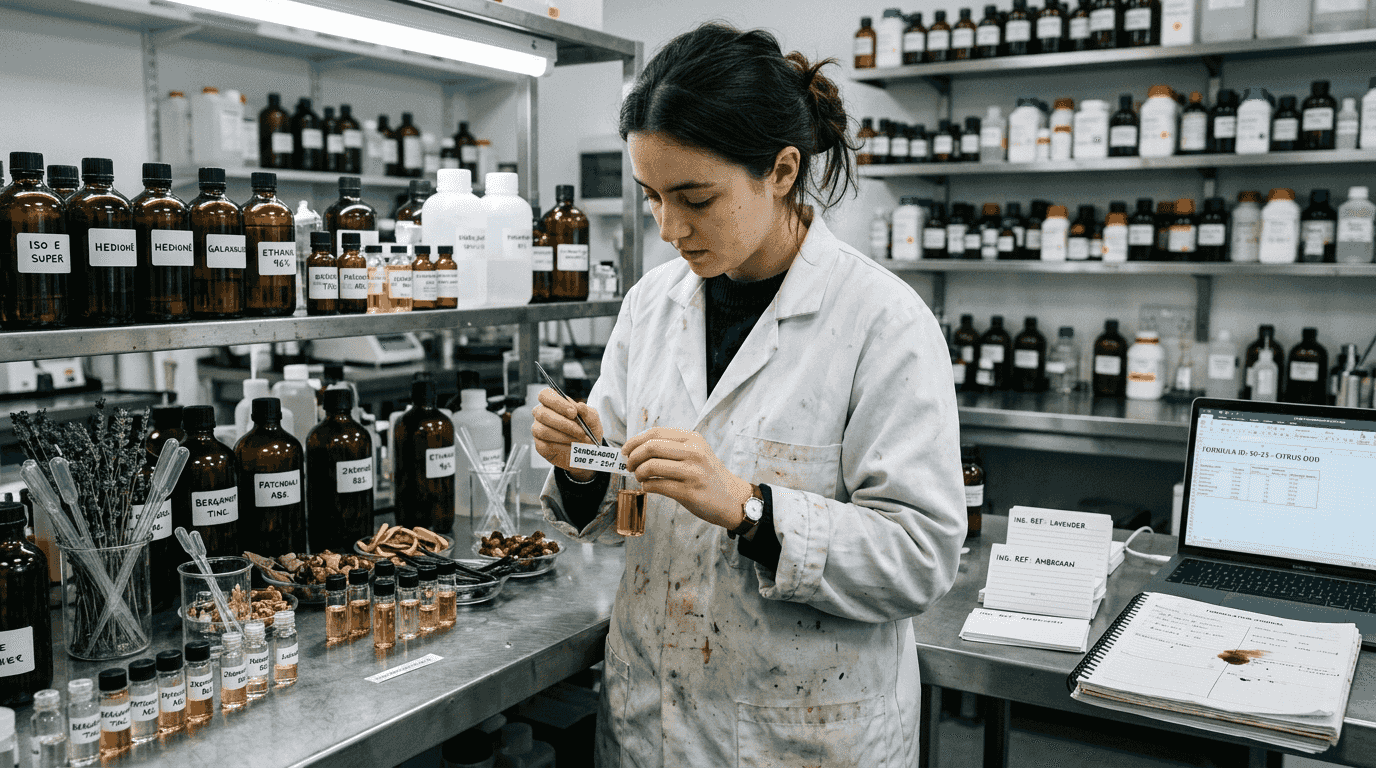
Natural ingredients provide unmatched complexity. Rose absolute contains over 400 aromatic compounds, creating depth impossible to fully replicate synthetically. These naturals offer richness, warmth, and subtle variations that change with harvests, origins, and extraction methods. However, they present significant challenges beyond cost. Supply inconsistency affects formulation stability, as agricultural variables produce batches with differing scent profiles.
Ethical concerns complicate natural sourcing. Sandalwood harvesting threatens endangered species, whilst musk once required killing animals. Modern sustainability demands push perfumers toward alternatives that protect ecosystems whilst maintaining scent quality. Synthetic materials provide consistency, longevity, and ethical sourcing without depleting natural resources or harming wildlife.
Synthetic molecules offer precision naturals cannot match. Perfumers control exact concentrations, ensuring batch-to-batch consistency essential for commercial production. Synthetics also enable scents impossible in nature, like Calone's fresh marine note or Iso E Super's woody amber. These materials expand creative possibilities beyond traditional natural palettes.
Cost considerations drive ingredient decisions significantly:
- Natural jasmine absolute: £6,000 to £11,000 per kilogram
- Synthetic jasmine accord: £150 to £300 per kilogram
- Natural oud oil: £20,000 to £50,000 per kilogram
- Synthetic oud molecules: £400 to £800 per kilogram
- Rose absolute: £3,000 to £5,000 per kilogram
- Synthetic rose compounds: £100 to £250 per kilogram
Allergen management favours synthetics in many applications. Natural materials often contain compounds triggering sensitivities, requiring extensive testing and labelling. Synthetics allow perfumers to create hypoallergenic formulas or reduce problematic substances whilst maintaining desired scent profiles. This proves particularly important for body care products with extended skin contact.
Hybrid approaches combine strengths from both categories. Perfumers might use natural rose absolute for depth whilst adding synthetic geraniol for brightness and longevity. This strategy optimises cost, performance, and sustainability. Amoureé Parfums' philosophy embraces this balanced approach, selecting ingredients based on quality and effect rather than origin alone.
| Aspect | Natural ingredients | Synthetic ingredients | Hybrid approach |
|---|---|---|---|
| Complexity | High, with subtle nuances | Variable, often focused | Combines depth with clarity |
| Consistency | Low, varies by harvest | High, identical batches | Stabilises naturals with synthetics |
| Cost | Very high | Moderate to low | Optimises budget allocation |
| Sustainability | Often problematic | Generally better | Balances ethics and quality |
| Allergen risk | Higher, complex mixtures | Lower, controlled compounds | Minimises whilst preserving character |
Consumer preferences increasingly favour transparency over rigid natural-only positioning. Educated buyers appreciate perfumers who select ingredients based on performance, ethics, and sustainability rather than marketing narratives. This shift empowers creators to use their full palette, crafting superior fragrances unconstrained by artificial limitations.
Applying perfumer's craft: from concept to signature scents
Creating personal or commercial fragrances becomes achievable once you understand perfumer techniques. Whether developing a signature scent or exploring fragrance as a hobby, following structured processes yields better results than random experimentation.
-
Define your concept clearly. Begin with inspiration sources like memories, places, or emotions you want to evoke. Create mood boards with colours, textures, and images representing your vision. Write descriptive paragraphs explaining the story behind your fragrance, guiding ingredient selection toward materials that communicate your narrative.
-
Research and source ingredients thoughtfully. Start with sample sizes rather than full bottles, testing materials individually before combining them. Specialty suppliers offer discovery sets containing common perfumery materials. Focus initially on essential building blocks like citrus oils, florals, woods, and musks before exploring exotic rarities.
-
Formulate your base accord structure. Divide your composition into top, heart, and base notes, planning how the fragrance evolves over time. Top notes provide initial impact but evaporate quickly. Heart notes form the fragrance character, lasting several hours. Base notes anchor the composition, providing depth and longevity. Balance these layers to create coherent development from application through dry down.
-
Blend in small quantities using precise measurements. Work in percentages rather than drops, using digital scales accurate to 0.01 grams. Start with 10ml total volume, mixing in alcohol or neutral carrier oil. Document every formula meticulously, recording exact percentages for each ingredient. This discipline enables replication and refinement.
-
Allow proper maturation time before evaluating. Tobacco accords require two to four weeks to develop fully, and most complex blends benefit from at least one week resting. Chemical interactions occur during maturation, creating new aromatic compounds and smoothing harsh edges. Test your blend immediately after mixing, then again after one week, two weeks, and one month to track development.
-
Test extensively on skin, not just paper. Fragrances interact with body chemistry, producing different results on various individuals. Apply small amounts to pulse points, evaluating how the scent develops over six to eight hours. Consider how temperature, humidity, and skin pH affect performance.
-
Refine through multiple iterations. Rarely does a first formula achieve perfection. Adjust ratios based on testing feedback, strengthening weak aspects or toning down overpowering elements. Keep detailed notes comparing versions, identifying which changes improved or detracted from your vision.
-
Consider regulatory compliance for commercial use. If creating fragrances for sale, familiarise yourself with IFRA standards and allergen labelling requirements. Certain ingredients face restrictions or require consumer warnings. Consulting with regulatory specialists prevents costly reformulations after production.
Pro Tip: Create a personal scent library by smelling individual materials daily, training your nose to recognise components within complex blends and enabling more intuitive formulation.
Experimentation accelerates learning. Sample exploration through discovery sets exposes you to professional compositions, helping identify techniques and ingredient combinations worth studying. Deconstruct favourite fragrances by identifying their notes and attempting to recreate simplified versions. This reverse engineering builds practical skills faster than theory alone.
Safety considerations matter throughout the process. Work in ventilated areas, as concentrated fragrance materials prove overwhelming in enclosed spaces. Wear gloves when handling potent compounds, and never apply undiluted materials directly to skin. Store ingredients properly in dark, cool locations to prevent degradation. Maintain organised workspaces with clearly labelled bottles to avoid dangerous mix-ups.
Explore signature fragrances from Amoureé Parfums
Understanding perfumer craft deepens appreciation for expertly composed fragrances. Amoureé Parfums offers curated collections embodying the principles explored throughout this article, from balanced natural-synthetic blends to carefully matured accords that reveal complexity over time.
Our fragrance portfolio showcases how professional perfumers translate concepts into wearable art. Each scent balances creativity with technical precision, using quality ingredients selected for performance rather than marketing narratives. Explore women's collections featuring elegant florals and sophisticated orientals, or discover men's ranges with bold woods and fresh aromatics.
Pro Tip: Sample multiple fragrances before committing to full bottles, allowing you to experience how different compositions develop on your skin chemistry and identifying your true signature scent.
Frequently asked questions
What skills are essential for a perfumer?
Perfumers need chemistry knowledge to understand molecular structures and ingredient interactions. Creativity proves equally vital, translating abstract concepts into tangible scent experiences. Sensory acuity requires years of training, learning to identify hundreds of materials instantly. Regulatory expertise ensures compliance with IFRA guidelines and allergen restrictions.
How do perfumers create scents of inextractable flowers like lily-of-the-valley?
Synthetic molecules like Bourgeonal and Hydroxycitronellal replicate lily-of-the-valley's aroma profile. These compounds mimic the flower's scent when blended in precise ratios, creating convincing accords indistinguishable from nature. Perfumers combine multiple synthetics to capture the fresh, green floral character impossible to extract naturally.
Why use both natural and synthetic ingredients in perfumes?
Hybrid approaches optimise fragrance complexity, consistency, cost, and sustainability simultaneously. Natural materials provide unmatched depth and nuance, whilst synthetics ensure batch consistency and ethical sourcing. Combining both categories allows perfumers to craft superior compositions that balance quality with practical considerations. This flexibility expands creative possibilities beyond limitations of either category alone.
How long does fragrance maturation take?
Maturation periods vary by composition complexity and ingredient types. Simple citrus blends may need only days, whilst complex accords require weeks. Tobacco formulations typically need two to four weeks for full character development. During maturation, chemical reactions occur between components, creating new aromatic compounds and smoothing harsh edges that make fresh blends smell disjointed.
What regulatory standards govern perfume creation?
IFRA guidelines establish safety standards for fragrance materials, restricting certain compounds or limiting their concentrations. These regulations protect consumers from allergens and sensitising substances. Perfumers must comply with allergen labelling requirements, declaring specific materials above threshold levels. Standards vary by market, requiring formulation adjustments for international distribution. Regulatory compliance balances consumer safety with creative expression.