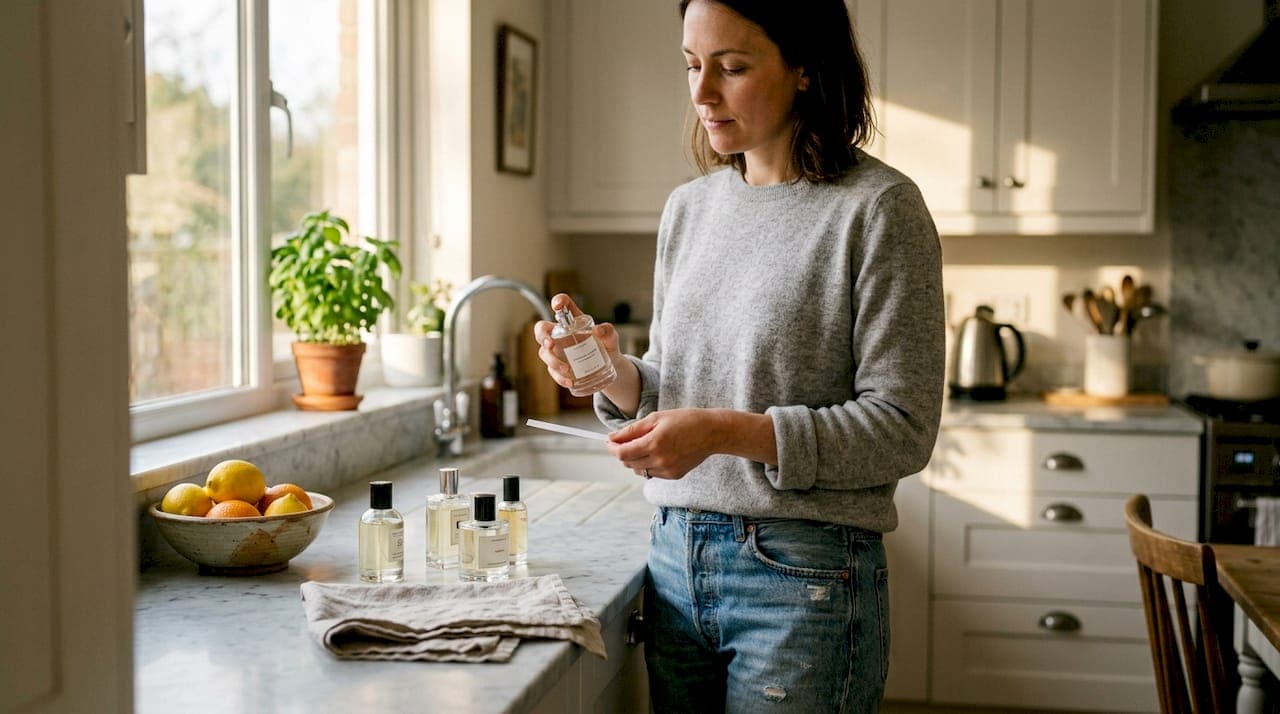
You've probably noticed your signature scent smells completely different on a sweltering July afternoon compared to a crisp December evening. This isn't your imagination playing tricks. Fragrances genuinely transform with the seasons, and understanding why helps you choose scents that truly shine year-round. Temperature, humidity, and even cultural traditions all influence how perfumes perform on your skin. This guide reveals the science behind seasonal scent variations and teaches you to select fragrances that complement each season perfectly, enhancing your personal expression and ensuring your scent always makes the right impression.
Table of Contents
- Key takeaways
- How weather influences fragrance perception
- Seasonal fragrance compositions: notes that suit each season
- How cultural and psychological factors shape seasonal fragrance choices
- Choosing and wearing fragrances effectively by season
- Explore seasonal fragrances at Amoureé Parfums
- Why do certain perfumes seem stronger in hot weather?
Key Takeaways
| Point | Details |
|---|---|
| Weather shapes fragrance | Temperature and humidity alter volatility and projection, changing which notes come forward across the seasons. |
| Notes by season | Seasonal citrus and floral notes suit summer, while spicy and woody notes dominate in winter, reflecting practical chemistry and preference. |
| Cultural and psychological factors | Cultural traditions and personal preferences influence how seasonal scents are chosen and perceived. |
| Seasonal application tips | Apply lighter bursts in summer and consider extra spray or layering in winter to maintain presence. |
How weather influences fragrance perception
Temperature dramatically changes how fragrances behave on your skin. Heat increases the volatility of fragrance molecules, causing scents to evaporate faster in summer. When mercury rises, your perfume's top notes burst forth immediately, creating an intense initial impression that fades more quickly than in cooler months. Conversely, winter's chill slows molecular movement, making base notes like amber and musk dominate whilst lighter citrus accords struggle to project.
Humidity adds another layer of complexity to fragrance performance. Moisture in the air acts like a carrier for scent molecules, helping them travel further and linger longer. On humid summer days, your perfume might seem overwhelming because water vapour amplifies projection. Dry winter air, however, absorbs fragrance molecules quickly, requiring more frequent reapplication to maintain presence. Your skin's natural moisture levels also shift seasonally, with winter dryness absorbing perfume faster than summer's natural oils.
Your body chemistry interacts uniquely with weather conditions throughout the year. Consider these environmental factors:
- Warm skin temperatures in summer accelerate chemical reactions between your natural oils and fragrance compounds
- Cold weather constricts blood vessels near skin surface, reducing natural warmth that helps diffuse scent
- Seasonal diet changes alter your skin's pH, affecting how fragrances develop
- Indoor heating in winter creates artificial warmth that can distort fragrance balance
Pro Tip: Apply fragrance to pulse points in summer but consider clothing application in winter to compensate for reduced skin warmth and projection.
Understanding these weather dynamics helps you anticipate how your favourite fragrances will perform. Summer calls for lighter application of potent scents, whilst winter demands generous spraying or layering to achieve noticeable presence. The same perfume genuinely smells different across seasons because environmental conditions fundamentally alter molecular behaviour and your perception of those molecules.
Seasonal fragrance compositions: notes that suit each season
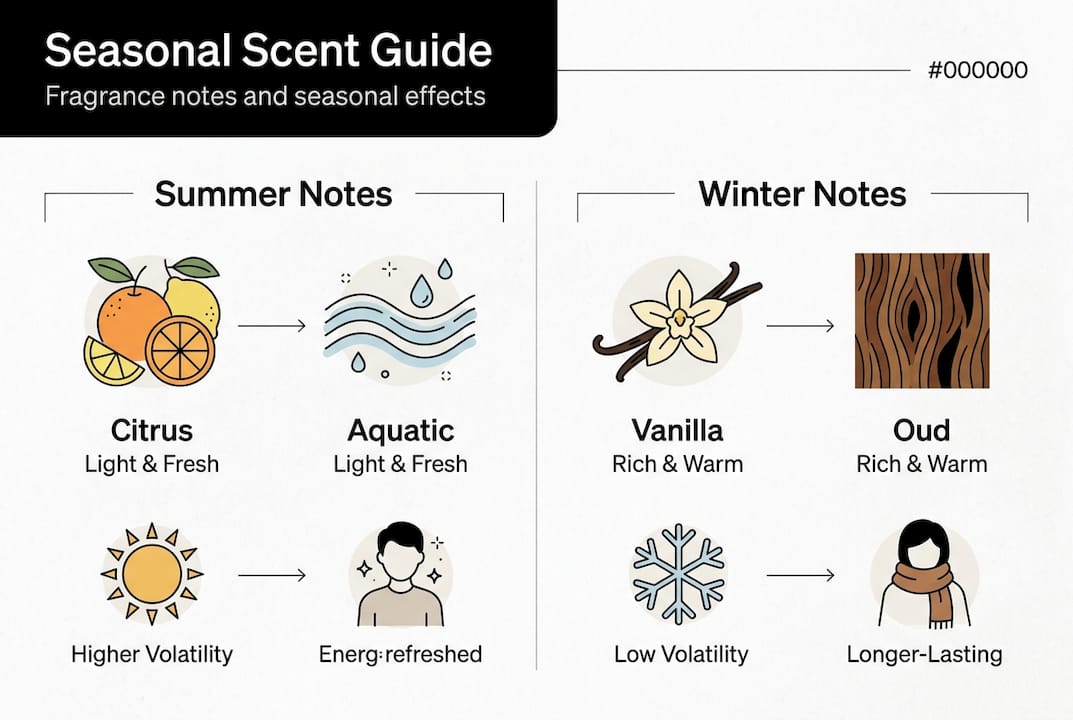
Perfumers deliberately craft compositions with seasonal performance in mind. Light citrus and floral notes are preferred in warmer months, whilst spicy and woody notes dominate colder periods. This isn't arbitrary fashion but practical chemistry meeting cultural preference. Certain molecular structures simply perform better under specific temperature and humidity conditions.

| Season | Ideal notes | Example accords | Why they work |
|---|---|---|---|
| Spring | Green, floral, aquatic | Lily of the valley, fresh grass, rain | Light molecules project well in mild temperatures without overwhelming |
| Summer | Citrus, marine, fruity | Bergamot, sea salt, peach | Quick evaporation suits fleeting top notes that refresh in heat |
| Autumn | Spicy, gourmand, earthy | Cinnamon, caramel, patchouli | Medium weight notes balance cooling air with comforting warmth |
| Winter | Woody, oriental, resinous | Sandalwood, oud, frankincense | Heavy base notes persist despite cold and provide cosy richness |
The molecular weight of fragrance compounds determines seasonal suitability. Lighter molecules in citrus oils evaporate rapidly, making them perfect for summer when you want refreshing bursts rather than lasting intensity. Heavier molecules in woods and resins release slowly, ideal for winter when you need all-day presence despite cold air dampening projection. This explains why your summer bergamot scent seems thin in December whilst your winter amber feels suffocating in July.
Seasonal note preferences also reflect practical lifestyle considerations:
- Summer activities involve more outdoor time and physical exertion, requiring fresh scents that won't clash with perspiration
- Winter layered clothing traps fragrance close to body, allowing richer compositions to develop complexity
- Spring's transitional weather demands versatile scents that adapt to temperature swings
- Autumn's return to indoor socialising suits intimate, enveloping fragrances
Exploring women's fragrance selections and men's fragrance options reveals how brands organise collections around these seasonal principles. You'll notice summery offerings emphasise transparency and brightness whilst winter releases showcase depth and warmth. This organisation helps you navigate choices efficiently, matching your needs to appropriate compositions without trial and error.
How cultural and psychological factors shape seasonal fragrance choices
Beyond physical performance, psychological associations powerfully influence which fragrances feel right for each season. Seasonal traditions and celebrations greatly influence fragrance popularity and perceived appropriateness. Your brain links certain scents with specific times of year through repeated exposure and cultural conditioning, creating expectations that feel almost instinctive.
Winter holidays particularly drive fragrance preferences. December's association with cinnamon, clove, and vanilla stems from festive baking and mulled beverages, making gourmand fragrances feel celebratory and appropriate. Spring's connection to fresh florals reflects nature's renewal and traditional associations with rebirth and new beginnings. These aren't universal truths but learned patterns that vary across cultures, yet they strongly influence what feels comfortable wearing.
Cultural norms establish unwritten rules about seasonal scent appropriateness:
- Wearing heavy oriental fragrances in summer heat might seem inappropriate or overwhelming to others
- Light aquatic scents in winter can appear incongruous with the season's mood
- Festive periods create temporary acceptance for otherwise niche scents like frankincense or myrrh
- Regional climate differences mean winter scents vary dramatically between tropical and temperate zones
Your emotional state shifts with seasons, affecting fragrance preferences. Shorter winter days and reduced sunlight often create desire for comforting, enveloping scents that provide psychological warmth. Summer's energy and optimism align with uplifting citrus and bright florals that mirror the season's vitality. This psychological dimension explains why the same person craves completely different scents in January versus July, beyond mere temperature considerations.
Pro Tip: Experiment with unexpected seasonal choices like fresh mint in winter or warm vanilla in summer to discover unique signatures that set you apart whilst still feeling personally authentic.
Marketing and social influence also shape seasonal preferences. Brands launch collections timed to seasons, creating awareness and desire for specific scent profiles. When everyone discusses summer fragrances in May, you naturally start considering lighter options even if your winter scent still performs adequately. Exploring fragrance sample collections lets you test seasonal recommendations without committing to full bottles, helping you distinguish genuine preference from marketing influence.
Choosing and wearing fragrances effectively by season
Selecting appropriate seasonal fragrances requires systematic evaluation of both scent characteristics and your lifestyle needs. Follow this practical approach:
- Assess your seasonal activities and environments to determine required fragrance performance
- Identify note families that align with the season's temperature and humidity conditions
- Test candidates on your skin during typical seasonal conditions, not in climate-controlled shops
- Evaluate longevity and projection at different times of day as temperatures fluctuate
- Consider your wardrobe, as fragrance interacts differently with various fabrics
- Start with samples to confirm performance before investing in full bottles
Storage significantly impacts fragrance quality across seasons. Heat and light degrade perfume compounds, particularly affecting delicate top notes. Keep bottles in cool, dark places away from windows and radiators. Summer's heat poses particular risk, so consider relocating fragrances to cooler rooms during warmest months. Proper storage ensures your winter scents remain vibrant when you retrieve them next cold season.
| Season | Average longevity | Projection strength | Recommended application |
|---|---|---|---|
| Spring | 6-8 hours | Moderate | 3-4 sprays on pulse points |
| Summer | 4-6 hours | Strong initially, fades quickly | 2-3 sprays, reapply afternoon |
| Autumn | 7-9 hours | Moderate to strong | 4-5 sprays, focus on clothing |
| Winter | 8-10 hours | Moderate, close to skin | 5-6 sprays, layer for projection |
Adapting your application technique seasonally maximises fragrance performance:
- Summer requires strategic placement on cooler pulse points like inner elbows rather than neck where heat intensifies scent
- Winter benefits from applying to clothing which releases fragrance gradually as you move between temperatures
- Layering products like scented lotions under perfume extends wear time in dry winter conditions
- Carrying travel atomisers enables midday refreshing when seasonal conditions accelerate evaporation
Layering techniques can enhance fragrance adaptation across seasons for personal preference. Combining a light base fragrance with seasonal toppers lets you maintain a signature whilst adjusting to conditions. This approach proves particularly valuable during transitional seasons when weather fluctuates dramatically day to day. You might pair a year-round woody base with fresh citrus in warmer spells or spicy accords when temperatures drop.
Pro Tip: Use fragrance samples to build a seasonal rotation library, discovering which scents genuinely suit your chemistry and lifestyle rather than following generic recommendations that might not match your unique needs.
Visiting fragrance shops during actual seasonal conditions helps you make informed choices. Testing a winter fragrance in July's heat won't reveal its true character. Request samples to evaluate at home over several days, experiencing how scents perform during your normal routines. This patient approach prevents expensive mistakes and builds a curated collection that serves you brilliantly throughout the year.
Explore seasonal fragrances at Amoureé Parfums
Now that you understand how seasons transform fragrance performance, it's time to discover scents perfectly suited to your needs. Amoureé Parfums offers carefully curated fragrance collections designed to help you navigate seasonal selections with confidence. Whether you're seeking fresh summer citrus or cosy winter orientals, you'll find sophisticated options that deliver exceptional quality.
Our women's fragrances and men's fragrances span every seasonal preference, from light aquatic compositions to rich gourmand creations. Each scent includes detailed note breakdowns helping you anticipate seasonal performance before purchasing. Not sure which fragrance suits your chemistry? Sample sets let you test multiple options across different seasons, ensuring you invest wisely in scents that genuinely enhance your personal style throughout the year.
Why do certain perfumes seem stronger in hot weather?
Why do certain perfumes seem stronger in hot weather?
Higher temperatures increase evaporation of volatile fragrance molecules, making scents project more intensely and seem stronger initially. Your skin's warmth also rises in heat, accelerating the chemical reactions between natural oils and perfume compounds. Humidity amplifies this effect by helping scent molecules travel further through moisture-laden air, creating more noticeable presence than the same fragrance produces in cool, dry conditions.
Can I wear the same fragrance year-round?
Yes, you absolutely can wear one signature scent throughout all seasons if it brings you joy and confidence. However, adjusting application technique and quantity seasonally helps maintain consistent performance despite changing conditions. Layering complementary products or alternating between lighter and richer versions of similar scent families lets you adapt your favourite fragrance to work harmoniously with each season's unique characteristics.
What are the best fragrance notes for winter?
Winter fragrances typically feature warm, heavy notes including vanilla, amber, sandalwood, oud, frankincense, and musk. Spices like cinnamon, cardamom, and clove add cosy warmth whilst resinous accords provide lasting richness. These notes contain larger molecules that evaporate slowly, ensuring your fragrance maintains presence despite cold air that dampens projection and requires more robust compositions to achieve noticeable wear.
Do cultural events influence fragrance choices?
Cultural celebrations and traditions significantly shape which fragrances feel appropriate and desirable during specific seasons. Festive periods like Christmas create demand for gourmand scents reminiscent of holiday baking, whilst spring celebrations often favour fresh florals symbolising renewal. These associations vary across cultures but powerfully influence purchasing patterns and wearing habits, making certain scent families feel instinctively right or wrong for particular times of year regardless of their technical performance.