
Have you ever noticed how a perfume that smells divine on your friend can smell completely different on you? This isn't your imagination playing tricks. The same fragrance can produce surprisingly distinct scent profiles on different individuals, influenced by a complex interplay of body chemistry, environment, and perfume structure. Understanding why perfumes behave this way transforms how you select, apply, and enjoy fragrances. This guide reveals the fascinating science behind scent variations and empowers you to find perfumes that truly complement your unique chemistry.
Table of Contents
- Key Takeaways
- How perfume composition influences scent perception
- The role of individual body chemistry in perfume scent differences
- Environmental and application factors affecting perfume scent
- Choosing and testing perfumes for your unique scent
- Discover perfumes tailored to you at Amoureé Parfums
- Frequently asked questions
Key Takeaways
| Point | Details |
|---|---|
| Note layers explain variation | Perfume unfolds in top middle and base notes that interact with your skin to create a unique scent on you. |
| Body chemistry matters | Your skin pH, natural oils and even diet shape how a fragrance smells on you compared with others. |
| Environment affects scent | Ambient factors such as temperature and humidity influence evaporation and projection, altering how the fragrance develops on your skin. |
| Test across hours | Applying in the morning and assessing the fragrance for at least six hours reveals how top middle and base notes evolve. |
How perfume composition influences scent perception
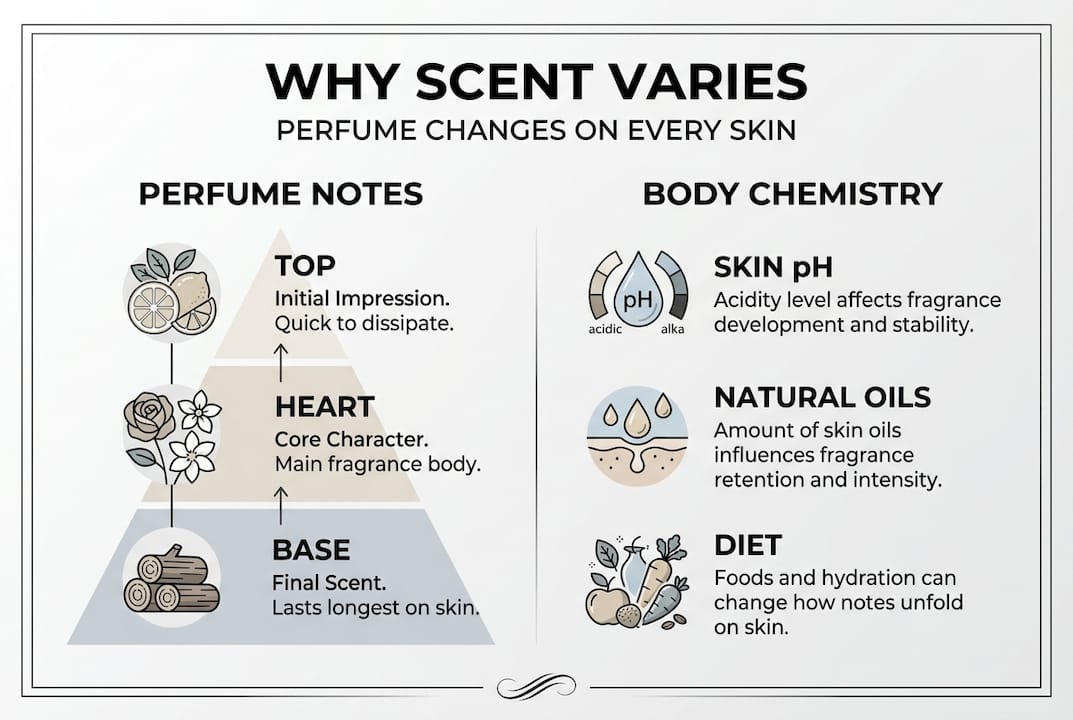
Perfume composition and layering creates the foundation for why fragrances smell different on various individuals. Every perfume is carefully constructed with three distinct layers that unfold over time, each contributing to the overall scent experience.
Top notes are the initial impression you smell immediately after application. These light, volatile molecules evaporate within 15 to 30 minutes, creating that first burst of citrus, herbs, or fresh florals. Because they disappear quickly, they're often the least indicative of how a perfume will ultimately smell on you.
Middle notes, also called heart notes, emerge as top notes fade. These form the perfume's core character and typically last two to four hours. Floral, fruity, or spicy accords dominate this phase, and this is where you begin to notice how your skin chemistry interacts with the fragrance. The same jasmine note might smell creamy on one person and sharp on another.
Base notes provide the lasting impression, lingering for six hours or more. Rich ingredients like amber, musk, vanilla, and woods anchor the fragrance and blend with your natural scent. This is where individual differences become most pronounced, as these molecules have extended contact with your skin's unique chemistry.
The interaction between these layers creates what perfumers call the scent journey. On your skin, warmth and natural oils influence how quickly each layer evaporates and how intensely each note projects. Someone with warmer skin might find base notes develop faster, whilst cooler skin may preserve top notes longer.
Pro Tip: Test a new perfume for at least six hours to experience all three note layers. Apply it in the morning and observe how it evolves throughout your day before making a purchase decision.
When exploring men's fragrances or women's fragrances, understanding perfume composition insights helps you predict which scents might work best with your chemistry.
| Note type | Evaporation time | Common ingredients | Scent characteristics |
|---|---|---|---|
| Top notes | 15-30 minutes | Citrus, herbs, light florals | Fresh, bright, immediate |
| Middle notes | 2-4 hours | Jasmine, rose, spices, fruits | Rich, full-bodied, core scent |
| Base notes | 6+ hours | Musk, amber, vanilla, woods | Deep, warm, lingering |
The role of individual body chemistry in perfume scent differences
Your body's unique chemistry is perhaps the most significant factor in how perfumes smell on you. Individual body chemistry creates a personalised scent signature that no one else can replicate.
Skin pH levels vary from person to person, typically ranging from 4.5 to 6.5 on the pH scale. More acidic skin tends to hold fragrances longer but may intensify certain notes, making them smell sharper or more pronounced. Alkaline skin often softens scents, creating a mellower interpretation of the same perfume. This is why a vibrant citrus fragrance might smell zesty on your friend but subdued on you.
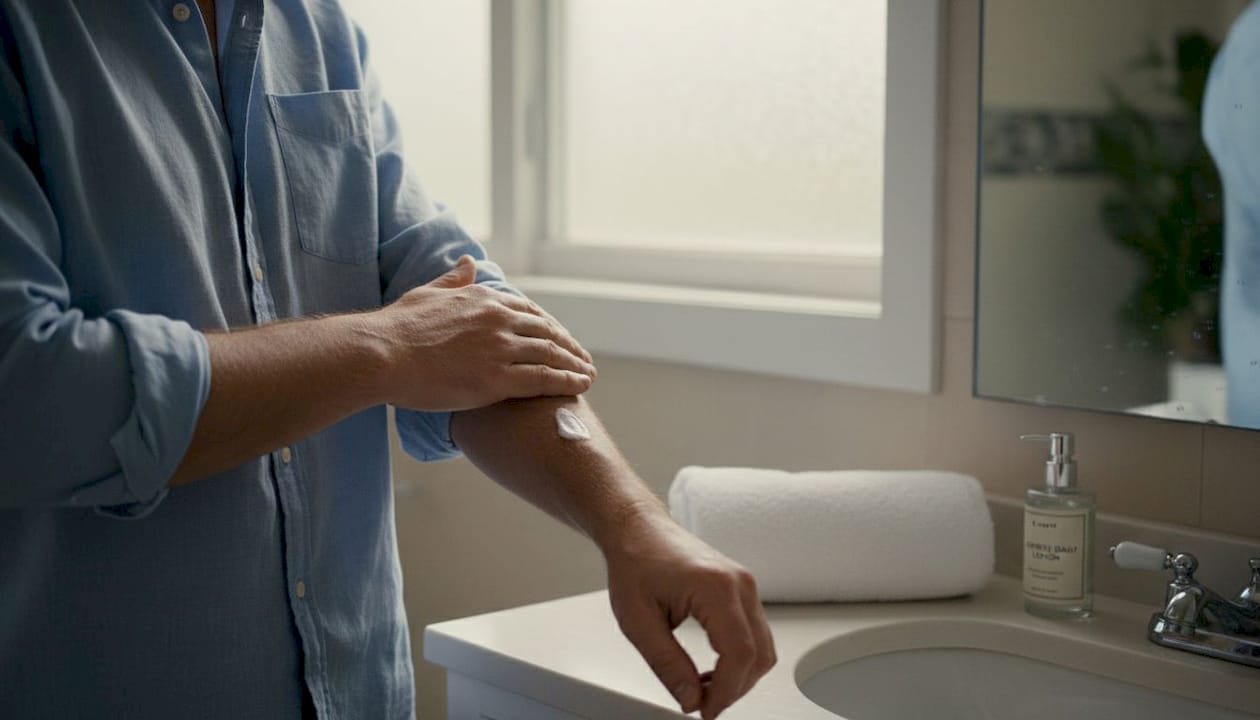
Natural skin oils play a crucial role in fragrance development. Oily skin acts as a reservoir, holding scent molecules longer and allowing them to develop more fully. The oils can also enhance certain notes whilst suppressing others, particularly affecting how floral and woody accords project. Dry skin, conversely, causes perfumes to evaporate more quickly, often requiring more frequent reapplication.
Diet influences your body's natural scent in subtle but measurable ways. Spicy foods, garlic, and certain supplements can alter your skin's odour profile, which then mingles with your perfume. Even hydration levels matter because well-hydrated skin retains fragrance better than dehydrated skin.
Medications and hormonal changes also affect scent perception. Certain prescriptions can alter skin chemistry temporarily, whilst hormonal fluctuations during menstrual cycles, pregnancy, or menopause can make the same perfume smell different at various times.
Environmental factors compound these personal variables. Your body temperature affects evaporation rates, which is why perfumes smell more intense after exercise or in warm weather. Humidity in the air can either amplify or dampen scent projection, depending on the fragrance's composition.
Pro Tip: Always test perfumes on your own skin rather than relying on paper strips. Paper cannot replicate your unique chemistry, and you'll miss the true scent development that occurs when fragrance meets your skin's oils and pH.
Exploring women's fragrance variations reveals how the same scent family can smell remarkably different on various individuals. Understanding skin chemistry and perfumes helps you make informed choices when selecting from fragrance skin chemistry options.
- Skin pH affects how acidic or alkaline your natural chemistry is, altering perfume interaction
- Natural oils enhance longevity and influence which notes project most strongly
- Diet and medications subtly change your body's scent profile
- Hydration levels determine how long fragrances last on your skin
- Hormonal changes can temporarily alter how perfumes smell on you
Environmental and application factors affecting perfume scent
Beyond your personal chemistry, external conditions and how you apply perfume significantly impact scent variations. Application technique and environment influence whether a fragrance smells vibrant or muted, long-lasting or fleeting.
Temperature dramatically affects perfume behaviour. Heat accelerates evaporation, causing top notes to dissipate faster and intensifying the overall scent. This is why the same perfume smells stronger in summer than winter. In cold weather, fragrances sit closer to the skin and develop more slowly, often requiring additional sprays to achieve noticeable projection.
Humidity levels interact with fragrance molecules in unexpected ways. High humidity can make perfumes smell heavier and more cloying because moisture in the air slows evaporation. Dry conditions cause scents to dissipate quickly, reducing longevity and requiring more frequent reapplication.
Direct sunlight and heat exposure can alter a perfume's chemical structure, particularly affecting delicate citrus and floral notes. This is why perfumes stored in warm bathrooms or left in hot cars can smell different over time. The same principle applies to skin exposure, where sun-warmed skin projects scent more intensely.
Application technique matters as much as environmental conditions. Moisturised skin holds fragrance longer because the oils create a base that slows evaporation. Applying perfume immediately after showering, when skin is still slightly damp, helps lock in the scent.
- Target pulse points where blood vessels sit close to the skin: wrists, neck, behind ears, and inside elbows. Body heat at these spots helps diffuse the fragrance.
- Spray from 15 to 20 centimetres away to ensure even distribution without oversaturation. Holding the bottle too close creates concentrated spots that smell overpowering.
- Avoid rubbing wrists together after application, as friction breaks down fragrance molecules and alters the scent's development.
- Layer with unscented or complementary body products to avoid competing fragrances. Scented lotions can clash with your perfume, creating muddled scent profiles.
- Apply to hair or clothing for extended longevity, but test first as some fragrances can stain fabrics or dry out hair.
Pro Tip: Rotate your fragrances seasonally to match environmental conditions. Lighter citrus and aquatic scents work beautifully in warm weather, whilst richer oriental and woody fragrances shine in cooler months when their complexity can develop fully.
Exploring fragrance samples guidance helps you test how different application methods affect scent on your skin. Both men's fragrance application tips and women's fragrance application tips emphasise the importance of technique in achieving optimal results.
Choosing and testing perfumes for your unique scent
Finding perfumes that truly suit you requires patience, experimentation, and strategic testing. Sampling and testing is essential to discover fragrances that harmonise with your individual skin chemistry rather than fighting against it.
Testing on your skin is non-negotiable. Whilst paper strips provide a general impression, they cannot replicate how your body heat, oils, and pH interact with fragrance molecules. What smells divine on a card might smell entirely different after six hours on your wrist.
Using fragrance samples allows you to live with a scent over several days and in different environments. Apply a sample in the morning and observe how it evolves through your workday, during exercise, and into the evening. Notice whether it fades quickly or lingers, whether it smells consistent or changes dramatically.
| Sampling method | Advantages | Disadvantages |
|---|---|---|
| Paper strips | Quick initial impression, convenient for comparing multiple scents | Cannot show skin chemistry interaction, misleading for final scent |
| Roller samples | Precise application, portable, allows multi-day testing | Limited quantity, may not show full projection |
| Spray samples | Authentic application method, shows true projection and longevity | Can be wasteful, harder to control amount |
Keeping a fragrance diary helps you track patterns and preferences. Note the perfume name, application time, weather conditions, and how the scent develops throughout the day. Record which notes you notice at different stages and whether the fragrance feels appropriate for various occasions. Over time, you'll identify patterns in what works best with your chemistry.
When choosing perfumes, consider multiple factors beyond just liking the initial smell:
- Occasion determines whether you need something subtle for professional settings or bold for evening events
- Season affects which fragrance families will perform best in current weather conditions
- Personal style should align with your perfume choices; your scent is an extension of your identity
- Longevity needs vary depending on whether you want all-day wear or something that fades after a few hours
- Projection preferences differ; some prefer intimate scents whilst others enjoy fragrances that announce their presence
Avoid rushing perfume decisions. The excitement of a new scent can cloud judgement, leading to purchases you later regret. Test samples for at least a week, wearing each perfume multiple times in different contexts. Pay attention to compliments you receive, but more importantly, notice how the fragrance makes you feel.
Explore diverse options through perfume shopping options that offer both women's perfume choices and men's perfume choices. Building a small collection of versatile fragrances allows you to match scents to your mood, occasion, and season.
Discover perfumes tailored to you at Amoureé Parfums
Now that you understand why perfumes smell different and how to find fragrances that complement your unique chemistry, it's time to explore options designed for discerning fragrance enthusiasts. Amoureé Parfums offers carefully curated collections that celebrate individuality whilst delivering timeless elegance.
Our diverse fragrances collection includes sophisticated options for every preference and occasion. Whether you're drawn to fresh citrus notes, romantic florals, or deep woody accords, you'll find premium scents that rival renowned designer brands at accessible prices.
Explore our women's fragrances collection featuring elegant signatures that range from delicate and feminine to bold and confident. Our men's fragrances collection offers distinguished scents that embody sophistication and style.
Take advantage of our sampling programme to test fragrances risk-free before committing to full bottles. With 24/7 customer support and competitive shipping rates, discovering your signature scent has never been easier. Visit Amoureé Parfums today and find the perfect fragrance that truly smells like you.
Frequently asked questions
How does skin chemistry affect the scent of a perfume?
Your skin's pH level, natural oils, and moisture content interact with perfume ingredients, altering how the fragrance smells and how long it lasts. Oily skin typically holds scents longer and may intensify certain notes, whilst dry skin causes faster evaporation. This unique interaction means the same perfume can smell quite different from person to person, which is why testing on your own skin is essential.
Can the weather or environment change how my perfume smells?
Absolutely. Heat and humidity significantly impact fragrance behaviour by affecting evaporation rates. Warm weather intensifies perfumes and causes top notes to dissipate faster, whilst cold conditions make scents sit closer to the skin and develop more slowly. High humidity can make fragrances smell heavier, whilst dry air causes them to fade quickly.
What's the best way to test a perfume before buying?
Always test perfume on your own skin rather than relying on paper strips, which cannot replicate your body chemistry. Apply a sample to your wrist or inner elbow and observe how it develops over at least six hours, noting changes in different environments. Try samples over several days to understand how the fragrance performs in various conditions before making a purchase decision.
Why does my perfume smell different at different times of day?
Your body temperature, activity level, and even what you've eaten can influence how perfume smells throughout the day. Physical activity raises body temperature, intensifying scent projection. Hormonal fluctuations, particularly in women, can also alter how fragrances smell at different times of the month. Environmental factors like moving between air-conditioned spaces and outdoor heat create additional variation in scent development.