
Many premium perfumes owe their depth, warmth, and staying power to a single ingredient that most wearers cannot name. Oud, the aromatic resin from Aquilaria trees infected by a specific fungus, has been prized for centuries across the Middle East and Asia, yet it remains one of the most misunderstood notes in Western perfumery. Some find it intimidating. Others assume it is simply "musky" or "heavy." In reality, oud is a world of contrasts: smoky and sweet, animalic and honeyed, ancient and thoroughly modern. This guide will walk you through everything you need to know to appreciate, choose, and wear oud with confidence.
Table of Contents
- What is oud? From tree resin to olfactory gold
- How oud is extracted: Methods, complexity, and impact on scent
- The scent profile of oud: Interpreting its depth and diversity
- Oud's role in modern perfumery: The foundation of complexity and longevity
- Classic and modern oud expressions: Timeless tradition meets new trends
- Discover premium oud fragrances with Amoureé Parfums
- Frequently asked questions
Key Takeaways
| Point | Details |
|---|---|
| Oud is liquid gold | Its rarity and unique origin make it one of the most prized fragrance ingredients. |
| Scent varies widely | Oud’s aroma shifts from animalic and smoky to sweet and honeyed depending on region and blend. |
| Long-lasting performance | Oud-based fragrances offer exceptional longevity and projection compared to other perfume notes. |
| Modern vs classic blends | Newer oud perfumes offer lighter, versatile options alongside traditional, opulent blends. |
What is oud? From tree resin to olfactory gold
Oud begins its life not in a laboratory but deep inside a forest. When an Aquilaria tree becomes infected by a fungus, it responds by producing a dark, fragrant resin within its heartwood. This resin is oud, also known as agarwood or oudh. The process is entirely natural and, crucially, extraordinarily rare.
Fewer than 7% of Aquilaria trees ever produce usable resin, which is why raw oud can fetch around $5,000 per pound on the global market. The worldwide oud industry is valued at approximately $6 billion annually, driven by demand from the Gulf states, South Asia, and an increasingly enthusiastic Western market. It is not called "liquid gold" without reason.
Culturally, oud carries enormous significance. In the Middle East, burning agarwood chips to perfume a room or garment is a centuries-old ritual of hospitality and reverence. In Asia, it features in religious ceremonies and traditional medicine. Understanding this heritage helps you appreciate why oud-based woody perfume examples feel so layered and intentional.
"Oud is not merely a fragrance ingredient. It is a cultural artefact, a symbol of generosity, and one of the most complex aromatic substances on earth."
| Origin region | Common oud name | Typical price range per kg |
|---|---|---|
| India | Hindi oud | £3,000 to £8,000 |
| Cambodia | Cambodi oud | £2,500 to £6,000 |
| Malaysia | Malay oud | £1,500 to £4,000 |
| Bangladesh | Bangladeshi oud | £1,200 to £3,500 |
How oud is extracted: Methods, complexity, and impact on scent
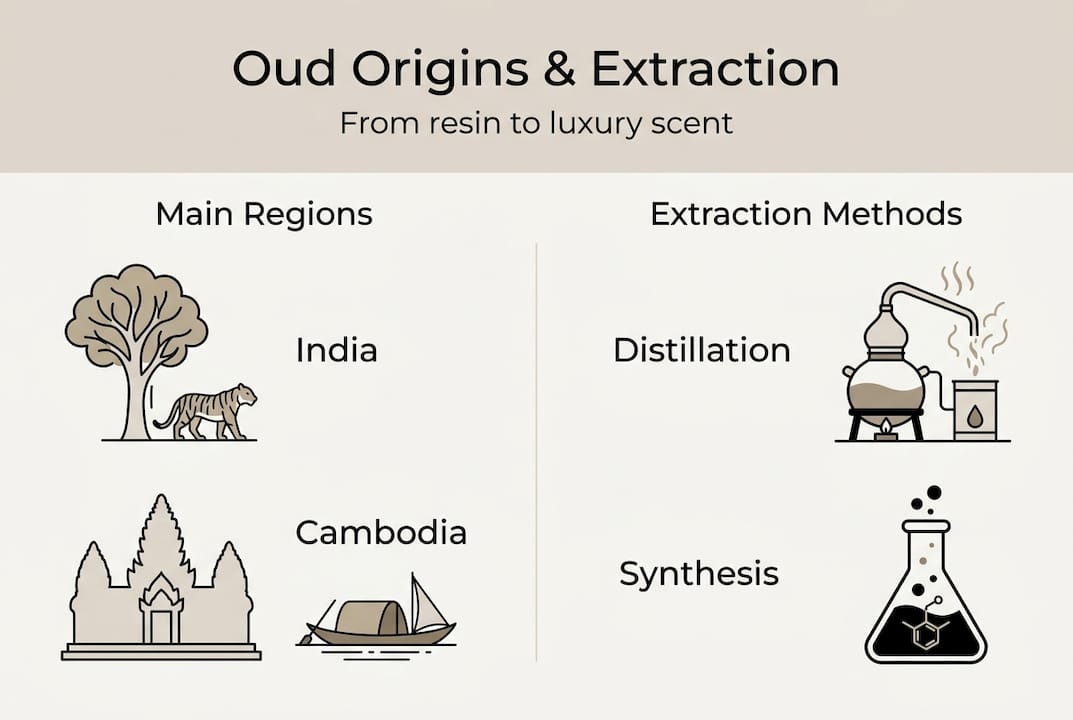
The way oud is extracted from the wood shapes everything about the final fragrance. Three main methods are used in the industry, and each produces a noticeably different result.
Hydro-distillation is the traditional approach. Wood chips are soaked in water and then heated, releasing the aromatic compounds slowly over many hours. This method yields a complex, deeply layered aroma but produces very little oil per batch, which drives up cost. Steam distillation is faster and more efficient, producing a cleaner, more balanced scent that works well in modern blends. Supercritical CO2 extraction is the most contemporary technique, offering high purity and yield, though some perfumers argue it sacrifices the raw, earthy nuance that makes oud so compelling.
Synthetic oud molecules, such as Iso E Super or Javanol, are increasingly used in mainstream perfumery. They offer consistency, lower cost, and a more sustainable footprint. However, they rarely replicate the full spectrum of natural oud. When you see examples of oud in modern perfumes, it is worth checking whether the brand uses natural, synthetic, or blended oud to understand what you are actually smelling.
Pro Tip: When comparing oud fragrances, ask whether the oud is natural or synthetic. Natural oud evolves on your skin over hours, while synthetic versions tend to stay more linear. Neither is inferior, but knowing the difference helps you set the right expectations.
| Extraction method | Aroma character | Yield | Relative cost |
|---|---|---|---|
| Hydro-distillation | Rich, complex, animalic | Very low | Highest |
| Steam distillation | Balanced, smooth | Moderate | Medium |
| Supercritical CO2 | Clean, precise | High | Lower |
| Synthetic molecules | Consistent, linear | Very high | Lowest |
The scent profile of oud: Interpreting its depth and diversity
Asking "what does oud smell like?" is a bit like asking what wine tastes like. The answer depends entirely on where it comes from and how it has been handled. That said, certain qualities appear consistently across most oud expressions.
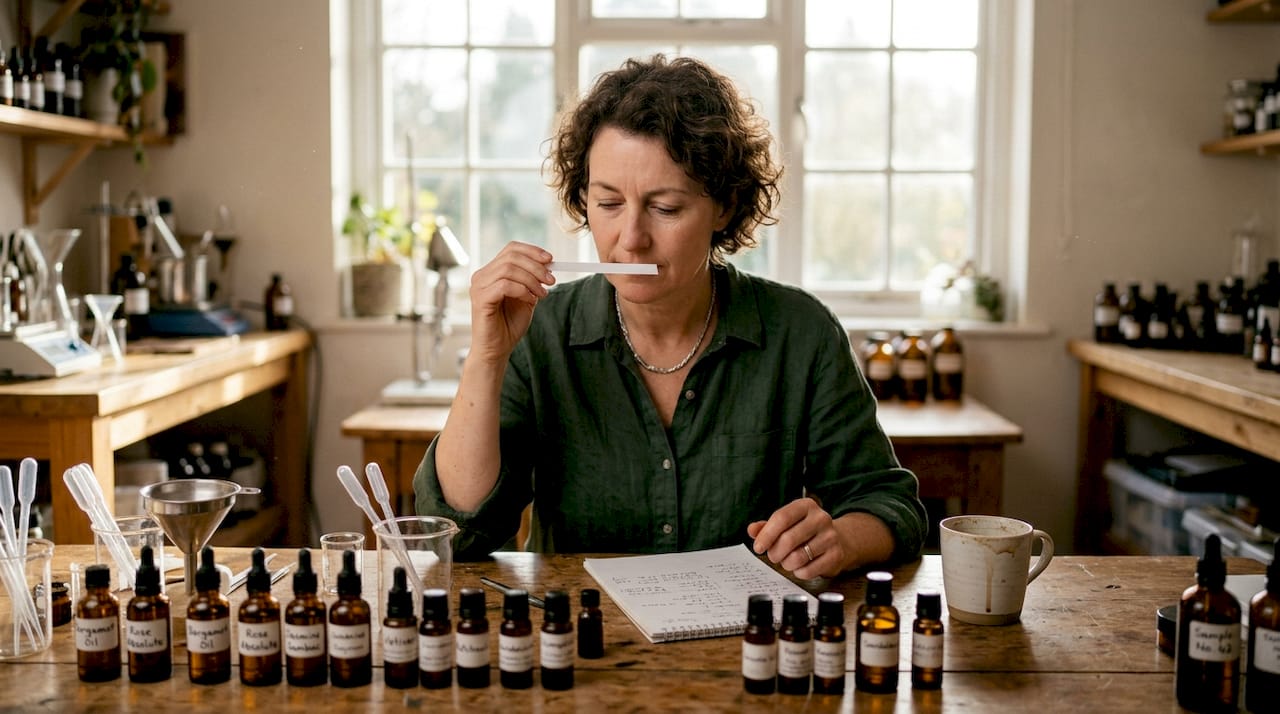
Oud's scent varies considerably by origin: Hindi oud from India tends to be animalic and faintly fecal, which sounds off-putting but adds extraordinary depth in a blend. Cambodi oud from Cambodia is sweeter and more honeyed, making it far more approachable for newcomers. Malaysian and Bangladeshi ouds sit somewhere in between, often leaning woody and smoky.
Common oud scent qualities include:
- Woody and earthy: The baseline character found in almost all natural oud
- Smoky: Particularly present in Indian and Bangladeshi varieties
- Leathery: A dry, almost suede-like quality that adds sophistication
- Animalic: Raw and primal, most pronounced in Hindi oud
- Sweet and honeyed: The signature of Cambodi oud, beloved in Western blends
- Balsamic: A warm, resinous quality that bridges oud with amber and vanilla
Blending transforms oud entirely. Rose softens its animalic edge and creates the iconic "rose oud" combination beloved across the Gulf. Saffron adds a spiced, metallic warmth. Amber and vanilla push oud towards a sweeter, more enveloping character. Understanding how perfume origin changes aroma is essential here, because the same oud note can smell completely different depending on what surrounds it.
"Oud carries the weight of ritual and memory. In the Middle East, it is a symbol of status and ceremony; in the West, it has become the ultimate marker of luxury perfumery."
For new wearers, skin testing is not optional. Oud reacts with your body chemistry in ways that no strip test can predict. Spray a small amount on your wrist, wait 30 minutes, and assess how the fragrance notes develop across the dry-down before committing to a full bottle.
Oud's role in modern perfumery: The foundation of complexity and longevity
In fragrance architecture, notes are divided into top, heart, and base. Top notes are what you smell immediately. Heart notes emerge after a few minutes. Base notes are the foundation, the part that lingers longest and gives a fragrance its lasting character. Oud is the ultimate base note.
As a fixative in perfumery, oud binds other ingredients together and slows their evaporation, which is why oud-based fragrances last so much longer than lighter, citrus-forward scents. The difference in wear time is striking.
| Fragrance | Oud type | Longevity on skin | Longevity on fabric |
|---|---|---|---|
| Arabian Oud Kalemat Black | Natural oud | 10 to 12+ hours | 24+ hours |
| Tom Ford Oud Wood | Blended oud | 6 to 8 hours | 12 to 16 hours |
| Lattafa Raghba Wood Intense | Synthetic oud | 10 to 12 hours | 18 to 24 hours |
Sillage, the trail a fragrance leaves in the air, is also dramatically enhanced by oud. A well-constructed oud fragrance announces your presence without being aggressive, which is why it is so closely associated with confidence and occasion dressing.
For those building a fragrance wardrobe, consider Midnight Oud as a starting point. It balances oud's intensity with softer accords, making it wearable across seasons. If you want to understand how oud affects wear time in practice, comparing a pure oud oil with a blended eau de parfum is one of the most instructive experiments you can do.
Pro Tip: Apply oud-based fragrances to pulse points such as the wrists, neck, and inner elbows. The warmth of these areas activates the resinous base notes and helps the scent evolve naturally throughout the day.
Here is a practical approach for building your oud wardrobe:
- Start with a modern, lighter oud blend to calibrate your nose
- Move to a rose oud or saffron oud to experience classic Middle Eastern combinations
- Try a pure or near-pure oud oil to understand the raw material
- Experiment with layering oud over a clean musk or floral base
- Identify your preferred origin style (Cambodi for sweetness, Hindi for depth)
Classic and modern oud expressions: Timeless tradition meets new trends
Traditional oud fragrances are unapologetically bold. Think rich rose oud combinations, heavy saffron and amber bases, and a presence that fills a room. These are the classic heavy oud blends that have defined Gulf perfumery for generations, worn as a statement of opulence and cultural identity.
Modern oud is a different conversation. Western perfumers have spent the last two decades finding ways to make oud accessible without stripping it of its soul. Lighter floral oud blends pair the resin with iris, peony, or white tea. Citrus oud combinations use bergamot or yuzu to lift the heaviness. Musk-forward ouds create a skin-close, intimate effect rather than a bold projection.
For those new to oud, consider these entry points:
- Floral oud: Rose or peony with a light oud base, approachable and elegant
- Citrus oud: Fresh top notes that gradually reveal a warm oud heart
- Woody oud: Sandalwood or cedarwood blended with oud for a grounded, earthy effect
- Sweet oud: Vanilla, tonka bean, or amber paired with Cambodi oud for a dessert-like warmth
Éclat de Rose is a beautiful example of how rose and oud can coexist in a fragrance that feels both timeless and contemporary. If you are unsure where to begin, sampling oud blends before committing to a full bottle is always the wisest approach. You can also explore the full range of men's oud fragrances to see how the note translates across different concentration levels and styles.
"The best way to understand oud is to wear it. No description, however detailed, replaces the experience of watching it evolve on your own skin over the course of a day."
Discover premium oud fragrances with Amoureé Parfums
Now that you understand what makes oud so extraordinary, the most rewarding next step is to experience it for yourself. Reading about animalic depth, honeyed sweetness, and resinous longevity only takes you so far. The real education happens when you wear it.
At Amoureé Parfums, we have curated a selection of oud-rich fragrances designed to suit every level of familiarity with this remarkable note. Whether you are drawn to the bold, traditional expressions favoured across the Gulf or the lighter, modern interpretations that have captured Western audiences, there is something here for you. Browse our women's oud perfumes and men's oud scents to find your match, or try oud samples to explore the full spectrum before choosing your signature scent.
Frequently asked questions
Why is oud so expensive and rare?
Oud forms only in Aquilaria trees that have been infected by a specific fungus, and fewer than 7% of trees ever produce usable resin, making it one of the scarcest natural fragrance materials on earth. The global market is valued at around $6 billion annually, reflecting both its rarity and its cultural importance.
What does oud actually smell like?
Oud's character shifts dramatically depending on its origin: Hindi oud is animalic, Cambodi oud is sweet and honeyed, while others lean woody or smoky. Blending with rose, saffron, or amber further transforms its impression.
How long does oud last in perfume?
Oud is a powerful fixative, and quality oud fragrances typically last between 8 and 24 hours. Arabian Oud Kalemat Black lasts 10 to 12 hours on skin and over 24 hours on fabric, which illustrates just how tenacious this note can be.
How should I wear oud if I am new to it?
Experts recommend that newcomers start with lighter oud blends, test on skin rather than paper, and layer sparingly until you understand how the note interacts with your own body chemistry. A modern floral or citrus oud is an ideal starting point.