Making a lasting impression through scent is harder than it sounds. With thousands of perfumes on the market, finding something that feels genuinely yours can feel overwhelming. Fragrance layering, the practice of wearing two or more scents together, has quietly become one of the most powerful tools for creating a signature that no single bottle can replicate. In this guide, we share the techniques, frameworks, and real-world experiments that will help you build combinations that are complex, personal, and unmistakably you.
Table of Contents
- Understanding fragrance layering: the basics and benefits
- Criteria for successful layering: how to choose and combine scents
- Popular layering combinations and real-world experiments
- Advanced fragrance layering: seasonal, genderless, and playful approaches
- Common mistakes and troubleshooting your scent layers
- A nuanced approach to fragrance layering: experience beyond the formula
- Explore endless combinations with Amoureé Parfums
- Frequently asked questions
Key Takeaways
| Point | Details |
|---|---|
| Layer for unique scent | Mixing perfumes lets you create a one-of-a-kind, personalised fragrance statement. |
| Moisturised skin boosts longevity | Applying to moisturised skin can make your layered scent last twice as long. |
| No fixed formulas | Experimenting and adjusting is vital as there are no universal layering rules. |
| Context matters | Choose your combinations based on season, occasion, and your personal mood. |
Understanding fragrance layering: the basics and benefits
Fragrance layering simply means applying more than one perfume to your skin, either simultaneously or in sequence, to create a blended scent that is greater than the sum of its parts. It is not a new concept. Perfumers have long understood that the most compelling scents are built from contrasting and complementary elements. What has changed is that enthusiasts now have access to the knowledge and the variety of products to do this themselves.
The benefits go well beyond novelty. Layering can:
- Extend longevity: A heavier base note fragrance worn beneath a lighter one anchors the overall scent and slows its fade.
- Increase sillage: The trail a scent leaves behind becomes richer and more dimensional when multiple accords interact.
- Create personalisation: No two people will wear the same combination in the same way, which is the entire point.
- Correct imbalances: If a perfume you love is too sharp or too sweet on its own, a complementary layer can soften or deepen it.
One misconception worth addressing immediately: layering is not about drowning yourself in fragrance. It is about balance. A common mistake is assuming more product equals more impact. It does not. Restraint is part of the craft.
"Fragrance layering is less about following rules and more about developing a personal vocabulary of scent."
Skin condition matters enormously here. Moisturised skin doubles fragrance longevity compared to dry skin, which is why applying an unscented body lotion before your perfumes is one of the simplest upgrades you can make. Understanding how your skin interacts with fragrance is part of the broader picture covered in our guide to scent secrets.
Criteria for successful layering: how to choose and combine scents
Choosing what to layer is where most people get stuck. The good news is that there is a logical framework, even if the final call is always personal. Successful combinations require personal testing and a genuine awareness of scent profiles rather than rigid formulas.
Here is a practical process to follow:
- Start with your anchor scent. This is typically a richer, warmer fragrance with strong base notes such as oud, sandalwood, or musk. It will form the foundation.
- Choose a complementary top layer. Look for a fragrance that shares at least one note family with your anchor. A woody base pairs beautifully with a spiced or smoky top layer.
- Check the note structure. Understanding fragrance notes explained will help you predict how scents will evolve together over time.
- Test on skin, not paper. Blotters tell you almost nothing about how a combination will behave on your body. Your skin chemistry transforms every fragrance.
- Wear it for a full day. First impressions are misleading. The real test is how the combination smells three to six hours after application.
When it comes to fragrance families, some pairings are reliably harmonious. Florals work well with musks and light woods. Citrus notes lift heavier orientals without clashing. Gourmand scents (think vanilla, caramel) blend naturally with warm spice. Knowing how to identify quality fragrances also helps, because well-constructed perfumes layer more predictably than cheaper, synthetic-heavy alternatives.
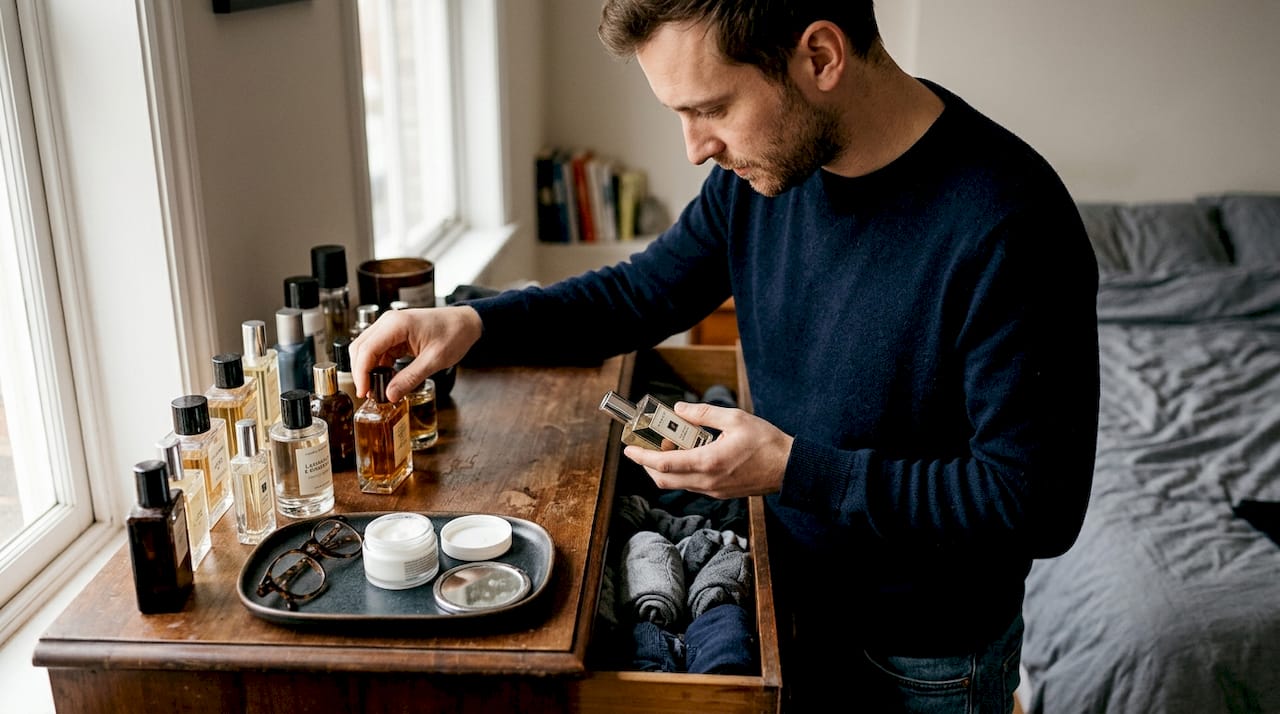
Pro Tip: Apply your base note fragrance first and allow it to settle for two to three minutes before adding the second scent. This prevents the top notes of the first fragrance from being immediately overwhelmed.
Popular layering combinations and real-world experiments
Theory is useful, but examples are better. Here are three classic and trending combinations that enthusiasts consistently return to, along with what makes each one work.
| Combination | Key notes | Best worn | Effect |
|---|---|---|---|
| Rose + oud | Floral, resinous, woody | Evening | Opulent, long-lasting, dramatic |
| Citrus + vetiver | Fresh, earthy, green | Daytime | Clean but grounded, professional |
| Vanilla + amber | Sweet, warm, resinous | Autumn/winter | Cosy, skin-close, intimate |
The rose and oud pairing is arguably the most celebrated in layering culture. Rose softens oud's intensity while oud gives the floral a backbone it rarely has on its own. The citrus and vetiver combination is a favourite for office wear: fresh enough to feel clean, earthy enough to feel considered. For colder months, vanilla and amber create a warmth that feels almost like a second skin.
Real-world testing backs this up. Testing 50+ combinations over eight months consistently showed that experimentation, not formula-following, produced the most satisfying results. Skin type played a significant role too. On drier skin, heavier base notes dominated faster, while oilier skin preserved the balance between layers for longer.
- For daytime wear, prioritise lighter, fresher top layers over a clean musk base.
- For evening wear, lean into depth: woody perfume examples paired with florals or orientals create the most memorable impressions.
- Explore alternative layering combos if you want to move beyond the classics.
Advanced fragrance layering: seasonal, genderless, and playful approaches
Once you are comfortable with the basics, the real creativity begins. Seasonal layering is one of the most effective ways to keep your scent wardrobe feeling fresh and relevant throughout the year.
| Season | Recommended approach | Example pairing |
|---|---|---|
| Spring | Light florals over green or aquatic bases | Peony + white musk |
| Summer | Citrus or aquatic over clean musks | Bergamot + sea salt |
| Autumn | Spice or wood over warm amber | Cardamom + sandalwood |
| Winter | Rich orientals over heavy resins | Oud + benzoin |
A guide to scent by season can help you understand why temperature and humidity affect how fragrance molecules behave on skin, which in turn shapes your layering choices.
Genderless layering is another frontier worth exploring. Traditionally masculine notes such as leather, tobacco, and cedar can add extraordinary depth when layered beneath a feminine floral or fruity fragrance. The contrast creates tension that is genuinely compelling. This is not a trend. It is a recognition that scent has no gender, only character.
Pro Tip: Keep a small notebook or use your phone to record every combination you try, along with the order of application, the ratio, and how it evolved throughout the day. This record becomes invaluable over time.
For playful approaches, consider layering for mood rather than occasion. Emotional scent layering is a real phenomenon. Scientific frameworks can help predict outcomes, but real results vary considerably by context, skin, and even emotional state.
- Choose a scent that anchors your mood (calm, energised, sensual).
- Add a layer that amplifies or contrasts that feeling.
- Adjust the ratio based on how dominant you want each element to be.
Common mistakes and troubleshooting your scent layers
Even experienced enthusiasts hit walls. Knowing how to diagnose and fix a failing combination is as important as knowing how to build a good one.
The most common issues include:
- Muddled notes: When two fragrances compete rather than complement, the result smells confused and flat. Usually caused by choosing scents from incompatible families.
- Overpowering combinations: One fragrance drowns the other. Often a result of applying too much of the dominant scent, or layering two heavy orientals.
- Rapid fade: The combination disappears within an hour. Typically a skin hydration issue or a mismatch between fragrance concentrations.
- Unexpected sourness: Some combinations turn acidic on certain skin types due to pH interactions.
"There are no fixed rules that guarantee perfect layering; continual testing and adjusting are the only reliable method."
As ongoing testing confirms, no formula guarantees success every time. The perfumer's layering insights shared by professionals reinforce this: even trained noses rely on iteration.
Pro Tip: If a combination is not working, wash the area with unscented soap, moisturise, and start again with a different order or ratio. Changing which fragrance goes on first can completely transform the result.
When climate shifts, your layers need to shift too. Humidity amplifies projection, so reduce the number of sprays in summer. Cold weather suppresses sillage, so you may need to layer more generously in winter. Adjusting for your environment is not optional. It is part of the craft.
A nuanced approach to fragrance layering: experience beyond the formula
Here is something the internet's layering guides rarely admit: most of the "perfect combinations" you read about were perfect for one person, on one day, in one climate. They may do nothing for you.
After eight months of experimentation, the clearest lesson is that a scientific framework helps you start, but it cannot finish the job for you. Your skin, your body chemistry, your lifestyle, and even your emotional state on a given day all shape the outcome. No algorithm accounts for that.
The enthusiasts who develop the most compelling personal scents are not the ones who follow the most rules. They are the ones who keep records, stay curious, and trust their own nose above any recommendation. Scent is a story, and yours will not read the same as anyone else's. That is not a problem to solve. It is the whole point.
If you are looking for inspiration to start or expand your layering journey, exploring gifting fragrance experiences can also reveal combinations you might never have considered on your own.
Explore endless combinations with Amoureé Parfums
Ready to put these techniques into practice? The most important ingredient is having the right range of fragrances to experiment with.
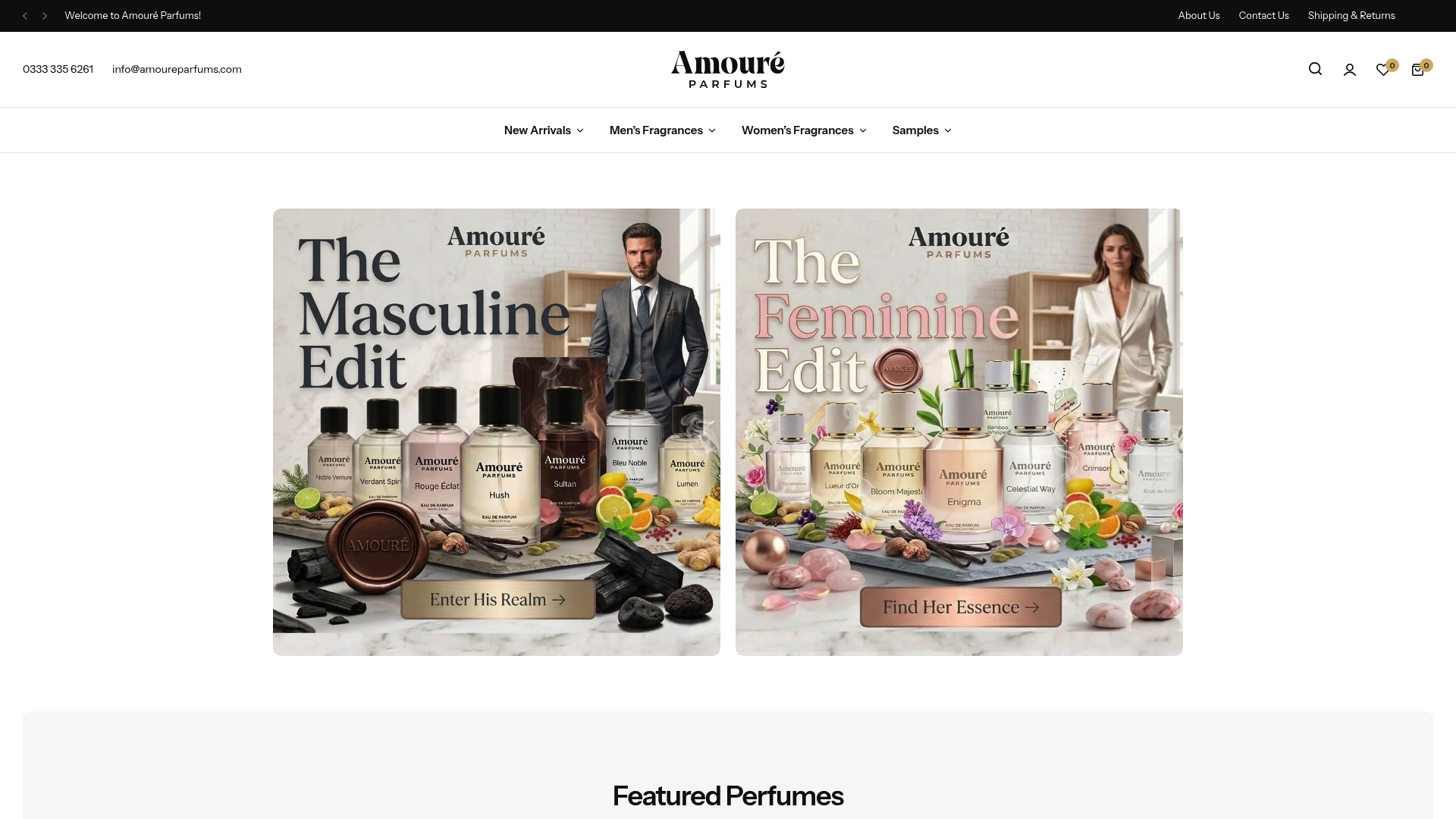
At Amoureé Parfums, you will find a carefully curated fragrances collection spanning florals, woods, orientals, and fresh accords, giving you everything you need to build layering combinations that are entirely your own. Not sure where to begin? Our sample sets let you trial multiple scents before committing, which is exactly how the best layering discoveries happen. Every great signature scent starts with curiosity and the right options in front of you.
Frequently asked questions
What is the most important rule of fragrance layering?
Layering works best when lighter, fresher scents are applied first, with deeper or richer ones added on top to anchor the blend and create lasting balance.
Does skin type affect how layered scents last?
Yes, significantly. Moisturised skin doubles how long fragrance lasts compared to dry skin, so applying an unscented lotion beforehand makes a measurable difference.
Can you layer perfumes from different brands?
Absolutely. Layering across brands is not only common but often produces the most unique and personalised results, since each house uses different accords and concentrations.
How many fragrances should you layer at once?
For most people, two is the ideal number. Personal testing suggests that three can work well when you pay careful attention to note compatibility and application order.
What if a combination doesn't work on my skin?
Wash the area with unscented soap, moisturise, and start fresh. Try changing the order of application or adjusting the ratio of each fragrance until the balance feels right.