TL;DR:
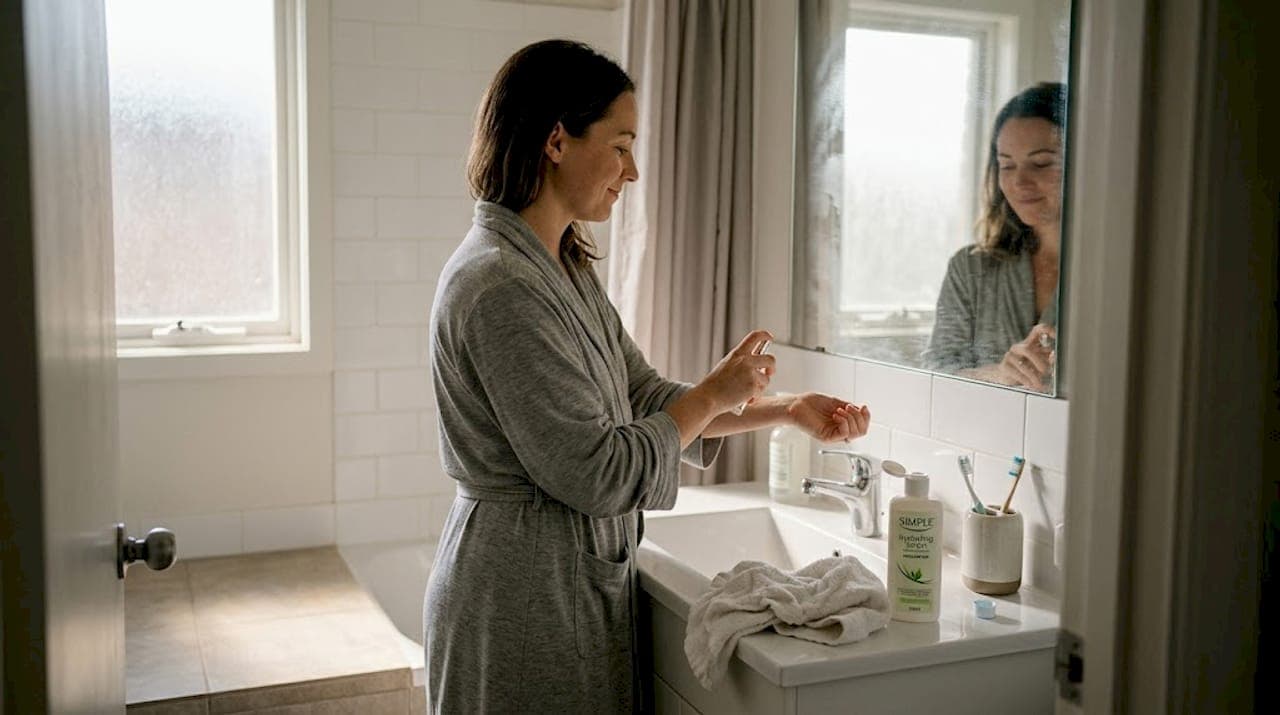
- Proper fragrance application involves moisturizing skin, targeting pulse points, and avoiding rubbing after spraying. Using the right technique and concentration maximizes scent longevity and projection. Consistent, intentional wear builds a memorable signature scent over time.
You spray your favourite perfume, step out the door, and by lunchtime it has all but vanished. That experience is far more common than you might think, and it nearly always comes down to technique rather than the quality of the fragrance itself. The good news is that a handful of expert-backed habits can transform how long your scent stays with you and how powerfully it projects throughout the day. This guide covers everything from skin preparation and pulse point targeting to spray technique and concentration choices, giving fragrance enthusiasts and fashion-conscious wearers the practical tools to build a truly memorable signature scent.
Table of Contents
- Prepping your canvas: Moisturisation and skin care essentials
- Pulse points unlocked: Where to spray for maximum impact
- Technique matters: How spraying and rubbing affect your signature
- How much is just right? Number of sprays and concentration explained
- A fragrance expert's truth: Signature scents are made, not found
- Find your perfect fragrance match
- Frequently asked questions
Key Takeaways
| Point | Details |
|---|---|
| Hydrate before application | Moisturised skin retains scent longer, so always prep with a fragrance-free lotion. |
| Target pulse points | Spraying on warm spots like wrists and neck ensures better diffusion and lasting impact. |
| Perfect your spraying technique | Don’t rub; allow your fragrance to settle and reveal its full notes naturally. |
| Tailor spray count to formula | Use 2-4 sprays based on your scent’s concentration for the ideal balance. |
| Signature scents need routine | Consistent, proper application is key to developing a memorable olfactory presence. |
Prepping your canvas: Moisturisation and skin care essentials
Think of your skin as a sponge. A dry sponge lets liquid slip right off, but a damp one holds it deep inside. Skin works in much the same way when it comes to fragrance, and this single insight is the foundation of every expert application routine.
Hydrated skin holds fragrance molecules close to the surface, allowing the top, middle, and base notes to unfold at their natural pace. Dry skin, on the other hand, absorbs the alcohol carrier almost immediately, pulling the scent away before it has any chance to develop properly. Moisturising before applying perfume is one of the most consistently recommended tips for enhancing longevity, and it genuinely makes a measurable difference.
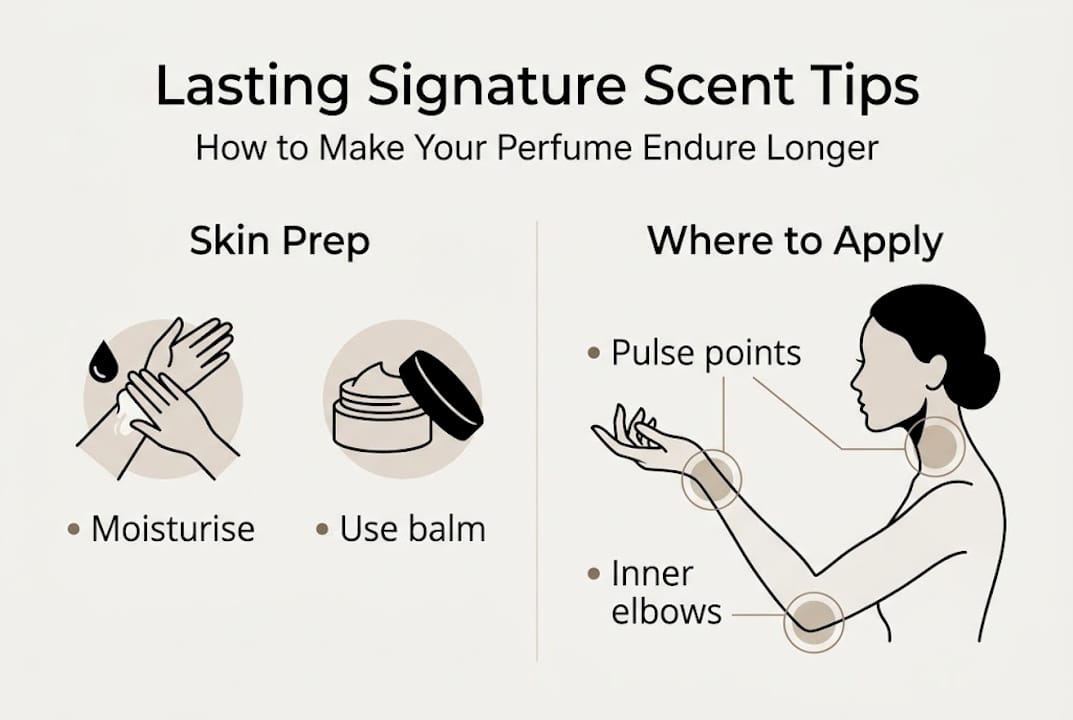
The type of moisturiser you choose matters just as much as using one at all. Scented body lotions can clash with your chosen fragrance, creating an unpleasant accord that neither product intended. The safest approach involves using unscented moisturiser or a lightweight, unscented body oil applied five to ten minutes before you spritz.
Key moisturiser recommendations by skin type:
- Dry skin: Rich, unscented body butter or almond oil applied generously to pulse points
- Oily skin: A lightweight, oil-free unscented gel moisturiser to avoid clogging pores
- Combination skin: Water-based lotion on oily zones, a richer cream on drier patches
- Sensitive skin: Fragrance-free formulas with minimal ingredients to avoid reactions
| Skin type | Moisturiser choice | Impact on longevity |
|---|---|---|
| Dry | Rich body butter or carrier oil | High improvement |
| Oily | Lightweight gel | Moderate improvement |
| Normal | Standard unscented lotion | Good improvement |
| Combination | Mixed approach per zone | Good improvement |
One common mistake is applying perfume over dry, flaky patches where the skin barrier is compromised. Fragrance simply will not anchor properly in those areas. Another mistake is skipping moisturiser on cooler mornings, assuming you do not need it. Your skin loses moisture constantly regardless of temperature, so the habit of prolonging fragrance wear through consistent hydration should be a year-round ritual.
Pro Tip: Apply a tiny amount of petroleum jelly to your pulse points before spraying. This creates an occlusive layer that locks the fragrance in place and genuinely extends how long the scent projects.
Pulse points unlocked: Where to spray for maximum impact
Pulse points are areas of the body where blood vessels sit close to the skin's surface, generating consistent warmth. That gentle, natural heat acts like a slow-release diffuser, gradually lifting the fragrance molecules into the air around you and creating the soft trail, known as sillage, that others notice as you move through a room.
Applying fragrance to pulse points is not simply tradition. It is rooted in the way scent chemistry works. Warmth accelerates the evaporation of fragrance compounds at a controlled rate, which means the notes emerge in layers rather than all at once.
Top pulse points for fragrance application:
- Inner wrists (classic and accessible)
- Base of the throat and sides of the neck
- Behind the ears (perfect for intimate projection)
- Inner elbows (great for floral and gourmand scents)
- Behind the knees (rises upward as body heat builds)
- Collarbone area (ideal for formal occasions)
Applying to pulse points on skin such as the wrists, neck, and inner elbows produces noticeably better diffusion than spraying on clothing. The warmth from your body continuously regenerates the scent rather than letting it sit static.
| Occasion | Recommended pulse points | Projection style |
|---|---|---|
| Office/daily wear | Wrists, collarbone | Subtle, close-range |
| Evening event | Neck, behind ears, inner elbows | Medium, social |
| Romantic setting | Behind knees, throat, wrists | Intimate, lingering |
| Outdoor/active | Inner elbows, wrists | Fresh, light |
One thing worth knowing is how scent develops on skin differently depending on the area. Warmer, more enclosed spots like the inner elbow tend to intensify heavier base notes such as musks and woods, while cooler, open spots like the wrists allow lighter citrus top notes to shine initially before transitioning.
More sprays does not equal more impact. Crowding multiple pulse points with heavy application leads to a cloying effect that overwhelms rather than impresses. Two or three well-chosen points, applied thoughtfully, will always outperform a full-body spray.
Technique matters: How spraying and rubbing affect your signature
You have prepared your skin, you have chosen your pulse points. Now the way you actually apply the fragrance can either preserve all that effort or quietly undo it.
The most widespread mistake in fragrance application is rubbing the wrists together after spraying. It feels instinctive, almost ceremonial. But rubbing wrists after application creates friction that literally breaks apart the delicate top note molecules in your perfume, causing them to evaporate far faster than intended. What you lose is not just longevity but the carefully composed opening of your fragrance.
"Friction generated by rubbing wrists together accelerates evaporation and disrupts the fragrance's intended molecular development, shortening overall wear time significantly."
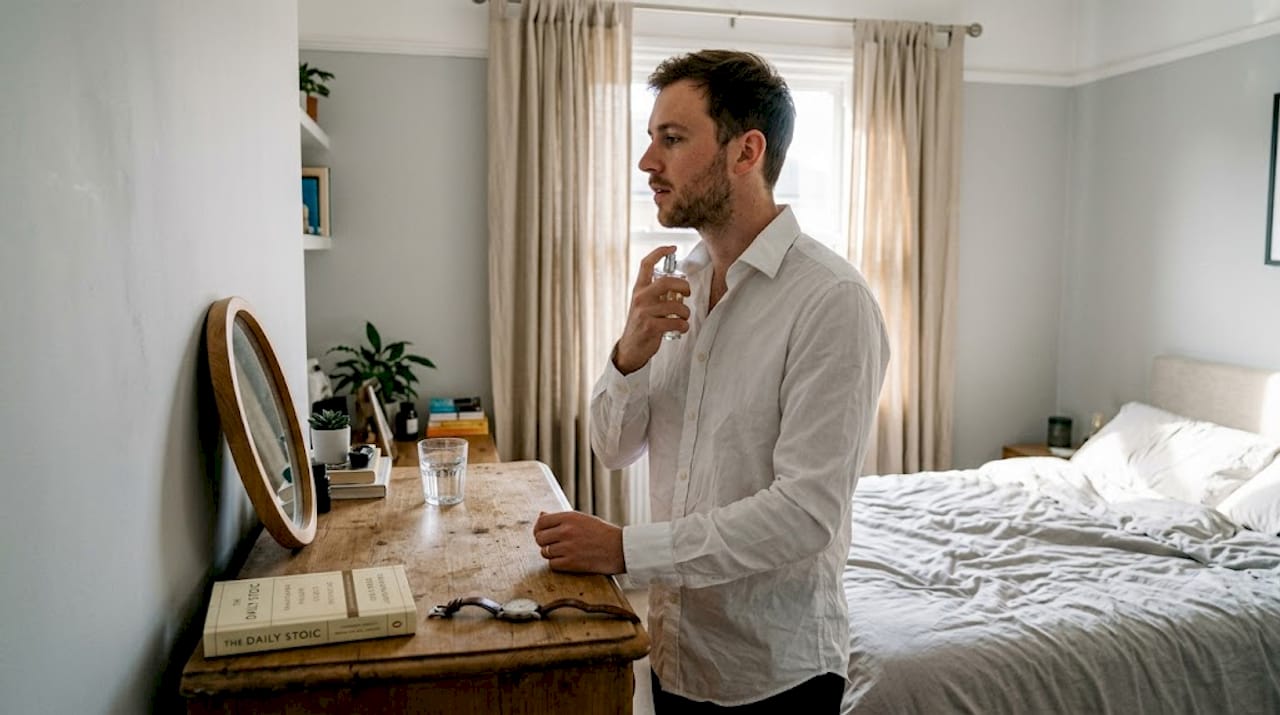
The correct approach is simply to spray and let the fragrance settle on its own. Allow three to five seconds for the alcohol to disperse and resist the urge to touch the area at all. For how perfume structures react on skin, patience in these first moments is genuinely important.
Spray technique essentials:
- Hold the bottle 10 to 15 centimetres from the skin for an even mist
- Spray in a single, swift motion rather than pumping repeatedly in one spot
- Aim perpendicular to the skin surface for the most even coverage
- Never spray directly into the eyes or on broken skin
- Allow each application area to dry naturally before getting dressed
As for the cloud method, where you spray into the air and walk through the mist, chemist-backed advice consistently shows it wastes far more product than it delivers in longevity. The majority of the fragrance falls to the floor or dissipates into the room rather than landing on warm skin where it can anchor and develop.
Pro Tip: For a midday refresh without over-layering, carry a small travel atomiser and apply just one spray to the inner wrist. Avoid adding to the neck or ears where the original application may still be quietly developing in the base notes.
How much is just right? Number of sprays and concentration explained
Fragrance concentration directly shapes how many sprays you actually need. Getting this balance right means you never waste product and never arrive somewhere smelling like you bathed in a bottle.
Using 2 to 3 sprays for EDP formulations is widely recommended for balanced wear without over-application. Eau de toilette, being lighter, typically calls for three to four sprays to achieve a similar effect. Pure parfum is so concentrated that one or two sprays is genuinely enough.
How to choose your spray count:
- Check the concentration on the bottle (EDT, EDP, or Parfum)
- Start conservatively and assess projection after five minutes
- Add one more spray only if the sillage feels genuinely faint
- Adjust upward in colder weather, downward in heat
- Never exceed six total sprays regardless of concentration
| Concentration | Fragrance oil % | Spray count | Wear duration |
|---|---|---|---|
| Eau de cologne (EDC) | 2 to 4% | 4 to 6 sprays | 2 to 3 hours |
| Eau de toilette (EDT) | 5 to 15% | 3 to 4 sprays | 4 to 6 hours |
| Eau de parfum (EDP) | 15 to 20% | 2 to 3 sprays | 6 to 10 hours |
| Parfum/extrait | 20 to 30% | 1 to 2 sprays | 8 to 12+ hours |
The EDT vs. EDP differences go beyond simple concentration. EDTs tend to project more openly in the first hour before softening, making them excellent for casual daytime wear. EDPs linger closer to the skin and tend to suit evening occasions or colder months beautifully.
Perfume longevity on your skin type also shifts these benchmarks. Oily skin holds fragrance longer than dry skin across all concentration types, which is why the same perfume can seem to last all day on one person and disappear within two hours on another. Weather plays a role too. Heat intensifies projection in warm months, while cold air suppresses diffusion and may call for a heavier concentration or one additional spray.
A fragrance expert's truth: Signature scents are made, not found
Here is something most fragrance content will not tell you directly: the people who smell truly unforgettable are rarely those who own the most bottles. They are the ones who understand exactly how to wear the two or three they have.
There is a common obsession in fragrance culture around acquiring the newest release, the rarest niche house, or the most talked-about bottle of the season. That pursuit can be genuinely enjoyable. But it rarely produces a memorable scent identity. A signature comes from consistency, from wearing a fragrance so regularly that it begins to interact predictably with your skin chemistry and build associations in the minds of people around you.
The technique you apply matters far more than the prestige of the label. Someone who moisturises first, targets the right pulse points, and respects their EDP's concentration will outperform someone wearing a luxury parfum carelessly every single time. Choosing the perfect scent is only the beginning. Wearing it with intention is what leaves a lasting impression.
Refine how you apply before you reach for the next bottle. The ritual is the signature.
Find your perfect fragrance match
Now that you have the techniques, the next step is making sure the fragrance itself is worthy of the effort. At Amoureé Parfums, every scent in the full fragrance collection has been curated to reward expert application with rich development, impressive sillage, and lasting depth.
Whether you are searching for something bold and woody for evening wear or light and floral for everyday moments, the women's fragrance selection offers a beautifully edited range to explore. Ready to find the scent that becomes truly yours? Browse the collection and let the notes guide you toward your next signature.
Frequently asked questions
How do I make my perfume last longer on my skin?
Moisturising before application with an unscented lotion and spraying directly onto pulse points are two of the most effective and consistently recommended techniques for extending fragrance longevity.
Can I spray perfume on my clothes instead of my skin?
Perfume needs skin contact to react with your natural warmth for the best diffusion and development, though a light mist over fabric-safe clothing can supplement rather than replace direct skin application.
Is the cloud method effective for fragrance application?
The cloud method wastes product and delivers far less longevity than spraying directly onto warm pulse points, as most of the fragrance disperses into the air before it ever reaches the skin.
How many sprays should I use for eau de parfum?
Two to three sprays are ideal for EDP concentration, providing balanced projection without risk of overpowering those around you.
Why should I avoid rubbing my wrists after spraying perfume?
Rubbing wrists creates friction that breaks down the fragrance's delicate top note molecules and accelerates evaporation, reducing the overall wear time of your perfume noticeably.