TL;DR:
- Sampling with authentic, properly sized samples prevents fragrance disappointment and helps find your signature scent.
- Use proper testing techniques, including neutral environment, limited scents, and tracking evolution over hours.
- Buy samples from trusted sources, check for authenticity markers like batch codes, and avoid counterfeits.
Buying a full-size fragrance online without testing it first is one of the most common disappointments in beauty shopping. You fall for the description, love the bottle, place the order, and then the scent simply does not suit you. It is a frustrating and costly mistake that happens to even experienced fragrance lovers. The good news is that sampling solves this problem entirely. This guide walks you through exactly what you need, where to get authentic samples, how to test them like an expert, and how to build a discovery routine that leads you to scents you will genuinely love and wear with confidence.
Table of Contents
- What you need to sample fragrances the right way
- Where to get authentic fragrance samples and avoid counterfeits
- How to sample and test fragrances like an expert
- Maximising your fragrance discovery: selection, cycles, and stylish alternatives
- Why most fragrance sampling advice falls short
- Discover and sample fragrances with Amoureé Parfums
- Frequently asked questions
Key Takeaways
| Point | Details |
|---|---|
| Limit your sessions | Test only 3-5 scents per session to fully experience each fragrance. |
| Source samples wisely | Always buy from trusted retailers or subscription services to avoid fakes. |
| Evaluate at every stage | Assess top, heart, and base notes by wearing the fragrance for several hours. |
| Explore beyond designer | Try alternative and niche brands for unique, stylish scents. |
What you need to sample fragrances the right way
Before you spray a single thing, it pays to be prepared. Sampling fragrances without the right setup is like wine tasting in a kitchen full of garlic. Your environment and your tools shape everything you perceive.
Fragrance samples come in three main formats. Discovery sets are curated collections sold directly by brands or retailers, often including five to ten miniatures. Decants are portions of a full bottle transferred into a smaller vial, usually by specialist sellers. Subscription services send you a new scent each month in a standard vial size. Each format has its place depending on your goals and budget.
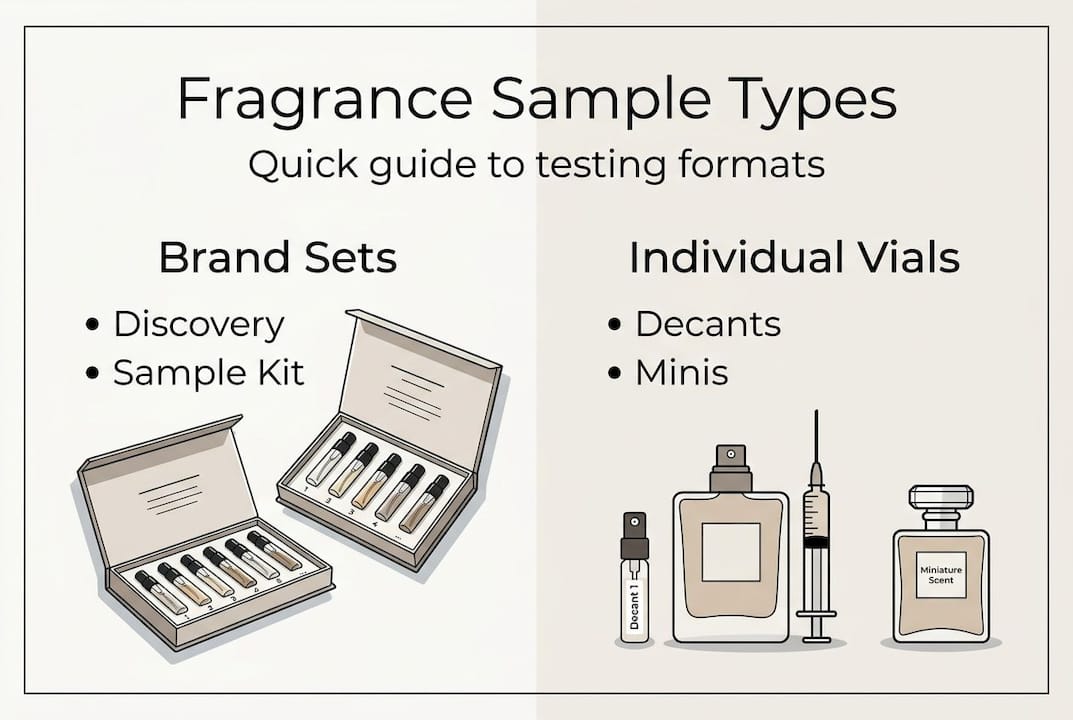
For meaningful testing, aim for at least 0.5ml per sample. Tiny spray cards give you almost nothing to work with. An 8ml vial is ideal because it gives you enough liquid to wear the fragrance across several days and different conditions, which is the only way to truly know if a scent suits you.
Essential tools for a proper sampling session:
- Blotter strips for initial impressions before applying to skin
- Coffee beans to reset your sense of smell between scents
- A clean atomiser if decanting from vials without a spray mechanism
- Unscented moisturiser to prep dry skin, which holds fragrance better
- A notebook or app to record your impressions at each stage
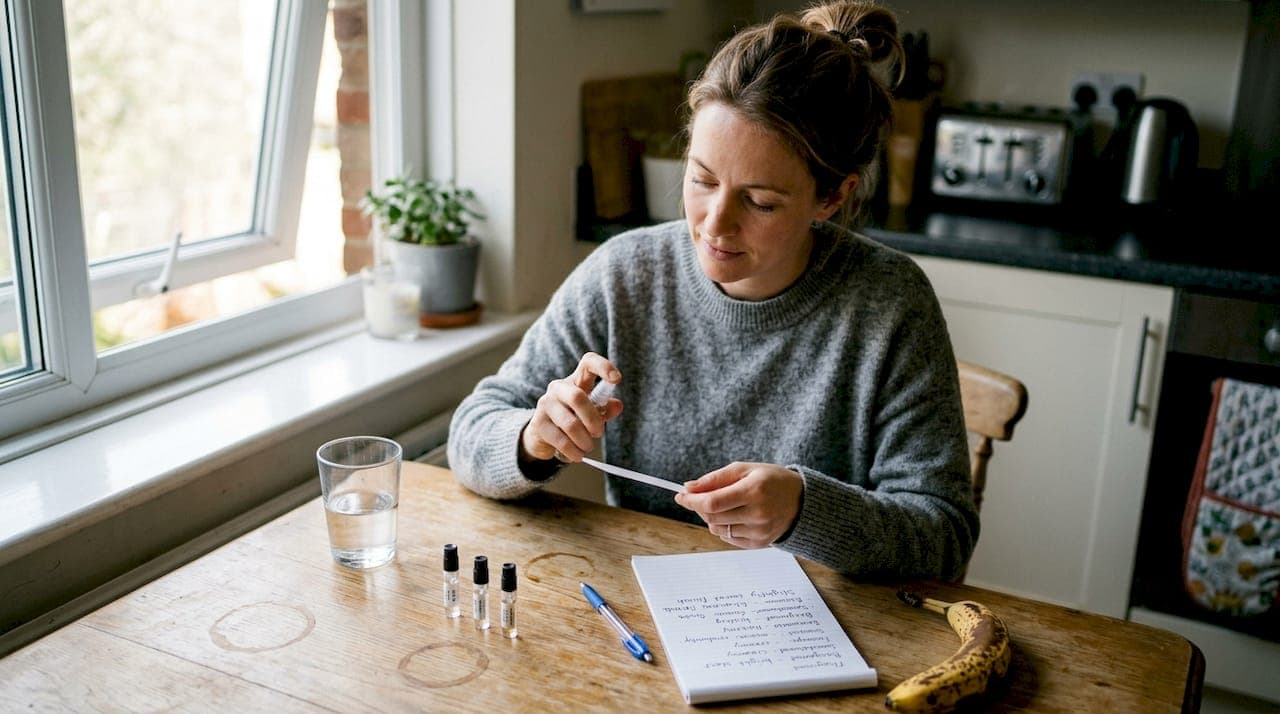
The core methodology for sampling fragrances involves preparing a neutral environment, limiting yourself to three to five scents per session, applying to pulse points without rubbing, and evaluating the scent as it evolves over several hours. This is not overcautious advice. It is the difference between a useful session and a confusing one.
Pro Tip: Avoid testing fragrances straight after eating spicy food, wearing strong hand cream, or being in a smoky room. All of these distort your perception and make fair comparison almost impossible.
For more guidance before you begin, these fragrance shopping tips and advice on how to buy perfume online are worth reading alongside this guide.
| Sample type | Typical size | Best for |
|---|---|---|
| Discovery set | 1.5ml to 10ml | Exploring a brand's range |
| Decant | 5ml to 30ml | Testing a specific scent in depth |
| Subscription vial | 8ml | Monthly variety and discovery |
Where to get authentic fragrance samples and avoid counterfeits
Once you have gathered your tools, it is vital to make sure your samples are the real thing. The counterfeit fragrance market is larger than most people realise, and fake samples can smell nothing like the genuine article.
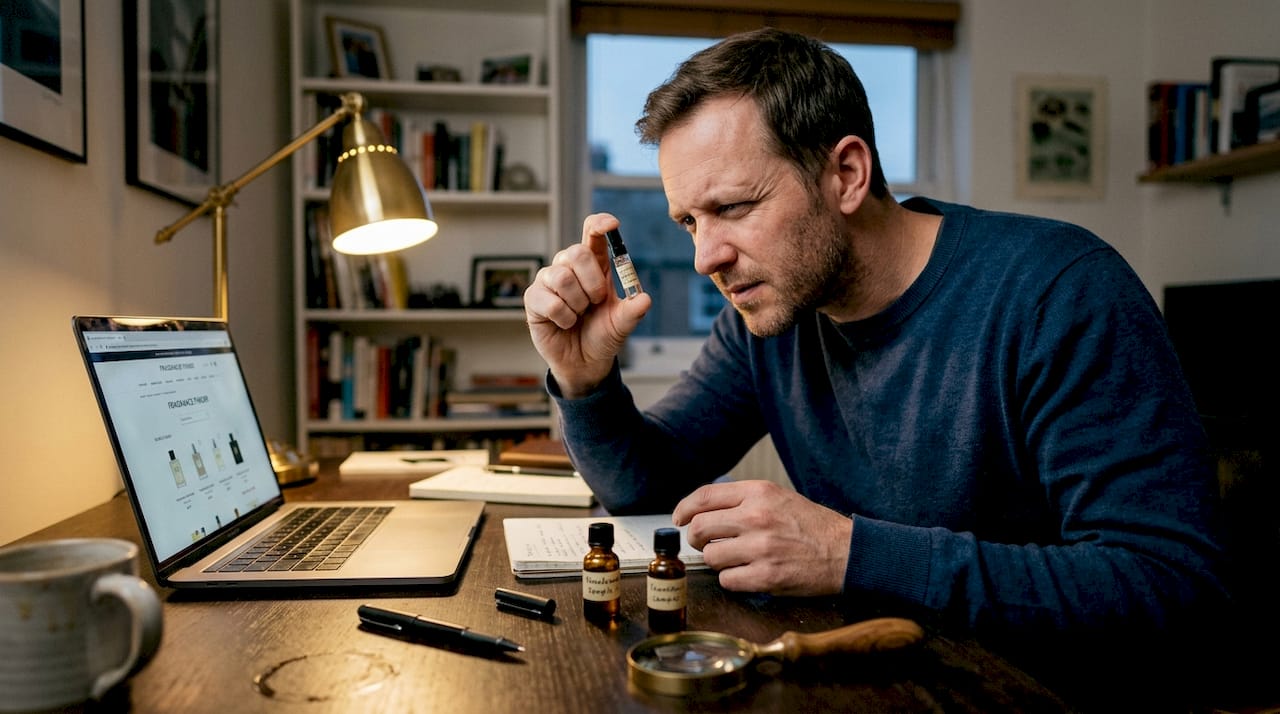
The safest sources for fragrance samples are official brand websites, established beauty retailers such as Sephora and Boots, and reputable subscription services. Purchasing discovery sets, individual decants, or subscriptions from authorised retailers is the most reliable way to avoid fakes and ensure you are smelling the genuine formulation.
Signs that a sample may be counterfeit:
- Unusually low price compared to market value
- Blurry or uneven printing on the label
- Weak or off-putting scent that fades within minutes
- No batch code on the vial or packaging
- Seller with no reviews, no return policy, or vague product descriptions
Batch codes are a particularly useful tool. Every legitimate fragrance has a batch code printed on the box or bottle. You can check these on sites such as checkfresh.com to verify the production date and confirm authenticity. Buying from authorised retailers and checking packaging details, including clear printing, sealed vials, and a fine mist spray, are the most reliable ways to confirm you have the real thing.
"A fake fragrance does not just smell wrong. It can contain unregulated ingredients that irritate skin or trigger reactions. Authenticity is not just about quality. It is about safety."
When buying decants specifically, always choose sellers who use atomisers rather than rollers. Rollers introduce contamination from skin contact and degrade the fragrance faster. A clean atomiser preserves the scent and gives you a more accurate test.
Pro Tip: Search for the seller's name alongside the word "reviews" before purchasing any decant. Fragrance communities on Reddit and dedicated forums are excellent for verifying whether a decant seller is trustworthy.
For more on identifying authentic samples and how to shop fragrances online safely, these resources will help you shop with confidence.
How to sample and test fragrances like an expert
With authentic samples in hand, it is time to put them to the test using a proven expert approach. The way you apply and evaluate a fragrance matters enormously.
Follow these steps for each session:
- Prepare your skin. Apply a small amount of unscented moisturiser to your wrists and inner elbows. Dry skin absorbs fragrance quickly and gives a distorted reading.
- Apply sparingly. One or two sprays on a pulse point is enough. Do not rub. Rubbing breaks down the top notes and changes what you smell.
- Evaluate the top notes. These appear in the first five to fifteen minutes. They are often bright, fresh, or sharp. They are also the most fleeting.
- Wait and revisit. The heart notes emerge after around twenty to thirty minutes. This is the true character of the fragrance.
- Assess the dry-down. After two to four hours, the base notes take over. These are the deepest, most lasting impressions and the ones that linger on your skin and clothing.
- Reset between scents. Smell coffee beans, breathe fresh air, or simply wait before moving to the next sample.
Test intervals of 15 to 20 minutes between scents, with full evaluations at one to two hours and again at four to six hours, give you the clearest picture of how a fragrance performs. Limiting yourself to a maximum of three to five scents per session prevents olfactory fatigue, which is the point at which your nose simply stops distinguishing between smells.
Pro Tip: Test your final shortlist on skin, not just blotters. A scent that smells extraordinary on paper can shift dramatically once it interacts with your body chemistry. This is not a flaw. It is simply how fragrance works.
Understanding why scent changes on skin helps you interpret your results more accurately. And if you want to go deeper into how each layer behaves, a guide to fragrance note types will give you the vocabulary to describe what you are experiencing. When you are ready to place two scents side by side, comparing perfumes systematically makes the decision much easier.
Maximising your fragrance discovery: selection, cycles, and stylish alternatives
Now that you know the steps to sample like a pro, let us look at strategies for broadening your scent horizons and making the most of your exploration.
The smartest approach is to sample across fragrance families rather than sticking to what you already know. Fragrance families include citrus, floral, woody, oriental, aquatic, and green. Choosing one sample from each family in your first cycle gives you a genuine map of your preferences rather than a narrow slice.
Key strategies for building your discovery cycle:
- Select three to five scents per cycle across different families to avoid overlap
- Track your impressions immediately after application, at one hour, and at the end of the day
- Note the occasions each scent feels right for: morning commute, evening out, weekend relaxation
- Revisit your notes before ordering the next cycle to spot patterns in what you love
- Include at least one niche or non-designer option per cycle to discover hidden gems
An 8ml sample lasts approximately one month with daily wear, giving you around 120 sprays to form a thorough opinion. Ordering three to five per cycle across different fragrance families is the most efficient way to discover stylish non-designer options alongside well-known names.
Subscription services offer a convenient way to maintain this rhythm. They vary in price, variety, and reliability, so it is worth comparing before committing.
| Service | Monthly cost | Vial size | Variety |
|---|---|---|---|
| Scentbird | From $16 | 8ml | 500+ scents |
| Scentbox | From $16 | 8ml | 850+ scents |
Both services cover designer and niche options, but Scentbox tends to offer a slightly broader catalogue. The drawback of subscriptions is that you do not always control the exact formulation or batch, so pairing them with direct purchases from trusted retailers gives you the best of both worlds.
For those interested in layering discoveries into something truly personal, fragrance layering opens up a creative dimension that goes well beyond wearing a single scent. And for refining your choices as your knowledge grows, these expert fragrance selection tips will help you shop with increasing precision.
Why most fragrance sampling advice falls short
Most guides tell you the mechanics: apply here, wait this long, smell coffee beans. What they rarely tell you is that the biggest obstacle to finding your signature scent is not technique. It is the tendency to outsource your taste.
Following influencer recommendations or chasing whatever is trending this season leads most people in circles. You end up with a collection of scents that smell impressive in theory but feel wrong on you. Fragrance is deeply personal. The emotional impact of scent is tied to memory, mood, and identity in ways that no list can predict.
The most interesting discoveries almost always come from stepping outside the mainstream. Niche houses and stylish alternatives to designer names often offer more distinctive, longer-lasting formulations at comparable or lower prices. They simply lack the marketing budgets of the big names.
Our honest advice: treat sampling as a genuine sensory education rather than a shortcut to a purchase. The more sessions you complete with curiosity and an open mind, the faster you develop a nose that knows exactly what suits you.
Discover and sample fragrances with Amoureé Parfums
Ready to begin sampling with total confidence? Amoureé Parfums makes it straightforward to explore a curated selection of high-quality scents without the guesswork.
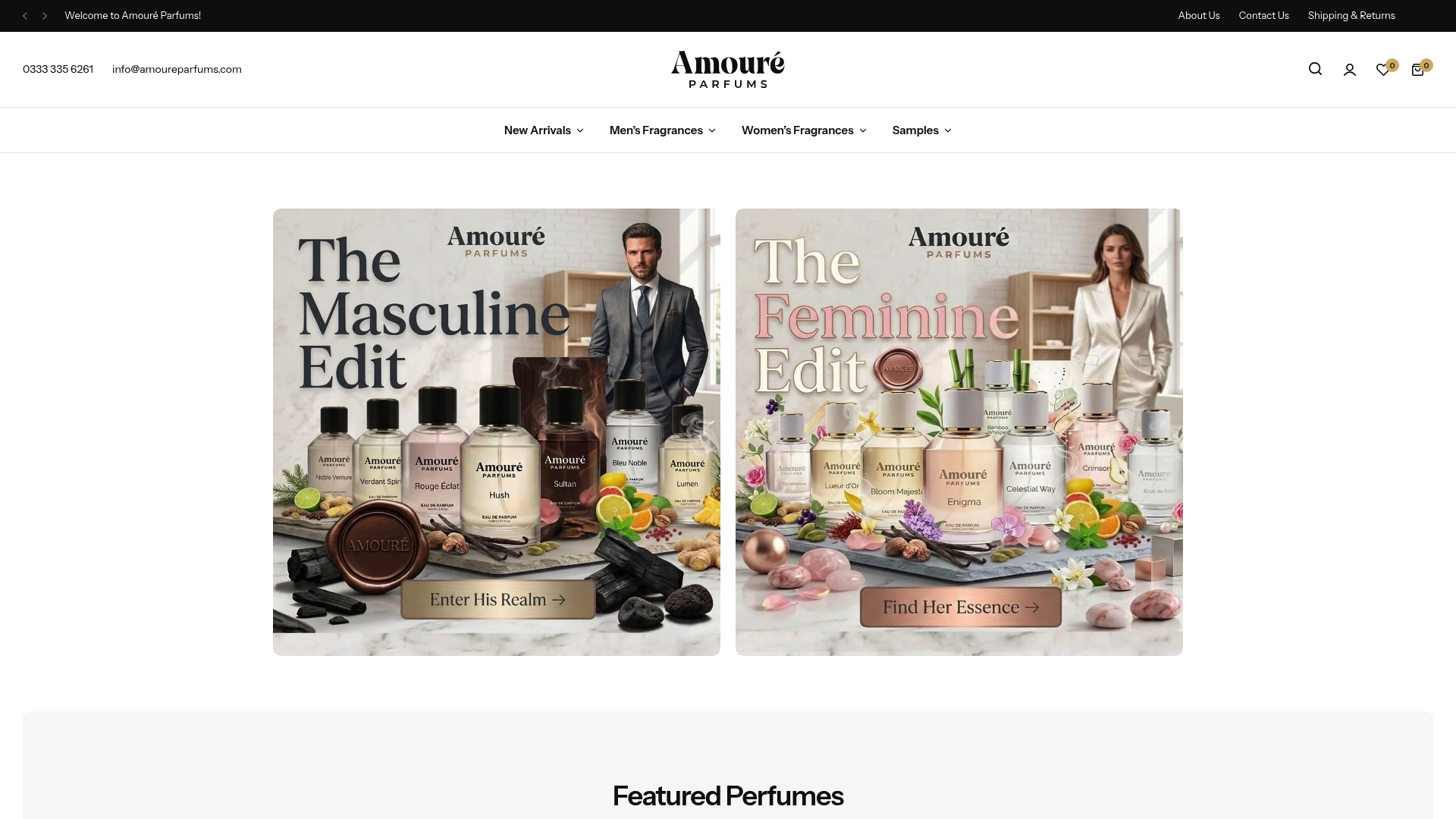
Browse a carefully chosen range of fragrance samples and discovery options, including a full women's fragrance selection spanning floral, woody, oriental, and fresh families. Every product is sourced with authenticity and quality in mind, so you can apply the sampling techniques from this guide with complete peace of mind. Whether you are searching for a new signature scent or simply curious about what suits you, Amoureé Parfums is the ideal starting point for your fragrance journey.
Frequently asked questions
How many fragrance samples should I test at once?
Limiting to three to five scents per session prevents olfactory fatigue and allows you to clearly distinguish the top, heart, and base notes of each fragrance. More than five and your nose simply stops making useful distinctions.
What is the best way to apply fragrance samples for testing?
Spray onto your pulse points and resist the urge to rub. Applying without rubbing preserves the top notes and gives you a true reading of how the scent develops on your skin over time.
How do I spot fake fragrance samples online?
Check packaging, batch codes, and seller reliability before purchasing. Authorised retailers with clear return policies and verifiable reviews are always the safest choice.
How long should I wait between testing different scents?
Wait at least 15 to 20 minutes between scents and use coffee beans or fresh air to reset your sense of smell. For a full evaluation, revisit each scent at the one-hour and four-hour marks.