TL;DR:
- Fragrance shopping is easier when you define your preferences and understand scent families.
- Reading detailed fragrance profiles and testing samples on skin prevent mismatched purchases.
- Fragrance preferences evolve over time; treat scent selection as an ongoing, personal journey.
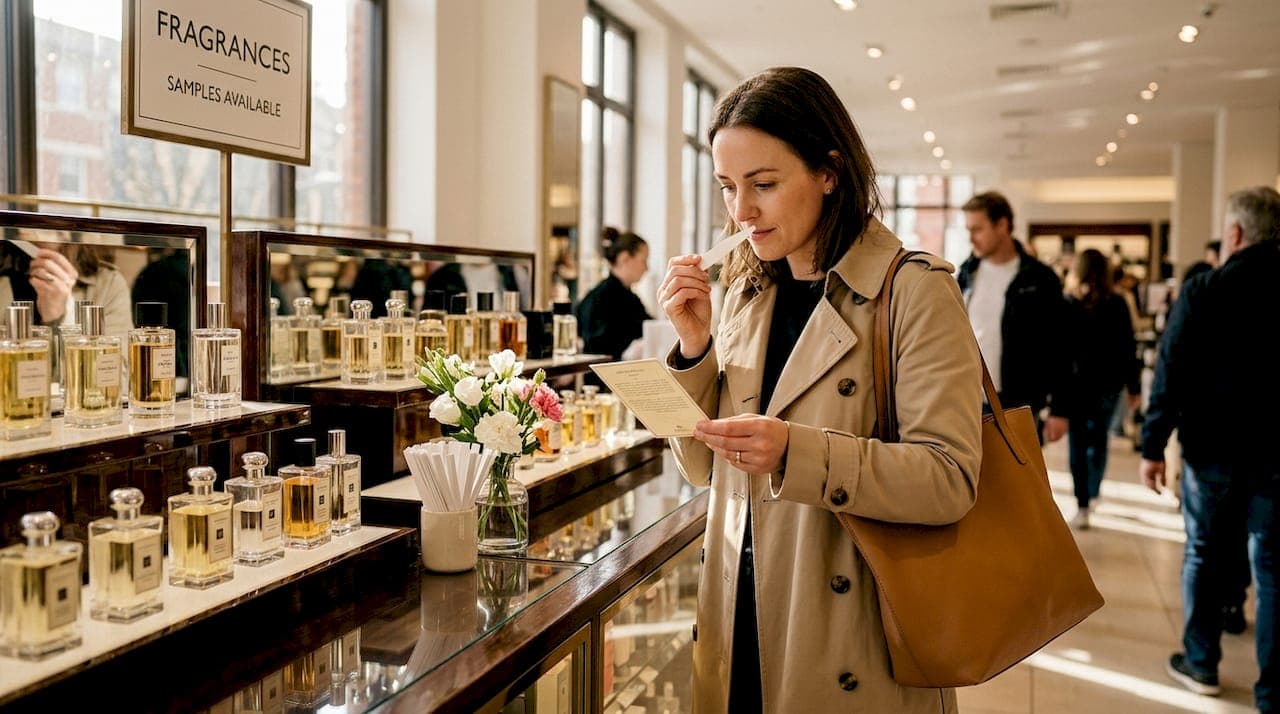
Fragrance shopping should feel exciting, yet for most people it quickly becomes overwhelming. Thousands of bottles line the shelves, marketing copy blurs together, and the pressure to choose wisely makes the whole experience feel more stressful than enjoyable. Whether you are searching for your own signature scent or hunting for a thoughtful gift, the process becomes far simpler once you have a clear framework. This guide walks you through every stage, from clarifying your preferences and reading fragrance profiles to testing samples and buying confidently online, so you can make a choice you will genuinely love wearing every day.
Table of Contents
- Establish your fragrance criteria
- Explore curated collections and reading fragrance profiles
- Test, compare, and interpret samples effectively
- Making your selection: Signature scents, layering, and buying online
- The art (and science) of choosing a fragrance: An overlooked truth-of-choosing-a-fragrance%3A-an-overlooked-truth)
- Experience curated luxury with Amoureé Parfums
- Frequently asked questions
Key Takeaways
| Point | Details |
|---|---|
| Start with clear criteria | Know your scent preferences, occasions, and skin chemistry to narrow your search. |
| Sample and compare thoughtfully | Test fragrances with intention and organise your impressions for each scent. |
| Layer and experiment | Try fragrance layering and keep an open mind as your preferences may evolve. |
| Trust guides and reviews | Read expert profiles and real feedback to make informed fragrance choices. |
Establish your fragrance criteria
Before you even look at a single bottle, knowing what you actually want saves enormous time and prevents expensive mistakes. Fragrance shopping without criteria is like grocery shopping without a list: you wander, you impulse-buy, and you often go home with something that does not quite fit.
Start by familiarising yourself with the main fragrance families:
- Fresh and citrus: Light, clean, and energising. Perfect for daytime and warmer months.
- Floral: Romantic and feminine, ranging from soft rose to bold jasmine.
- Oriental: Rich, warm, and sensual, with notes of amber, vanilla, and spice.
- Woody: Earthy and grounding, featuring sandalwood, cedar, and vetiver.
- Gourmand: Sweet and edible, with notes like caramel, chocolate, or coffee.
- Aquatic: Fresh and breezy, evoking the sea or clean linen.
Once you know which family appeals to you, think about the occasion. A light floral suits an office environment far better than a heavy oriental, which comes into its own on an evening out. If you are buying a gift, consider the recipient's lifestyle and the settings where they will wear it most.
Skin chemistry is one of the most underestimated factors in fragrance shopping. The same perfume can smell entirely different on two people because your skin's natural oils, pH level, and even diet influence how a scent develops. This is why identifying scent notes before you shop gives you a far stronger foundation. Fragrance notes inform smarter purchases and help you predict how a scent will behave on your skin over time.

Also consider sensitivities. Some people react to heavy musks or certain synthetic compounds. If you know certain ingredients irritate your skin or trigger headaches, note them down before you begin browsing.
Finally, think about your seasonal scent choices, as seasons dramatically affect how a fragrance performs and feels. Heavy orientals can feel suffocating in summer heat, while delicate citrus scents may feel thin and cold in winter.
Pro Tip: Write down three words that describe how you want to smell, for example: clean, warm, and mysterious. Use those words as your filter when reading product descriptions.
Explore curated collections and reading fragrance profiles
Once you have set your preferences, the next step is to evaluate what the market offers. This is where curated collections become genuinely useful. Rather than browsing an endless catalogue of unrelated products, a well-curated selection groups scents by family, mood, or occasion, saving you hours of aimless searching.
When you land on a product page, read the fragrance profile carefully. A quality listing will tell you the top notes, which are what you smell immediately after application, the heart notes, which emerge after about 20 minutes, and the base notes, which are the lasting impression that lingers for hours. Fragrance profile details give you a roadmap for what to expect across the full wearing experience.
Here is what to look for when reading a fragrance profile:
- Top notes: Are they fresh, citrus-forward, or spicy? These create the first impression.
- Heart notes: Do they align with your preferred fragrance family?
- Base notes: Are they warm, woody, or musky? These define longevity and depth.
- Concentration: Eau de Parfum lasts longer than Eau de Toilette. Check the concentration level.
- User reviews: Real-world feedback often reveals how a scent performs in different climates and on different skin types.
Detailed fragrance profiles help consumers match perfumes to their preferences far more accurately than marketing language alone. Be cautious of vague descriptors like "luxurious" or "sophisticated" without supporting note details. These are marketing terms, not scent descriptions.
If you are shopping for someone else, think about the emotional tone of the scent rather than just the notes. A gifting fragrance choice should reflect the recipient's personality, not just your own taste.
"A fragrance is a story in another language." This idea captures why reading a profile carefully matters so much. Every note tells you something about the mood and character of the scent.
Take your time with this stage. A few minutes of careful reading now prevents the disappointment of receiving a bottle that smells nothing like you imagined.
Test, compare, and interpret samples effectively
After narrowing down favourites from collections, hands-on comparison is essential. Sampling is the single most important step in fragrance shopping, and it is the one most people skip when buying online. Do not make that mistake.
Direct comparison helps shoppers distinguish subtle differences in perfumes that written descriptions simply cannot convey. Here is a practical process for sampling effectively:
- Limit your testing session. Test no more than three or four fragrances at a time to avoid olfactory fatigue, which is when your nose becomes temporarily unable to distinguish scents.
- Apply to skin, not just paper. Spray or dab onto your wrist or inner elbow and allow it to settle for at least 20 minutes before judging.
- Document your impressions. Note the immediate smell, the mid-stage development, and the dry-down, which is the final base note stage after an hour or more.
- Revisit the next day. Sleep on your impressions. A scent you loved in the shop may feel different after reflection.
- Compare side by side. Use the table below to organise your notes.
| Fragrance | Aroma impression | Longevity | Sillage (projection) | Overall rating |
|---|---|---|---|---|
| Sample A | Warm, woody, vanilla | 6 to 8 hours | Moderate | 8/10 |
| Sample B | Fresh, citrus, green | 3 to 4 hours | Light | 7/10 |
| Sample C | Floral, powdery, musky | 5 to 6 hours | Strong | 6/10 |
Sillage refers to the trail a scent leaves in the air as you move. A high-sillage fragrance announces your presence; a low-sillage one stays close to your skin. Neither is better, they simply serve different purposes.
How a scent develops on your skin matters enormously. Scent variation on skin is real and significant, which is why testing on your own body is always more reliable than testing on a paper strip.
Pro Tip: Smell coffee beans between samples to reset your nose. It is a simple trick that genuinely works and keeps your senses sharp throughout a long testing session.
Making your selection: Signature scents, layering, and buying online
With a clear shortlist, it is time to make your final decision, whether a single scent, a blend, or an adventurous blind buy. This stage is about committing with confidence rather than second-guessing yourself indefinitely.
A signature scent is a fragrance so aligned with your personality and lifestyle that it becomes associated with you. Choosing one is a personal process, but a useful rule is to ask: would I feel comfortable wearing this every day for a year? If the answer is yes, it is a strong candidate.
That said, having multiple signatures is perfectly valid. Many people rotate based on mood, season, or occasion, and this is actually a more sophisticated approach to fragrance.
Fragrance layering is an excellent way to create something uniquely yours. Layering techniques allow you to combine two or more compatible scents to build depth and individuality. Layering creates a unique scent and is recommended for personalisation, particularly if you find that single fragrances feel incomplete on their own.
| Layering combination | Effect achieved |
|---|---|
| Woody base plus fresh citrus top | Grounded yet energising |
| Floral heart plus musky base | Romantic with lasting depth |
| Oriental base plus vanilla gourmand | Rich, warm, and indulgent |
For online buying, follow these guidelines:
- Read verified user reviews, not just editorial descriptions.
- Use blind buying tips to reduce risk when purchasing without sampling first.
- Order sample sizes before committing to a full bottle.
- Check quality fragrance identification resources to verify ingredient and production standards.
- Use find luxury perfume deals guides to shop smartly without overspending.
Patience pays off here. A considered purchase you wear for years is far better value than a hasty buy that sits unused on a shelf.
The art (and science) of choosing a fragrance: An overlooked truth
Here is something most fragrance guides will not tell you: there is no such thing as a permanently perfect scent. Fragrance preferences shift constantly, shaped by age, mood, relationships, and environment. The oriental you adored at twenty may feel suffocating at thirty-five. That is not a failure of taste; it is evidence of growth.
The pressure to find "the one" can actually make fragrance shopping worse. It turns a joyful sensory experience into a high-stakes decision. We think the better approach is to treat scent discovery as an ongoing, evolving practice rather than a one-time assignment.
Seasonal fragrance changes are a perfect example of how fluid this journey should be. Allowing yourself to change your scent with the seasons keeps your relationship with fragrance fresh and genuinely pleasurable.
Scent is also deeply tied to memory and emotion. The right fragrance does not just smell good; it makes you feel like yourself, or like the version of yourself you want to be. That emotional resonance is what separates a good scent from a truly personal one. Lean into that feeling rather than chasing technical perfection.
Experience curated luxury with Amoureé Parfums
If you are ready to explore with renewed confidence, Amoureé Parfums brings together an expertly curated selection of premium fragrances for every taste, occasion, and budget.
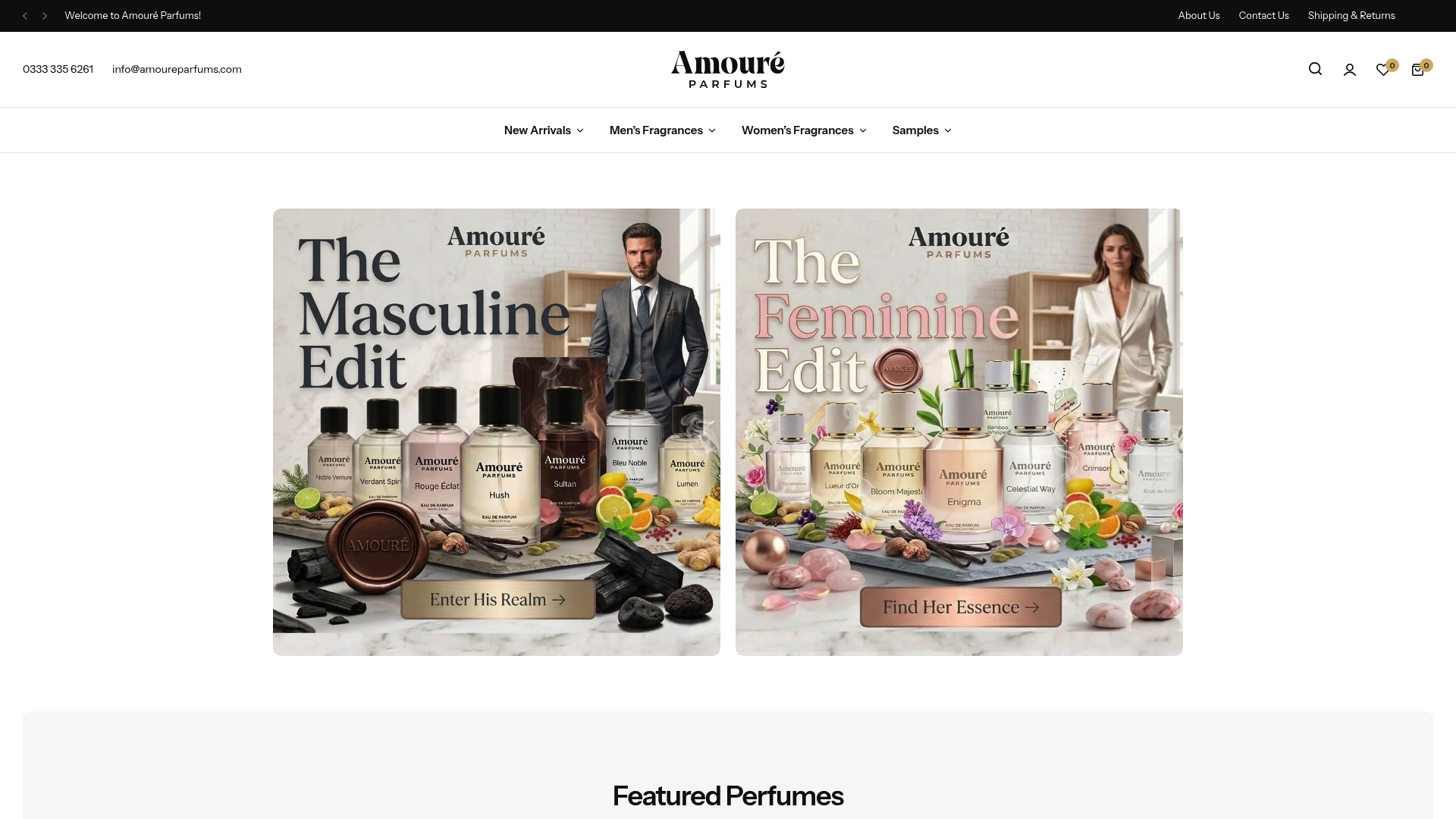
Whether you are searching for a bold new signature, a thoughtful gift, or simply want to experiment with something new, the collection has you covered. Browse the full fragrance selection to discover scents matched to your preferences, or explore dedicated ranges including women's premium scents and men's signature colognes. With detailed scent profiles, competitive pricing, and 24/7 support, finding your next favourite fragrance has never been more straightforward.
Frequently asked questions
Which fragrance family is best for everyday wear?
Fresh and citrus-based fragrances are ideal for everyday wear due to their lightness and versatility. Seasonal suitability guides everyday fragrance choices and help you adapt your scent as conditions change.
How should I test perfumes if shopping online?
Order official sample sets and read verified user reviews to safely try before buying a full bottle. Online perfume shopping resources offer practical methods for remote sampling and confident purchasing.
Does fragrance last longer on skin or clothes?
Perfume tends to last longer on fabrics, but develops more naturally on skin due to body chemistry. Individual scents develop uniquely on each person, making skin testing essential for an accurate impression.
How can I tell if a perfume is high-quality?
Check for complex, well-balanced notes and research the brand's production methods and ingredient standards. Guidance on identifying premium scent quality helps you distinguish genuinely superior fragrances from imitations.