TL;DR:
- A genuine limited edition perfume is produced in a fixed, finite quantity with no plans for restocking.
- Authenticity verification includes checking batch codes, packaging details, and sourcing from reputable sellers.
- Collecting and storing perfumes properly enhances their longevity and emotional value over time.
Not every bottle labelled 'limited edition' is genuinely rare. Some are carefully orchestrated marketing exercises designed to create urgency, while others represent true small-batch artistry that may never be repeated. The difference matters enormously if you are spending serious money or building a collection you care about. This guide cuts through the noise, explaining exactly what limited edition perfumes are, how they are made, how to spot fakes, and how to store and enjoy your bottles for years. By the end, you will have the knowledge to shop with genuine confidence.
Table of Contents
- What makes a perfume a limited edition?
- How limited edition perfumes are created and marketed
- How to spot genuine limited edition perfumes (and avoid fakes))
- Collecting, storing, and making the most of limited edition perfumes
- A fresh perspective on the allure of limited edition perfumes
- Discover, shop, and blossom: limited editions with Amoureé Parfums
- Frequently asked questions
Key Takeaways
| Point | Details |
|---|---|
| True definition | A limited edition perfume is produced in restricted numbers, often with special stories or celebrations behind its release. |
| Scarcity and value | Not all limited editions are genuinely rare or collectable; always verify authenticity and numbers. |
| Collecting wisely | Building and preserving a careful collection increases enjoyment and maintains each bottle’s value and beauty. |
| Expert authentication | Use batch codes, seller reputation, and direct research to distinguish real limited editions from fakes. |
| Enjoyment over hype | Savouring what you love matters more than chasing the rarest bottle—personal taste always leads true sophistication. |
What makes a perfume a limited edition?
The term 'limited edition' is used so freely in fragrance marketing that it has lost some of its meaning. At its core, a limited edition perfume is one produced in a fixed, finite quantity with no intention of restocking once that run sells out. That is the textbook definition. Reality, however, is messier.
Fragrance house strategies reveal that brands launch limited editions for several distinct reasons. Sometimes it is genuine artistry: a perfumer creates something extraordinary that cannot be scaled without compromising quality. More often, it is a calculated business decision. Brands use limited editions for storytelling around anniversaries or seasons, to test new markets, and to drive urgency through FOMO (fear of missing out), all while commanding higher pricing and margins than standard lines.
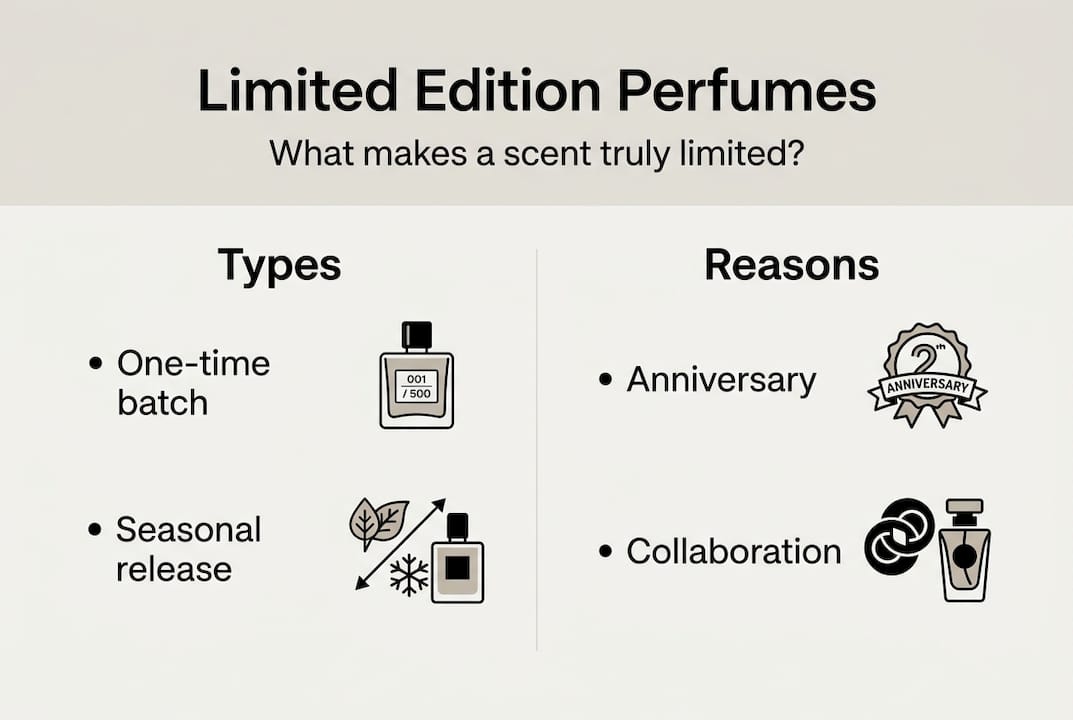
It helps to understand how limited editions differ from regular and discontinued releases. The table below makes this clear:
| Type | Availability | Restocked? | Typical pricing |
|---|---|---|---|
| Regular release | Ongoing | Yes | Standard |
| Limited edition | Fixed run | No | Premium |
| Discontinued | No longer made | No | Variable (often high on resale) |
Within the limited edition category itself, there is a tiered approach to scarcity. An ultra-rare release might number just 25 bottles worldwide, hand-signed by the perfumer. A broader 'limited' launch might produce 2,500 units across selected retailers. Both carry the same label, yet the experience and investment are worlds apart.
Common occasions that prompt limited launches include:
- Seasonal releases: winter or summer interpretations of a signature scent
- Anniversary editions: celebrating a brand milestone with special packaging or a reformulation
- Collaborations: partnerships with artists, fashion houses, or celebrities
- Geographic exclusives: bottles created for a specific market or retailer
- Charity and cause-driven editions: where proceeds support a particular initiative
Understanding these motivations helps you assess whether a bottle is worth pursuing or whether the 'limited' label is simply clever copywriting.
How limited edition perfumes are created and marketed
Once you understand the definition, it is important to see how the creation process sets limited editions apart. The journey from concept to counter is more involved than most buyers realise.
Here is a sequential overview of how a limited edition typically comes to life:
- Concept development: A creative director or perfumer identifies a theme, occasion, or ingredient story worth exploring.
- Fragrance composition: The perfumer builds the scent, often with greater creative freedom than on a commercial brief.
- Batch planning: Production quantities are fixed early, influencing ingredient sourcing and packaging decisions.
- Bespoke packaging design: Bottles, boxes, and labels are often specially commissioned, adding significant cost and visual impact.
- Marketing and pre-launch: Teasers, waitlists, and press previews build anticipation before release.
- Controlled distribution: Availability is deliberately restricted to selected stockists or direct channels.
- Sell-through and closure: Once stock is gone, the line closes. No reruns.
The difference between indie and luxury brands at each stage is striking. Indie brands use low minimum order quantities and hand-filling for true small batches, while luxury houses use tiered scarcity to control perception and pricing across wider distribution networks. An indie perfumer might fill 150 bottles by hand in their studio. A major house might produce 10,000 units and still call it 'limited'.
| Factor | Indie brand | Luxury house |
|---|---|---|
| Batch size | 50 to 500 units | 1,000 to 10,000+ units |
| Filling method | Often hand-filled | Automated production |
| Packaging | Artisan, bespoke | High-budget, branded |
| Distribution | Direct or niche retailers | Department stores, global |
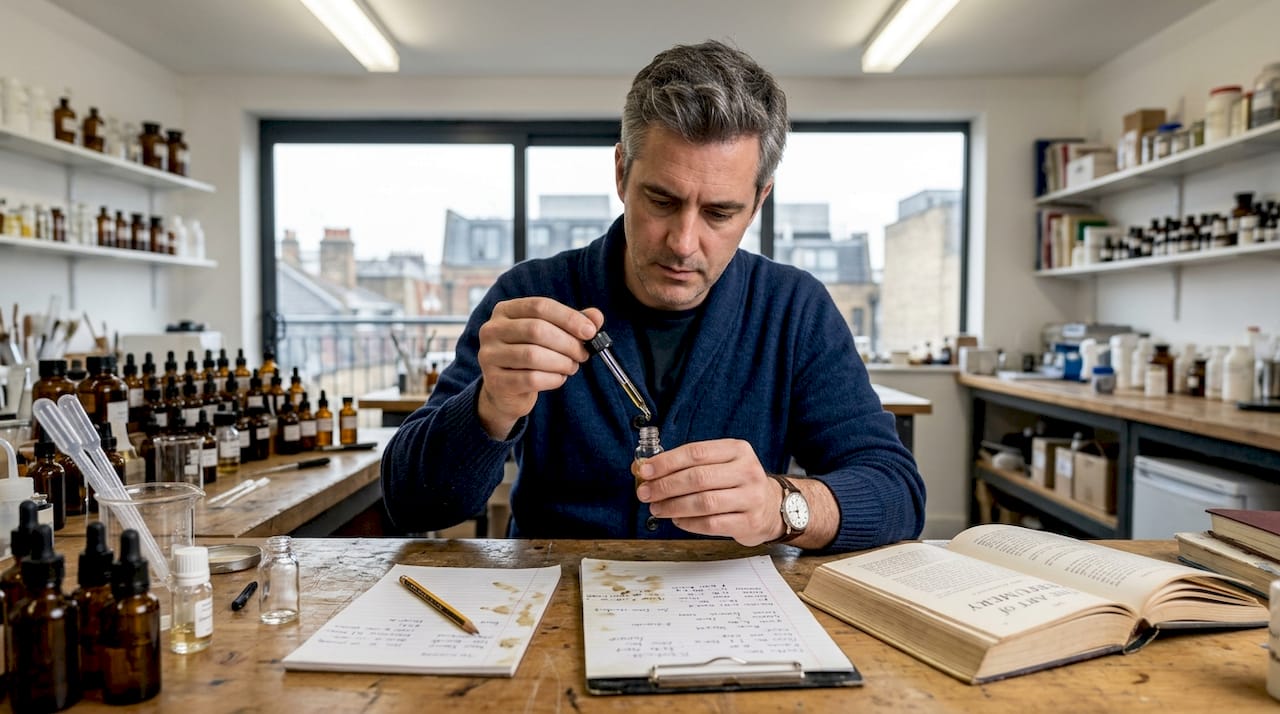
The behind-the-scenes artistry of perfume creation is genuinely fascinating, and limited editions often showcase a perfumer's most personal, uncompromised work.
Pro Tip: Look for hand-numbered bottles or bespoke presentation boxes when assessing authenticity. A bottle numbered '47/150' is a strong signal of a genuinely small run, whereas a bottle with no production number deserves closer scrutiny.
How to spot genuine limited edition perfumes (and avoid fakes)
Knowing how limited editions are made is vital, but distinguishing real from fake is where many enthusiasts stumble. The market for collectable fragrances attracts counterfeiters, and even experienced collectors can be misled.
First, it is worth addressing a common misconception: 'limited' does not always equal rare. Some releases labelled as limited editions are actually flanker releases, which are variations of an existing scent with a short planned lifecycle. They are produced in large numbers, discontinued after a season, and then rebranded as 'limited' in retrospect. Always check production numbers and discontinuation dates before assuming scarcity.
Red flags to watch for include:
- No batch code or production number on the bottle or box
- Unusually low pricing for a supposedly rare release
- Vague sourcing: the seller cannot confirm where stock originated
- Inconsistent packaging: fonts, colours, or finishes that differ from official brand imagery
- No certificate of authenticity for ultra-rare or collector editions
When verifying a purchase, smart sampling tips can save you from costly mistakes. Sampling before committing to a full bottle is always wise, particularly with unfamiliar sellers.
"The prevalence of misleading 'limited' claims means buyers must treat every purchase as an investigation. Cross-reference batch codes, check official brand archives, and never rely solely on a seller's word."
For deeper verification, use identifying quality scents as a framework to assess whether what is in the bottle matches the claimed formulation. A comparison guide for collectors can also help you evaluate bottles side by side when you suspect a fake.
Pro Tip: Always cross-reference the production date printed on the box with the brand's official launch timeline. If a bottle claims to be from a 2019 anniversary edition but the brand only launched in 2021, something is wrong.
Collecting, storing, and making the most of limited edition perfumes
With identification skills in hand, let us focus on curating and safeguarding your limited editions for years to come. A well-managed collection is both a pleasure to own and a sound investment of time and money.
Building a meaningful collection works best when approached with intention:
- Define your focus: Decide whether you are collecting by house, perfumer, ingredient family, or era.
- Set a budget: Limited editions can escalate in price quickly. Know your ceiling before you start browsing.
- Research before buying: Study a fragrance's notes, production history, and critical reception before committing.
- Buy from reputable sources: Authorised retailers, established auction houses, and trusted community sellers reduce risk significantly.
- Document your collection: Keep records of purchase dates, prices, batch codes, and provenance for each bottle.
Once you have your bottles, storage becomes critical. Fragrance molecules are sensitive to light, heat, and humidity. Stored cool and dark, most quality perfumes retain their integrity for 3 to 5 years, and often longer.
Key storage tips:
- Avoid windowsills and bathrooms: UV light and steam degrade fragrance rapidly
- Keep bottles upright: Prevents the stopper or cap seal from deteriorating
- Maintain consistent temperature: Fluctuations cause expansion and contraction, which can compromise the seal
- Store in original packaging: Boxes provide an extra layer of protection from light
- Consider a dedicated fragrance cabinet: Dark, cool, and away from heat sources
For expert storage tips that go beyond the basics, it is worth reading up on how serious collectors manage large inventories.
The question of wearing versus preserving is personal. Some collectors never open their rarest bottles, treating them as art objects. Others believe a perfume only fulfils its purpose when worn. There is no wrong answer, but consider keeping a small decant for wearing while preserving the original bottle unopened if long-term value matters to you.
A fresh perspective on the allure of limited edition perfumes
Here is something the fragrance industry rarely admits: the hype cycle around limited editions is designed to make you act before you think. Scarcity is a feeling as much as a fact, and brands are extraordinarily skilled at manufacturing that feeling.
True sophistication in collecting is not about owning the rarest bottle on the market. It is about owning the bottles that mean something to you. A limited edition that connects with your personal history, your taste, or a moment in time will always be more valuable than a bottle you bought because a countdown timer told you to.
We believe the most rewarding collections are built slowly, with curiosity and genuine emotional engagement. Chasing current scent trends has its place, but the bottles you will cherish in ten years are the ones you chose for yourself, not the ones an algorithm suggested. The limited edition market rewards patience, knowledge, and personal conviction far more than it rewards speed.
Discover, shop, and blossom: limited editions with Amoureé Parfums
Ready to elevate your scent wardrobe with genuine, curated limited editions? At Amoureé Parfums, we have done the hard work of sourcing and verifying so you do not have to.
Explore our hand-picked women's limited editions and men's exclusive scents, each selected for quality, authenticity, and that unmistakable sense of occasion. Whether you are starting your first collection or adding a statement bottle to an established one, our premium perfume collection offers something genuinely special. With 24/7 support and competitive shipping, discovering your next signature scent has never been more straightforward.
Frequently asked questions
Are limited edition perfumes always more expensive than regular ones?
Many limited edition perfumes carry a premium due to exclusivity and storytelling, but pricing varies considerably with brand strategy. Some brands use limited editions primarily to test markets rather than maximise margins, keeping prices accessible.
How can I check if a 'limited edition' perfume is genuine?
Examine batch codes, production numbers, and packaging details carefully, and always buy from reputable sellers. Verify via batch codes and cross-reference with the brand's official launch records to confirm authenticity.
How long do limited edition perfumes last before they spoil?
Most quality fragrances last 3 to 5 years when stored in cool, dark conditions; always check for changes in scent character or colour as early indicators of degradation.
Do all limited edition perfumes become collector's items?
Not at all. True collectables tend to be ultra-rare small batches from respected houses or perfumers, whereas broadly distributed 'limited' releases rarely appreciate in value over time.