TL;DR:
- Sampling perfume on skin accounts for individual skin chemistry, ensuring better scent decisions.
- Blind buying leads to high regret and wasted expenses; sampling reduces this significantly.
- Proper sampling involves skin tests, repeated trials, and recording impressions for reliable results.
Buying a full bottle of perfume without testing it first is one of the most common and costly mistakes fragrance lovers make. 67% of Europeans own unworn bottles averaging €340 in wasted spend, adding up to a staggering €780 million across the continent. That is not just a financial loss. It is the quiet disappointment of reaching for a bottle you never wear. Sampling before you commit reduces buyer's remorse by 52% and lifts satisfaction by 35%. This guide explains why your skin chemistry matters, what blind buying really costs, and how to sample fragrances in a way that genuinely helps you find a scent you will love.
Table of Contents
- Why perfumes smell different on every person
- The risks and costs of blind buying
- How to sample perfumes for the best results
- Common mistakes and expert tips for sampling success
- Why the true perfume connoisseur never skips sampling
- Ready to find your signature scent? Sample fragrances with confidence
- Frequently asked questions
Key Takeaways
| Point | Details |
|---|---|
| Your chemistry matters | Perfume interacts with your skin type and pH, so sampling is the only way to know how a fragrance truly smells on you. |
| Sampling prevents waste | Testing before buying dramatically reduces regret and costly mistakes, helping you build a collection you really enjoy. |
| Expert testing techniques | Using skin, not just paper, and trying perfumes in different conditions provide the clearest results. |
| Clever sampling saves money | Buying samples costs a fraction of full bottles, letting you explore more scents before committing. |
Why perfumes smell different on every person
If you have ever spritzed the same fragrance as a friend and ended up smelling completely different, you already know this is true. What you may not know is exactly why it happens. The answer lies in your skin's unique biology, and understanding it is the first step to shopping smarter.
Your skin's pH level, oiliness, hydration, temperature, and even your microbiome (the community of bacteria living on your skin) all interact with a fragrance's molecules. As skin chemistry and scent research confirms, these factors alter how a scent evolves, how long it lasts, and how far it projects. A perfume that smells warm and woody on one person can turn sharp and medicinal on another.
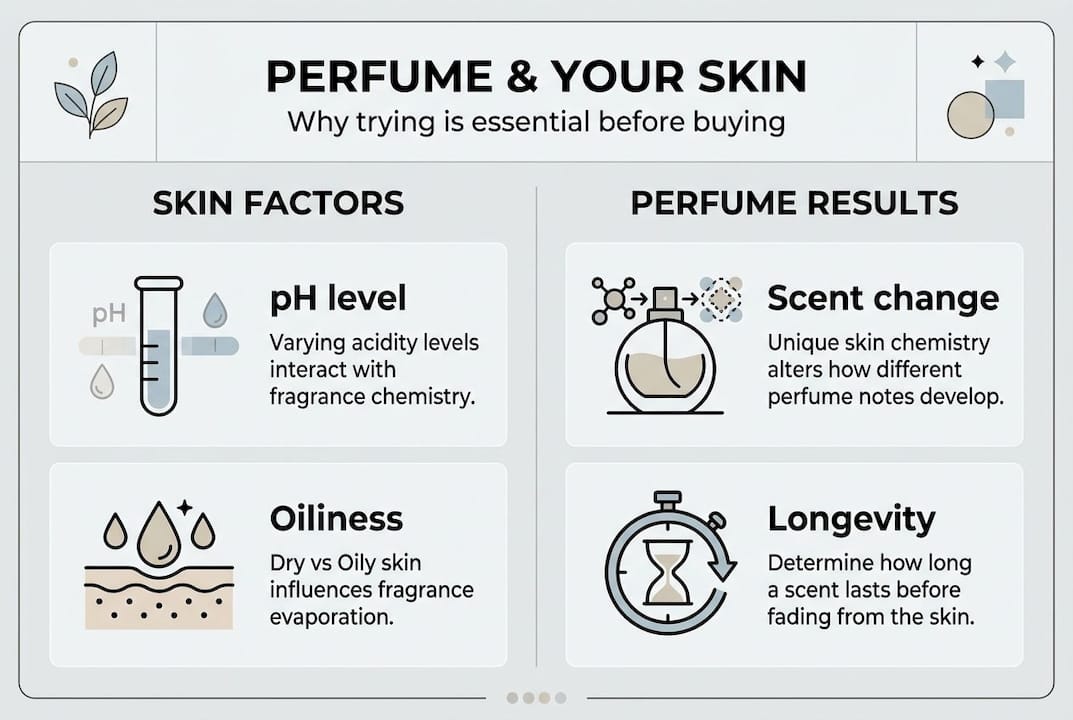
Skin oiliness plays a particularly significant role. Oily skin holds fragrance molecules closer to the surface, which extends longevity and amplifies projection. Dry skin, on the other hand, absorbs fragrance quickly and offers fewer oils to bind with, meaning the scent fades faster. Hydration matters too: well-moisturised skin acts like a slow-release mechanism, letting the fragrance unfold gradually over hours.
| Skin type | Scent longevity | Projection | Best fragrance concentration |
|---|---|---|---|
| Oily | Long | High | Eau de Toilette or lighter |
| Dry | Short | Low | Eau de Parfum or Parfum |
| Normal | Moderate | Moderate | Any concentration |
| Combination | Variable | Variable | Test both concentrations |
Temperature is another overlooked variable. Warmer skin accelerates the release of top notes, which means a fragrance can smell brighter and more intense on a hot day. Diet and medication can shift your skin's pH over time, subtly altering how acidic or alkaline your skin is. Even your gut microbiome influences the compounds your skin secretes, which interact with fragrance ingredients in ways no bottle description can predict.
These scent differences explained are also why a perfume that smells extraordinary in summer may feel flat or overpowering in winter. Seasonal shifts in temperature and humidity genuinely change how a fragrance behaves, which is why understanding fragrance changes with seasons is part of becoming a more confident buyer.
"No two people share the same skin chemistry. A fragrance is not just a product; it is a collaboration between the formula and the wearer."
This is precisely why no review, description, or recommendation can substitute for wearing a fragrance on your own skin.
The risks and costs of blind buying
While chemistry explains personal variation, the financial consequences of skipping sampling are equally important. Blind buying, purchasing a full bottle based solely on reviews, notes lists, or brand reputation, is a gamble that rarely pays off as well as people hope.
The numbers are striking. Sampling reduces remorse by 52% and increases satisfaction by 35%, yet millions of buyers still skip the trial stage entirely. The average unworn bottle represents €340 in wasted spend. Multiply that across a continent and the figure reaches €780 million.
| Purchase method | Average satisfaction rate | Regret rate | Estimated cost of mistakes |
|---|---|---|---|
| Blind buy (no sample) | ~55% | ~45% | €340 per bottle |
| Sample first | ~90% | ~10% | Minimal |
Here are the most common reasons buyers regret blind purchases:
- The scent smelled entirely different on their skin than in reviews
- The fragrance did not last long enough to justify the price
- The opening notes were appealing but the drydown was unpleasant
- The scent was unsuitable for the intended occasion or season
- They realised a similar fragrance they already owned was preferable
Sampling costs a fraction of a full bottle, often just a few pounds for a 2ml or 5ml vial. That small investment gives you real, on-skin data before you commit to spending €100 or more. The blind buying pitfalls are well-documented, and even experienced collectors fall into them. A thorough online perfume shopping guide will always recommend sampling as the non-negotiable first step.
Sampling is not just about avoiding regret. It is about building a collection you genuinely reach for every day, rather than a shelf of expensive bottles that gather dust.
How to sample perfumes for the best results
Knowing why sampling matters, it is time to learn how to do it right. There is a significant difference between a casual spray and a properly conducted fragrance trial.
Start with the distinction between paper and skin testing. Paper strips (also called blotters) are useful for getting an initial impression of a fragrance's character and top notes. However, they cannot replicate what happens when a scent meets your skin's oils, pH, and warmth. Always follow up a blotter test with a skin application before making any decision. As sampling step-by-step guidance confirms, paper is for first impressions, skin is for true performance.
Follow these steps for accurate sampling:
- Apply fragrance to clean, unscented skin on the inner wrist or elbow
- Avoid rubbing the skin after application, as this breaks down the top notes prematurely
- Wait at least 30 minutes before assessing the heart notes
- Revisit the scent after 4 to 6 hours to evaluate the drydown
- Sample no more than two or three fragrances per session to avoid olfactory fatigue
- Try the same fragrance on different days and in different environments
Pro Tip: Try blind testing when possible. Ask someone to apply the fragrance without telling you the name or brand. This removes the psychological bias that comes with recognising a prestigious label, and lets you judge the scent purely on its own merits.
Concentration matters too. Higher concentrations such as Eau de Parfum or Parfum work better on dry skin because they contain more fragrance oil, which compensates for the skin's lower oil content. Lighter concentrations like Eau de Toilette suit oilier skin types, where the skin's natural oils amplify the scent naturally. Reading about sampling fragrances effectively can help you match the right concentration to your skin type before you even begin.
For home trials, keep a simple fragrance journal. Note the date, skin condition, weather, and your impressions at each stage. This creates a reliable record that helps you compare fragrances objectively over time. More fragrance shopping tips from experienced buyers consistently point to journalling as one of the most underrated tools in a fragrance lover's kit.
Common mistakes and expert tips for sampling success
Even expert samplers make mistakes. Here is what you can do to avoid the most common pitfalls and make your sampling sessions genuinely reliable.
The biggest mistake is sampling under identical conditions every time. Your skin chemistry shifts throughout the day and across seasons. Post-shower dry skin 'eats' perfume faster than normal, while hormones, diet, and medication can alter your chemistry in ways you may not notice. Hot, humid weather amplifies projection; cold, dry air can suppress it entirely.
Watch out for these common errors:
- Sampling immediately after a shower, when skin is at its driest and most absorbent
- Testing fragrances over scented body lotion or hair products, which creates unintentional layering
- Judging a fragrance solely on its opening notes without waiting for the drydown
- Sampling too many fragrances in one session, leading to olfactory fatigue
- Ignoring how stress and sleep deprivation can temporarily alter your skin's scent profile
Pro Tip: Smell freshly ground coffee beans between samples to reset your nose. It is a classic trick used in fragrance counters worldwide, and it genuinely works to clear your olfactory palette between tests.
"Reliability in sampling comes from repetition and varied conditions, not from a single perfect test."
Retest any fragrance you are seriously considering at a different time of day, on a different day of the week, and ideally in a different season or temperature. This gives you a much more complete picture of how the scent will perform in your real life. Learning to compare perfumes step-by-step is a skill that pays dividends every time you shop. And if you enjoy wearing multiple fragrances together, understanding fragrance layering tips will help you avoid accidental clashes during your sampling sessions.
Why the true perfume connoisseur never skips sampling
There is a persistent myth in fragrance communities that experienced buyers can skip sampling because their knowledge is sufficient. The data tells a different story. Experienced users report 75 to 97% blind buy success, but the consensus among fragrance experts firmly favours sampling, particularly for those with fewer than five years of serious collecting experience, where failure rates exceed 50%.
Even seasoned enthusiasts encounter surprises. A reformulated classic, a new batch with different ingredients, or simply an unexpected skin reaction can turn a confident blind purchase into a regret. Sampling is not a sign of inexperience. It is a sign of respect for the craft and for your own money.
Building a collection you genuinely love, rather than one built on impulse and brand prestige, requires patience. The most admired fragrance wardrobes are built one tested bottle at a time. If you are thinking about building a fragrance wardrobe that truly reflects your taste, sampling is not optional. It is the foundation.
Ready to find your signature scent? Sample fragrances with confidence
At Amoureé Parfums, we believe that finding your perfect fragrance should feel exciting, not risky. That is why we offer a carefully curated selection of premium scents designed to help you explore before you commit.
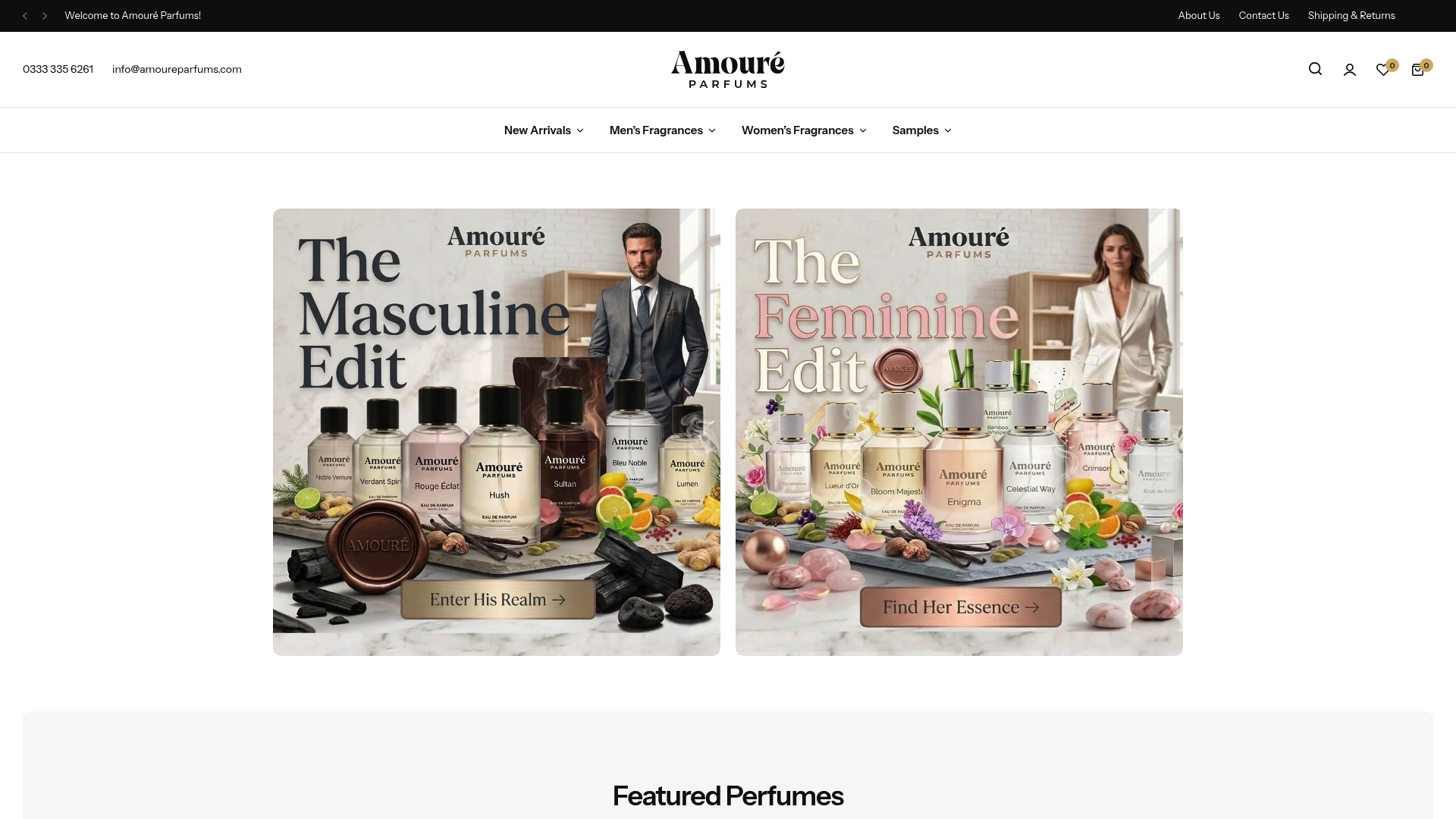
Browse our full fragrances collection to discover options across every style and occasion. Whether you are drawn to florals, orientals, or fresh aquatics, our women's fragrances and men's fragrances ranges offer something for every preference. Each listing includes detailed scent notes and suggestions to guide your choice, so you can approach your next fragrance purchase with genuine confidence rather than guesswork.
Frequently asked questions
What is the main benefit of sampling perfume first?
Sampling lets you experience how a fragrance evolves with your unique skin chemistry, ensuring you invest only in scents that genuinely suit you and avoiding costly disappointments.
How long should I test a perfume sample before deciding?
Test a fragrance for at least a full day to observe its development from opening notes through to the drydown, as perfume evolves over hours and early impressions rarely tell the whole story.
Why do some perfumes disappear quickly on my skin?
Dry or freshly cleaned skin tends to absorb fragrance rapidly, and since oily skin holds scents longer, factors like hydration and pH directly affect how long a scent lasts on you.
Can I rely on expert reviews and descriptions instead of samples?
Reviews are a helpful starting point, but even experienced collectors face regret, and sampling avoids 50%+ failure rates that no amount of reading can reliably prevent.