TL;DR:
- Floral perfumes are categorized into subfamilies like fresh white, powdery, spicy, and orientals.
- Perfume creation involves natural extraction, synthetic reconstruction, and accord blending techniques.
- Building a diverse floral scent wardrobe enhances personal style and makes thoughtful gifting easier.
Floral perfumes account for the largest share of the fragrance market, yet standing in front of a display of dozens of bottles can feel genuinely overwhelming. Rose, jasmine, tuberose, iris — each name promises something different, but how do you know which one suits your personality, your occasion, or the person you're buying for? The answer lies in understanding the subfamilies within the floral world. Once you grasp the basic distinctions between fresh, powdery, white, spicy, and oriental florals, every future fragrance decision becomes much easier. This guide breaks down those distinctions clearly, compares the key types side by side, and gives you practical guidance to find your signature floral scent.
Table of Contents
- How floral perfumes are classified
- Key types of floral perfumes: from classic to modern
- How floral perfumes are crafted: natural, synthetic, and blended
- Comparing top floral types: ideal matches for your style
- Our take: why building your own floral wardrobe pays off
- Find your perfect floral fragrance with Amoureé Parfums
- Frequently asked questions
Key Takeaways
| Point | Details |
|---|---|
| Floral perfume subfamilies | Floral perfumes are grouped by their dominant flower types and scent character, such as white, powdery, spicy, soft, and fresh. |
| Natural vs synthetic | Some floral scents are extracted from real blossoms, others—like lily of the valley—are recreated synthetically for authenticity. |
| Choosing wisely | Matching perfume type to occasion or personal style ensures your scent feels authentically elegant and memorable. |
| Versatility of florals | Floral perfumes can be worn solo or layered, making them perfect for daily wear or gifting. |
How floral perfumes are classified
The floral family is widely considered the most expansive in perfumery. It spans everything from a delicate spring narcissus to the heady richness of tuberose, which means the word "floral" on its own tells you very little. Experts resolve this by breaking the family into distinct subfamilies, each defined by its dominant flower types and overall scent character.
Floral subfamilies are grouped by dominant flower types and characteristics, including Spring/Green Florals such as narcissus and lilac, White/Sensual Florals such as jasmine and tuberose, Powdery Florals such as iris and violet, Spicy Florals such as geranium, classic Rose notes, and Atypical/Rare Florals such as reseda. This framework gives both perfumers and shoppers a shared language.
The Fragrance Wheel, a tool developed by fragrance consultant Michael Edwards, further organises these subfamilies. Within the wheel, floral subfamilies include Soft Floral (powdery and gentle), Floral Oriental or Floriental (floral with warm spices), White Floral (intoxicating and narcotic), and Fresh Floral (light with citrus or aquatic elements). Understanding where a perfume sits on that wheel tells you a great deal about how it will feel on your skin — and understanding why perfumes smell unique on each person adds another layer of clarity.
Here is a quick overview of the core floral subfamilies:
- Spring/Green Florals: Light, dewy, and natural. Think freshly cut stems and morning gardens.
- White Florals: Rich, sensual, and full-bodied. Often described as intoxicating.
- Powdery Florals: Soft and vintage-feeling, frequently built around iris or violet.
- Spicy Florals: Warmer and bolder, with geranium or carnation adding personality.
- Rose Florals: Romantic and timeless, ranging from fresh petals to velvety depth.
- Florientals: A bridge between floral and oriental, offering warmth and sophistication.
| Subfamily | Key flowers | Character |
|---|---|---|
| Fresh Floral | Peony, freesia, lilac | Light, breezy, daytime |
| White Floral | Jasmine, tuberose, gardenia | Lush, sensual, evening |
| Powdery Floral | Iris, violet, mimosa | Soft, elegant, classic |
| Spicy Floral | Geranium, carnation | Bold, warm, expressive |
| Floriental | Rose, orange blossom | Rich, exotic, sophisticated |
Each subfamily serves a different emotional register, which is why two people can both claim to "love florals" while preferring completely opposite scents.
Key types of floral perfumes: from classic to modern
With a clear understanding of classification, let's explore the main types of floral scents you'll encounter and what makes each special.
The floral family is the largest, most popular family in perfumery, prized for romance and versatility. It blends naturally with every other family as heart notes, which explains why so many fragrances carry a floral character even when marketed as woody or oriental. The contrast between a soliflore, which focuses on a single pure flower note, and a bouquet or oriental blend, which builds opulence from many layers, is one of the most important distinctions you can learn.
Classic rose and white florals are the romantic and timeless choices. They suit formal occasions, evenings out, and gifts for anyone who appreciates old-world elegance. White florals, in particular, carry a sensual, almost hypnotic quality that makes them memorable long after you leave a room.
Powdery and soft florals feel more understated. They are the everyday sophistication choice: gentle enough for an office or lunch, polished enough to feel considered. Iris-based scents sit firmly here, offering a slightly cool, almost cosmetic feel that many find quietly addictive.

Spicy and exotic florals are for those who want their scent to make a statement. Think geranium warmed by clove or rose deepened with saffron. These are confident choices that suit bold personalities.
Florientals are the modern choice for anyone who finds pure florals too simple. Floriental fragrances pair floral heart notes with warm spices for layered complexity, making them ideal for autumn evenings or special occasions.
For gifting, the rule is simple: the more confident you are about the recipient's taste, the more adventurous you can be. If in doubt, a soft rose or powdery iris rarely disappoints. Understanding fragrance notes explained properly will help you read a bottle's description and predict how it will actually smell.
- Classic rose: Best for romantic occasions, anniversaries, and gifts for mothers or partners.
- White floral: Ideal for evenings, formal events, and statement personal scents.
- Powdery floral: Perfect for everyday wear, office, and universally pleasing gifts.
- Spicy floral: Suits autumn and winter, bold personalities, and confident gifters.
- Floriental: The go-to for anyone wanting depth without going fully oriental.
"A well-chosen floral perfume does not just smell beautiful. It tells a story about the person wearing it."
Pro Tip: When shopping for floral perfumes, always test on skin rather than paper. The warmth of your body activates the heart notes and shows you the true character of the fragrance.
How floral perfumes are crafted: natural, synthetic, and blended
Understanding the scent families leads to another key factor: how perfumers actually bring these floral notes to life.
Not all flowers give up their scent willingly. Natural extraction methods vary by flower. Natural flowers like rose are captured via solvent extraction or steam distillation, but many flowers such as lily of the valley produce little or no usable scent when extracted and must be reconstructed synthetically. This is not a shortcut. It is a necessity born from chemistry.
Here is how the main extraction and creation methods work:
- Steam distillation: Hot steam passes through flower petals, carrying volatile scent molecules into a condensed oil. Used for rose, lavender, and geranium.
- Solvent extraction: A chemical solvent dissolves the aromatic compounds from petals, producing a highly concentrated paste called a concrete, then an absolute. Ideal for jasmine and tuberose.
- Enfleurage: One of the oldest methods, where petals are pressed into fat to absorb their scent. Rare today but still used in artisan perfumery.
- Synthetic reconstruction: Perfumers use aromatic molecules to recreate flowers that cannot be extracted. The indole molecule in white florals creates that distinctive sensual and slightly animalic edge that makes jasmine and tuberose so compelling.
- Accord blending: Perfumers combine individual notes to build a composite scent, such as a white floral accord built from jasmine plus tuberose, that smells more like a garden than any single ingredient.
Pro Tip: If a fragrance lists a flower that famously resists extraction, such as lily of the valley, peony, or orchid, the note is synthetic. This is not a quality compromise. The finest houses in the world use these molecules because they smell truer than anything found in nature.
Learning how perfumers create blends changes how you read a fragrance. It also helps you appreciate why premium perfumes cost what they do. The craft behind the art of perfume making is genuinely extraordinary.
Comparing top floral types: ideal matches for your style
Now that you know the makings and distinctions of floral perfumes, see how the main types compare side by side for your lifestyle and gifting needs.
The floral family is versatile, blending with all families as heart notes, from light fresh compositions to opulent oriental blends. That versatility is what makes comparison so useful: knowing where each type sits helps you match a scent to a moment.
| Floral type | Mood | Longevity | Best occasion | Gifting suitability |
|---|---|---|---|---|
| Fresh Floral | Breezy, optimistic | 3 to 5 hours | Daytime, spring, summer | Great for anyone |
| White Floral | Sensual, dramatic | 6 to 8 hours | Evening, formal | Confident choice |
| Powdery Floral | Soft, classic | 5 to 7 hours | Office, everyday | Universally safe |
| Spicy Floral | Bold, expressive | 6 to 9 hours | Autumn, winter, evenings | For known tastes |
| Rose Floral | Romantic, feminine | 4 to 7 hours | Anniversaries, romance | Timeless classic |
| Floriental | Exotic, layered | 7 to 10 hours | Special occasions | Luxurious gift |
Use this table as your starting point. Think about the recipient's daily wardrobe first. Someone who dresses in neutral, understated tones tends to favour soft or powdery florals. Someone who gravitates toward bold colour and statement pieces will likely appreciate a spicy or oriental floral. Exploring layering floral fragrances is also worth considering once you own more than one type — the combinations can be genuinely beautiful. For what is emerging as the dominant aesthetic right now, take a look at 2026 floral trends to stay ahead of the curve.
Our take: why building your own floral wardrobe pays off
Most fragrance guides tell you to find the one scent. We disagree. The idea that a single perfume can represent every version of you, on every occasion, across every season, is limiting in a way that no other area of personal style would accept. You wouldn't wear the same outfit to a morning meeting and a candlelit dinner. Your scent wardrobe should be no different.
Floral perfumes are uniquely suited to this approach because the subfamily range is so wide. A fresh peony scent for Monday mornings, a powdery iris for polished afternoons, and a lush white floral for evenings out — that is three bottles doing very distinct emotional work. Gifting also becomes more meaningful when you consider occasion and personality rather than defaulting to whatever is bestselling. Understanding the insights from luxury perfumery reinforces this: the finest houses have always designed their collections around wardrobing, not single signatures. Adopt that mindset and you'll never make a wrong choice again.
Find your perfect floral fragrance with Amoureé Parfums
Inspired to try a new floral? Here's how Amoureé Parfums can help you elevate your fragrance journey.
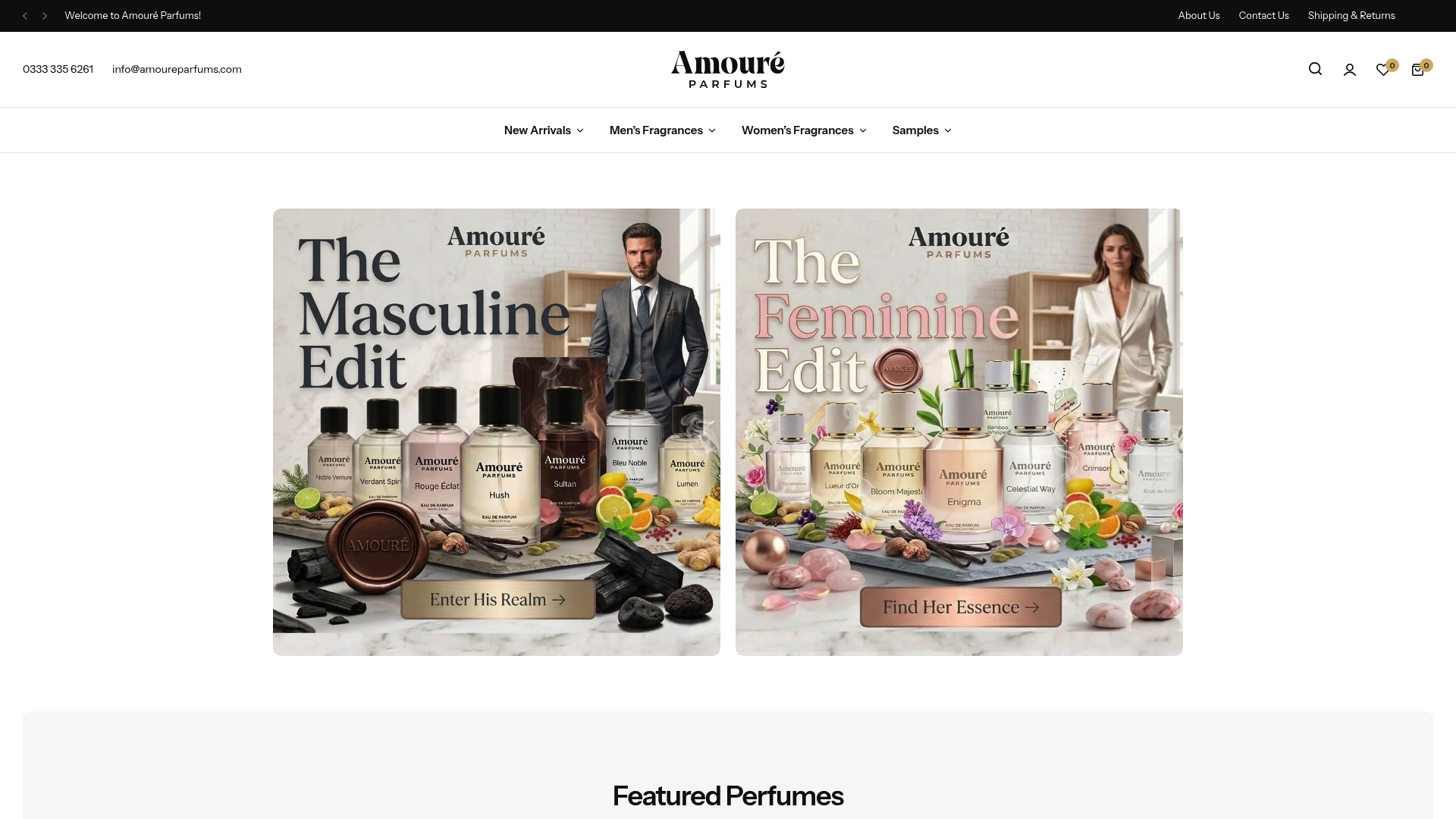
At Amoureé Parfums, we've curated a collection that spans every corner of the floral world, from breezy fresh peony scents to rich, lingering florientals. Whether you're searching for your own signature or selecting something truly special as a gift, our range makes the decision easy. Browse our full women's floral perfumes selection to find styles that match every mood, occasion, and personality. With detailed scent profiles, honest descriptions, and 24/7 support, you'll always feel confident before you buy. Explore all fragrances today and discover what your perfect floral actually smells like.
Frequently asked questions
What is the difference between a white floral and a fresh floral perfume?
White florals are intoxicating and narcotic, built around lush notes like jasmine and tuberose, while fresh florals are lighter and airier, often lifted with citrus or aquatic nuances for a daytime feel.
Why do some floral perfumes use synthetic notes?
Certain flowers, including lily of the valley, produce little extractable scent, so perfumers reconstruct them synthetically using safe aromatic molecules that often smell more vivid and true than any natural extract could.
What are soliflores in perfumery?
Soliflores are fragrances centred on a single dominant flower, offering a pure, focused scent experience. They contrast with bouquet-style perfumes, which layer many florals for greater complexity and opulence.
Which floral perfume is best for gifting?
Powdery and rose-based florals are widely regarded as the safest, most universally appreciated choices. The soft floral subfamily in particular is gentle, classic, and rarely polarising, making it an ideal starting point for an elegant, considered gift.