
TL;DR:
- Understanding fragrance families and the scent pyramid helps predict how a perfume will develop on your skin.
- Skin chemistry, personality, and lifestyle are crucial factors in choosing a fragrance that feels authentic.
- Testing on skin, limiting scent samples per session, and trusting your emotions are key to finding your signature scent.
You buy a perfume that smells extraordinary in the shop. You spritz it at home, and within an hour it has either vanished or turned into something you barely recognise. It is a frustrating experience, and it happens to almost everyone at some point. The truth is that choosing a fragrance without understanding your personal scent profile is a bit like buying shoes without knowing your size. This guide walks you through the exact process that fragrance experts use, from learning the language of scent to hands-on testing and even advanced technology, so you can finally find a fragrance that feels genuinely, unmistakably yours.
Table of Contents
- Understanding the basics: fragrance families and the scent pyramid
- How to prepare: knowing your preferences, personality, and needs
- Step-by-step: how to test and verify your scent profile
- Advanced tips: overcoming common pitfalls and using technology
- Why finding your scent profile is more art than science
- Ready to find or gift a signature scent?
- Frequently asked questions
Key Takeaways
| Point | Details |
|---|---|
| Know fragrance basics | Understanding scent families and the pyramid helps you decode and compare perfumes accurately. |
| Test on skin, not paper | Always try fragrances on your skin and wait for all stages before judging. |
| Tech aids, but chemistry rules | Quizzes and AI guide you, but your skin’s chemistry will always be the final judge. |
| Build a scent wardrobe | Consider a collection for different moods or occasions rather than sticking with one. |
Understanding the basics: fragrance families and the scent pyramid
Before you can find your signature scent, you need to speak the language. Fragrance is built on two foundational ideas: families and the scent pyramid. Once you understand these, every perfume description you read will start making sense.
Fragrance families are broad categories that group scents by their dominant character. The four main families are floral, woody, oriental, and fresh. Floral scents are built around flowers such as rose, jasmine, and peony. Woody scents lean on materials like sandalwood, cedar, and vetiver. Oriental fragrances are warm and rich, often featuring amber, vanilla, and spice. Fresh scents are clean and light, drawing on citrus, green notes, and aquatic elements. Most perfumes blend two or more families, which is why fragrance families by season can shift so dramatically between a summer spritz and a winter evening out.
The scent pyramid guide explains the second key concept: the fragrance pyramid, which describes how a perfume unfolds over time. The fragrance pyramid divides a scent into top, middle, and base notes, each playing a distinct role.
| Layer | Also called | Typical notes | Duration on skin |
|---|---|---|---|
| Top notes | Opening | Citrus, light herbs, green | 5 to 15 minutes |
| Middle notes | Heart | Floral, spice, fruity | 20 minutes to 2 hours |
| Base notes | Drydown | Wood, musk, amber, vanilla | 4 to 8+ hours |
Understanding this pyramid matters enormously for your scent profile:
- What you smell in the bottle is almost always the top notes, not the full picture
- The heart notes define the true character of the fragrance
- Base notes are what linger on your clothes and skin hours later
- A fragrance that smells sharp or citrusy at first may dry down to a warm, musky finish
- Your skin chemistry interacts most noticeably with the base notes
Knowing these mechanics means you will never again judge a perfume solely on that first spritz in the shop.
How to prepare: knowing your preferences, personality, and needs
With the fundamentals in place, the next step is turning inward. What does your ideal fragrance actually say about you? This is where personality, lifestyle, and even your wardrobe become useful clues.
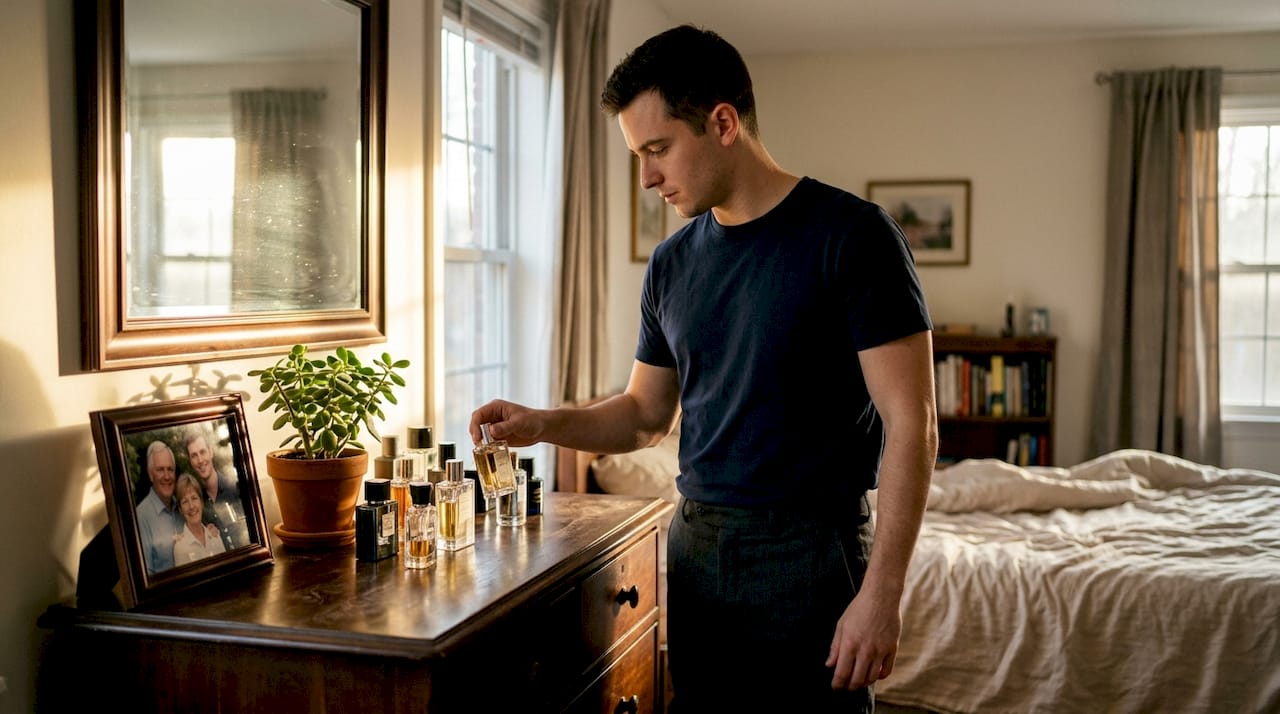
Online quizzes and AI tools are genuinely useful starting points, particularly if you are new to fragrance. They ask about your preferred scent memories, your style, your mood, and your lifestyle, then map your answers to fragrance families. However, skin testing for true profile remains essential because skin chemistry varies so much from person to person that no algorithm can fully predict how a scent will settle on you.
Here is a quick guide to translating personality traits into scent directions:
- Bold and confident: Oriental and woody families, think oud, amber, and dark musks
- Romantic and soft: Floral orientals, rose, and powdery musks
- Minimalist and clean: Fresh aquatics, white musks, and light woods
- Adventurous and outdoorsy: Green, aromatic, and earthy woody scents
- Playful and youthful: Fruity florals and bright citrus blends
One of the most useful decisions you can make early on is whether you want a single signature scent or a small fragrance wardrobe. Both approaches have real merit.
| Approach | Best for | Key benefit | Potential drawback |
|---|---|---|---|
| Single signature scent | Those who value consistency and identity | Instantly recognisable, builds association | May feel limiting across different occasions |
| Fragrance wardrobe | Those who enjoy variety and mood-dressing | Matches energy, season, and occasion | Requires more investment and storage |
For fragrance shopping tips that go beyond the basics, it also helps to think about when and where you plan to wear a scent, since matching scent to occasion is one of the most overlooked parts of building a personal collection.
Pro Tip: Buying a fragrance as a gift? Look at the recipient's wardrobe colours and style. Earthy tones and layered textures often point to woody or oriental preferences, while bright colours and clean lines suggest fresh or floral scents.
Step-by-step: how to test and verify your scent profile
Preparation sets the direction, but testing confirms it. This is where the real discovery happens, and there is a right way to go about it.
- Choose no more than three or four scents per session. Olfactory fatigue sets in quickly, and beyond four fragrances your nose simply stops distinguishing accurately.
- Apply to pulse points on skin, not paper. Use your wrist and inner elbow. Paper strips are useful for a first sniff, but they cannot replicate how a fragrance behaves on your body.
- Wait five minutes before judging. The top notes need to burn off before the heart of the fragrance emerges.
- Return after two to four hours. The drydown, meaning the base notes settling into your skin, is the truest expression of whether a scent suits you.
- Reset between scents with coffee beans. Sniffing roasted coffee beans between fragrances helps neutralise your olfactory palette so each test is fair.
- Write down your impressions immediately. Words like warm, sharp, green, powdery, or clean are enough. You do not need technical vocabulary to record a useful impression.
"Your skin is not a neutral surface. Its pH, sebum levels, and microbiome actively interact with fragrance molecules, which is why the same perfume can smell completely different on two people standing side by side."
This is why sampling perfumes before committing to a full bottle is so important. A fragrance sampling guide can help you structure this process efficiently. And if you want to understand exactly why scent chemistry varies so dramatically between individuals, the science is genuinely fascinating.
Pro Tip: Test fragrances in the morning when your sense of smell is sharpest, and avoid wearing other scented products on the day of testing.
Advanced tips: overcoming common pitfalls and using technology
Once you have done a few testing sessions, you will start noticing patterns. That is a good sign. But there are some common mistakes that even experienced fragrance buyers make, and a few advanced tools worth knowing about.
Common pitfalls to avoid:
- Judging a fragrance solely from a paper strip in the shop
- Skipping the drydown phase and buying based on the opening alone
- Testing too many scents in one session and losing accuracy
- Wearing a fragrance for one day and deciding it is not right without giving it a second chance
- Ignoring how your diet, hormones, and hydration affect your skin chemistry on any given day
Edge cases that affect scent profile:
- Anosmia or partial smell loss: If you struggle to detect certain notes, focus on families rather than individual ingredients
- Hormonal changes: Pregnancy, menopause, and medication can shift your scent preferences and how fragrances develop on your skin
- Diet: High-protein or high-spice diets can intensify certain base notes
- Skin dryness: Dry skin tends to absorb fragrance faster, shortening longevity
AI-powered fragrance tools have become increasingly sophisticated. Industry AI tools now achieve 85 to 89% accuracy in predicting how a scent will evolve on your skin, which is genuinely impressive. However, emotional resonance, the way a scent makes you feel, is still something only you can judge.
Olfactory training kits are another option worth exploring if you want to sharpen your nose over time. These kits contain isolated scent materials, such as individual woods, musks, and florals, and training with them for just ten minutes a day over a few weeks can significantly improve your ability to identify notes in complex fragrances. Think of it as building a vocabulary. The more words you know, the better you can describe and seek out what you love.
For a more structured approach, the connoisseur comparison method offers a systematic way to evaluate fragrances side by side. And if you are thinking longer term, learning to build a fragrance wardrobe with intention can turn your collection into something genuinely curated.
Why finding your scent profile is more art than science
Here is the honest truth that most fragrance guides skip over: no quiz, AI tool, or testing protocol can tell you what your signature scent should be. They can narrow the field. They can rule out entire families that will not suit your chemistry. But the final decision is always emotional, not analytical.
A signature scent is a kind of personal narrative. It is the smell of confidence before an important meeting, or the warmth of a fragrance you wore during a formative period of your life. Those associations are not something an algorithm can generate. They are built through experience, memory, and identity.
We would also push back gently on the idea that everyone needs a single signature scent. That pressure can make the search feel unnecessarily high-stakes. If your mood, wardrobe, and lifestyle shift across seasons and situations, a small collection of two or three fragrances is not indecision. It is self-awareness. Understanding scent notes deeply enough to build that kind of collection is a genuinely rewarding skill, and one that pays off every time you reach for a bottle that feels exactly right.
Ready to find or gift a signature scent?
You now have the knowledge to approach fragrance shopping with real confidence. You understand how the scent pyramid works, how to test on skin, and how to match a fragrance to your personality or the personality of someone you care about.
At Amoureé Parfums, we have built our entire collection around making this discovery process enjoyable and affordable. Whether you are searching for your own signature or choosing a thoughtful gift, you can browse all fragrances with the confidence of knowing exactly what to look for. If you are shopping for someone special, our women's fragrance collection offers elegant options across every major scent family, each described in detail to make your choice straightforward.
Frequently asked questions
How do online scent quizzes actually work?
They analyse your preferences for scent families, notes, and lifestyle using short questions, then recommend three to five matching fragrances. Quizzes typically take three to five minutes and achieve around an 85% completion rate.
Why does my perfume smell different from the bottle to my skin?
Your skin's pH, oiliness, and microbiome actively change how fragrance notes develop, so a scent may shift dramatically from the bottle to your body.
How many scents should I test at once to avoid nose fatigue?
Stick to a maximum of three or four scents per session, resetting your nose with coffee beans between each one to keep your impressions accurate.
Can I trust AI tools to find my perfect fragrance?
AI tools match up to 89% of users within narrow intensity margins, but personal chemistry and the emotional resonance of a scent still matter more than any algorithm.