TL;DR:
- Perfumes gradually expire due to chemical breakdown from light, heat, and oxygen exposure.
- Shelf life varies by fragrance type, with citrus and floral scents degrading faster than woody or oriental ones.
- Proper storage in a cool, dark place extends perfume longevity and maintains scent integrity.
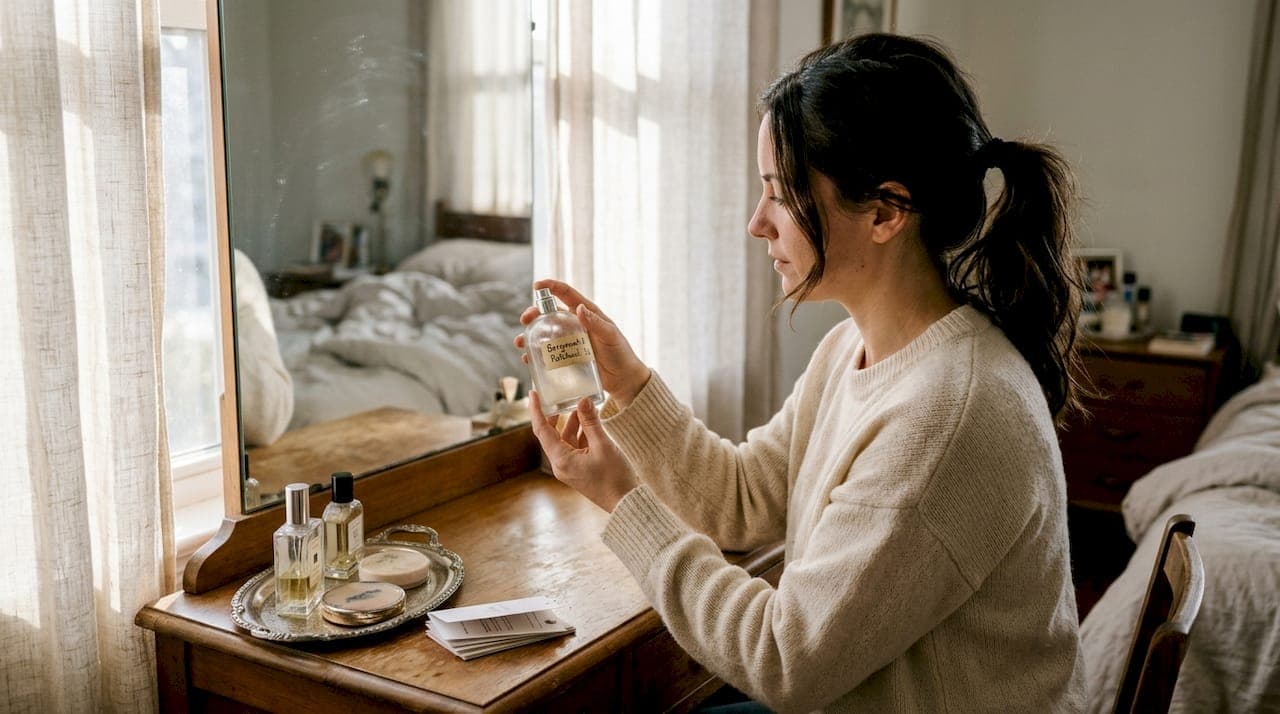
You open a bottle you haven't touched in three years, expecting that familiar rush of warmth and sophistication, and something is off. The scent is flatter, slightly sour, or just not quite right. Most people assume perfumes last indefinitely if left unopened, but that simply isn't true. Fragrance is a living chemistry, and like any complex mixture, it changes over time. Understanding why perfumes expire and how to slow that process is the difference between a scent that stays true for years and one that quietly turns on you.
Table of Contents
- What does perfume expiry actually mean?
- Core factors: why perfumes expire over time
- How scent families and ingredients influence perfume longevity
- Perfume types and shelf life: concentration matters
- What most perfume lovers miss about expiry and scent longevity
- Discover durable fragrances and care tips
- Frequently asked questions
Key Takeaways
| Point | Details |
|---|---|
| Expiry isn’t just smell | Perfumes change colour, lose scent, and may irritate skin as they expire. |
| Light and heat destroy scent | Exposure to sunlight and high temperatures accelerates perfume breakdown. |
| Citrus and florals fade fastest | Fragrance families rich in citrus or floral notes have shorter shelf lives than woody or oriental blends. |
| Concentration affects longevity | Parfums last longer than eau de parfum or eau de toilette, especially when unopened and well stored. |
| Proper storage postpones expiry | Keeping fragrances cool, dry, and sealed preserves their quality for years. |
What does perfume expiry actually mean?
Perfume expiry isn't a dramatic event. There's no mould, no obvious spoilage, and no warning label flashing at you. Instead, expiry is a gradual shift in the way a fragrance smells, looks, or performs on your skin. The molecules that create a scent are chemically reactive, and over time they break down, recombine, or oxidise into entirely different compounds.
The most common signs that a perfume has expired include:
- A sour, vinegary, or metallic smell where there was once sweetness or freshness
- A noticeably faded projection, meaning the scent barely carries beyond your skin
- A shift in colour, often from clear or pale gold to a deeper amber or brown
- A change in texture, particularly in older or oil-heavy formulations
- Notes that smell "wrong" or unbalanced compared to when the bottle was new
Understanding fragrance notes explained helps you spot these changes more precisely, because you'll know which top, heart, or base notes are supposed to be present.
"A perfume that once opened with bright citrus and settled into warm woods may, after expiry, smell predominantly of stale alcohol with very little character remaining."
It also matters for skin safety. Oxidised fragrance compounds can become irritants, particularly for those with sensitive skin. So wearing an expired perfume isn't just an aesthetic issue. Perfume shelf life varies by concentration and whether a bottle has been opened or not, which means two identical bottles can age very differently depending on how they've been used.
One thing many buyers overlook is that why perfumes smell different on each person also plays a role in how quickly you notice expiry. Your skin chemistry interacts with the fragrance, and as the formula degrades, that interaction becomes less predictable.
Core factors: why perfumes expire over time
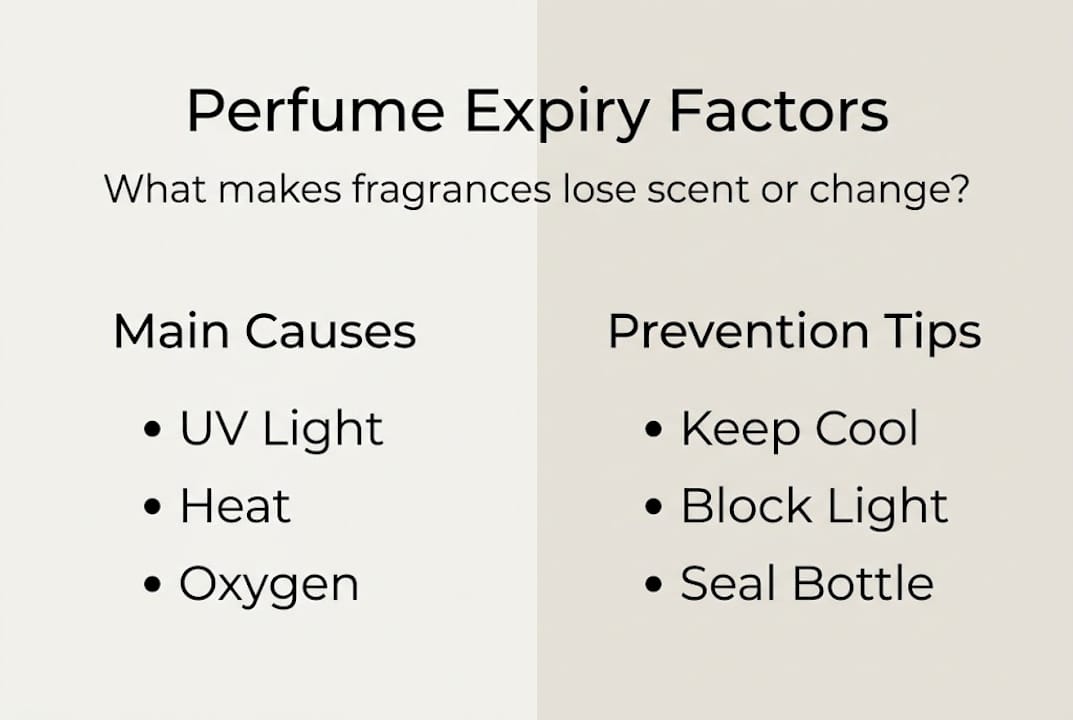
Three environmental villains are responsible for most perfume degradation: light, heat, and oxygen. Each one attacks fragrance molecules in a distinct way, and together they can reduce a perfectly good perfume to a shadow of itself within months if storage is poor.
Light triggers photodegradation, breaking apart the molecular bonds in aromatic compounds. UV rays are particularly aggressive, which is why perfumes stored on a sunny windowsill deteriorate so much faster than those kept in a drawer. Heat accelerates all chemical reactions, including the ones you don't want. Oxidation rates increase exponentially above 25°C, meaning a bathroom cabinet near a hot shower is one of the worst places to keep a bottle. Oxygen enters every time you spray or open a bottle, and it reacts with fragrance molecules to create new, often unpleasant compounds.
| Factor | Effect on fragrance | Risk level |
|---|---|---|
| UV light | Breaks molecular bonds | High |
| Heat above 25°C | Accelerates oxidation | Very high |
| Oxygen exposure | Creates off-notes via oxidation | High |
| Humidity | Degrades natural ingredients | Medium |
Natural ingredients are far more vulnerable than synthetic ones. Essential oils derived from flowers, citrus peel, or resins like oud oxidation in fragrance contain complex organic molecules that are chemically unstable. Synthetics, by contrast, are engineered for consistency and resist breakdown more effectively.
Pro Tip: Store your perfumes in their original boxes inside a cool, dark drawer or wardrobe. The box blocks light and helps maintain a stable temperature, which is the single most effective thing you can do to slow expiry.
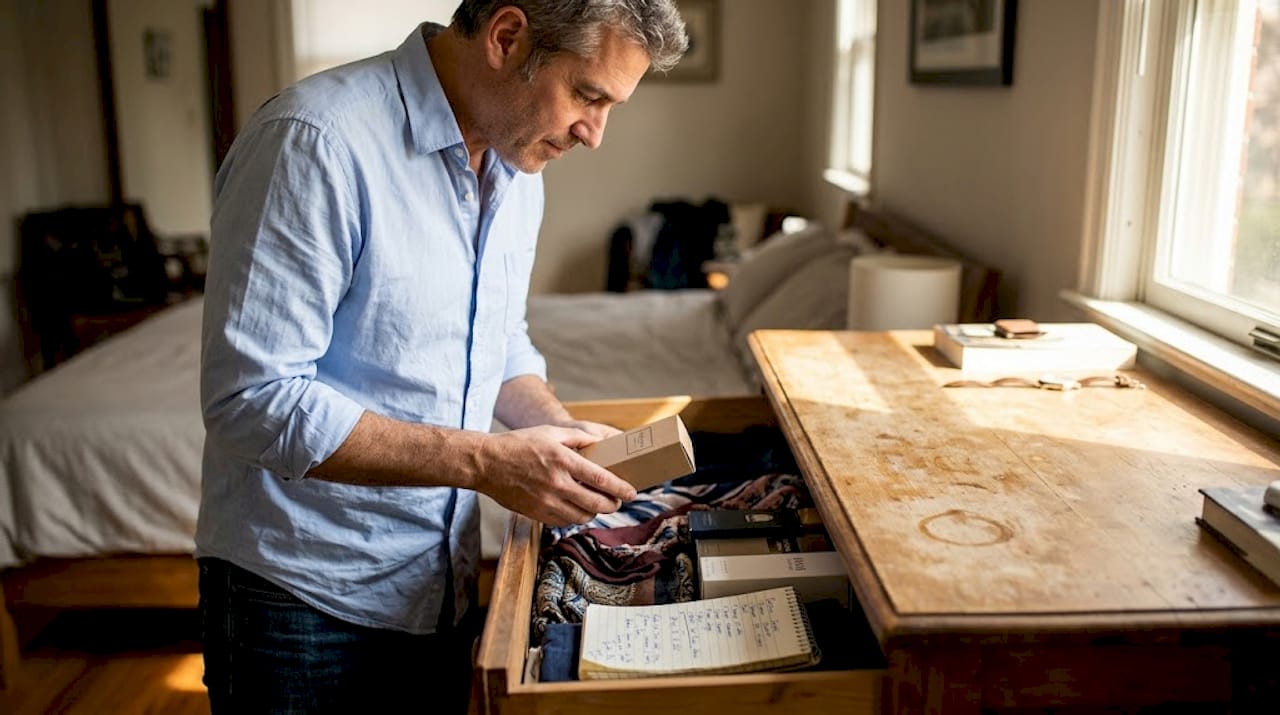
Good perfume collection storage tips go beyond just "keep it cool." Minimising the number of times you open a bottle, keeping caps firmly sealed, and avoiding temperature fluctuations all contribute meaningfully to longevity.
How scent families and ingredients influence perfume longevity
Not all perfumes age at the same rate. The fragrance family a scent belongs to and the ingredients used in its formula are among the biggest determinants of how long it will stay true.
Citrus and fresh floral scents are the most volatile. Their top notes, which include bergamot, lemon, neroli, and light rose, are composed of small, lightweight molecules that evaporate and oxidise quickly. Citrus and floral notes oxidize fastest, typically within one to three years, while woody, oriental, and base-heavy fragrances can last five to ten years or more. This is partly why a cologne you loved in summer may seem thin and uninspiring by the following year.
| Fragrance family | Typical longevity | Key vulnerable ingredients |
|---|---|---|
| Citrus/fresh | 1 to 3 years | Bergamot, lemon, grapefruit |
| Floral | 2 to 4 years | Rose, jasmine, lily of the valley |
| Woody | 5 to 8 years | Cedarwood, sandalwood, vetiver |
| Oriental/gourmand | 6 to 10+ years | Amber, vanilla, musk, oud |
The role of natural versus synthetic ingredients is equally important. Natural extracts are rich in complex organic compounds that interact unpredictably with light and heat. Synthetics are designed to be stable and consistent, which is why many modern perfumes blend both to balance character with durability.
Here's what this means practically:
- A perfume built on citrus top notes will smell noticeably different after 18 months if stored carelessly
- A rich oriental or amber-based scent may actually improve slightly with age before eventually degrading
- Fragrances with high natural content need more careful storage than those that are predominantly synthetic
Understanding seasonal scent families helps you match the right fragrance to the right season, but it also helps you anticipate which bottles need more attention. If you want expert scent tips on choosing fragrances built for longevity, the composition of the formula is one of the first things worth considering.
Perfume types and shelf life: concentration matters
Concentration is one of the clearest predictors of how long a perfume will last, both on your skin and in the bottle. The higher the percentage of aromatic oils, the longer the fragrance tends to remain stable and true.
Here's how the main concentration types compare:
- Parfum (extrait de parfum): Contains 20 to 30% aromatic oil. The richest and most stable formulation, lasting up to six to eight years unopened.
- Eau de parfum (EDP): Contains 15 to 20% oil. A strong everyday option with a shelf life of four to five years unopened.
- Eau de toilette (EDT): Contains 5 to 15% oil. More volatile and lighter, typically lasting two to three years.
- Eau de cologne (EDC): Contains 2 to 5% oil. The most diluted and shortest-lived, often under two years.
- Body mists and splashes: Under 2% oil. Designed for immediate freshness rather than longevity.
Key statistic: Once opened, even a high-quality parfum will typically last only one to five years depending on storage conditions, compared to six to eight years unopened.
Opening a bottle introduces oxygen immediately, and every subsequent spray lets in more. This is why half-used bottles degrade faster than full ones. If you have a beloved fragrance you use rarely, consider decanting it into a smaller bottle to reduce the air space inside.
Pro Tip: If you're investing in a new fragrance for longevity, explore eau de parfum explained to understand why EDP offers the best balance of richness, wearability, and shelf life for most buyers.
What most perfume lovers miss about expiry and scent longevity
Here's the perspective that rarely gets discussed: most perfume expiry isn't caused by the formula itself. It's caused by where you keep the bottle and how often you open it. The bathroom shelf, the dressing table by the window, the car glove box in summer. These are the real culprits, and yet most buyers never think twice about them.
There's also a sentimental trap. Many people hold onto a bottle long past its best because it carries a memory, a person, a moment. We understand that completely. Perfumes evoke memories in a way no other sensory experience quite matches. But wearing an expired version of a beloved scent doesn't honour that memory. It dilutes it. The smarter move is to replace it with a fresh bottle and store it properly from day one, so the scent stays true for as long as possible.
Daily habits matter far more than the formula inside the bottle.
Discover durable fragrances and care tips
Now that you understand what drives perfume expiry, you're in a much stronger position to choose wisely and store well. Whether you're building a collection or searching for a single signature scent, the quality and composition of the fragrance makes all the difference.
At Amoureé Parfums, our fragrance collection is curated with longevity and quality in mind. From rich orientals to sophisticated florals, you'll find options built to last. Explore our women's fragrances for scents that balance elegance with staying power, or browse our full range of timeless fragrances to find your next signature scent. Every bottle is chosen to give you the best possible experience, from first spray to last.
Frequently asked questions
How can I tell if my perfume has expired?
Look for a sour, faded, or off-putting smell and a shift in colour from pale to deep amber. Expiry signs include altered performance and changes in the original scent profile.
Do all perfume types expire at the same rate?
No. Parfum lasts the longest, followed by EDP and EDT. Shelf life varies significantly by both concentration and fragrance family, with citrus and floral scents degrading fastest.
What is the best way to store perfume to prevent expiry?
Keep bottles in a cool, dark place away from heat and direct light, and always replace the cap firmly after use. Light, heat, and oxygen are the primary causes of faster breakdown.
Is it safe to use expired perfume?
Expired perfumes are generally not harmful but may cause mild skin irritation in sensitive individuals. Expiry may affect both the scent quality and skin comfort, so always patch-test before applying freely.
Why do natural fragrances degrade faster than synthetic ones?
Natural ingredients contain complex organic molecules that are chemically unstable and react more readily with light, heat, and oxygen. Natural ingredients degrade faster than synthetics due to this inherent instability.